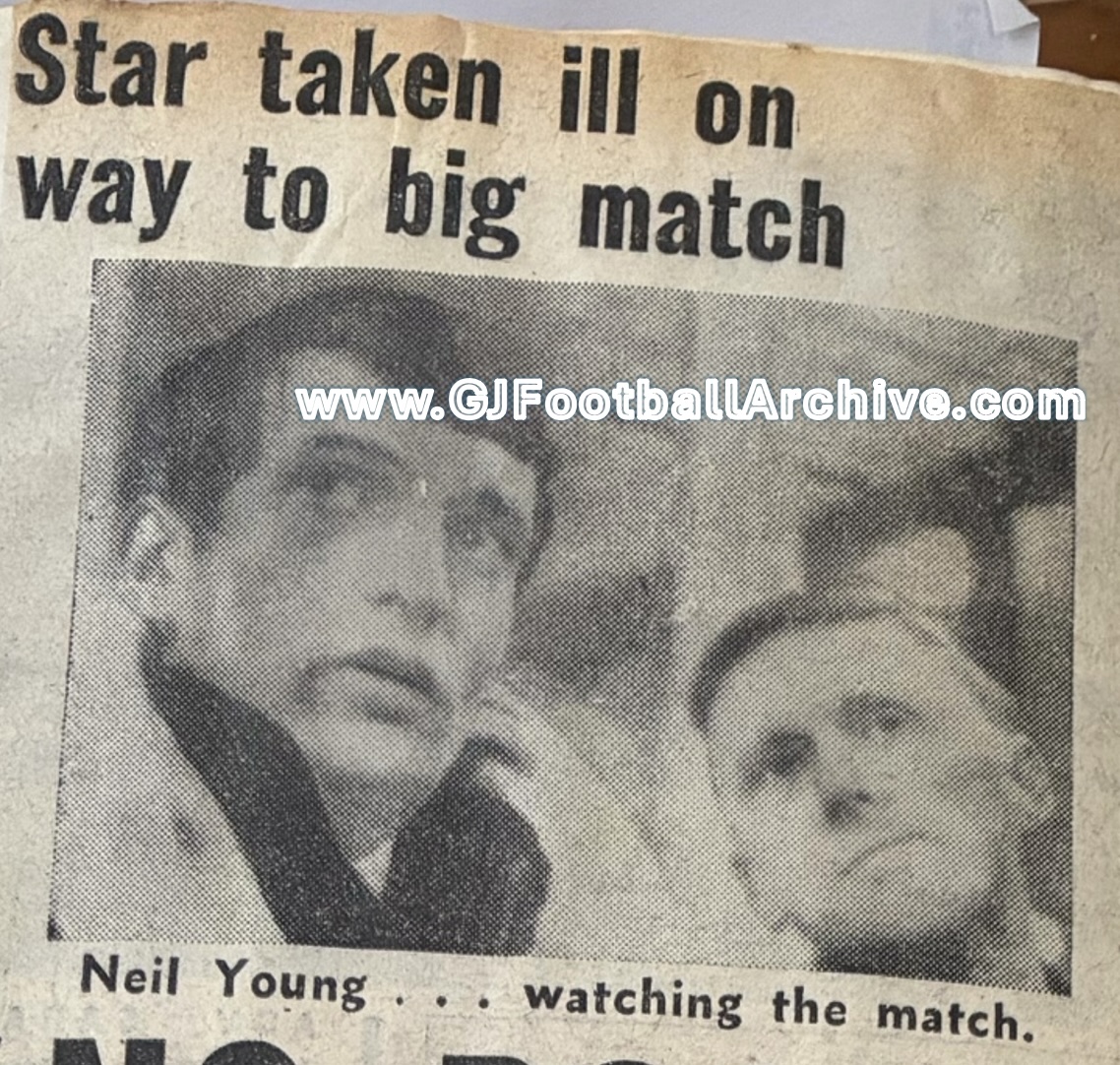
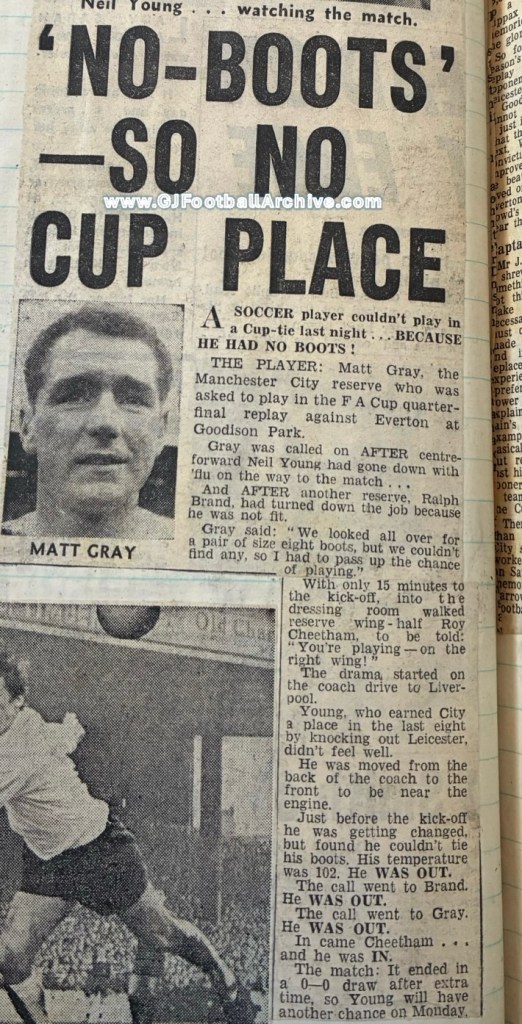
60 years ago today (29 March 1966) 60,349 watched a goalless FA Cup quarter final replay at Goodison Park between Everton and Manchester City. Once again City ‘keeper Harry Dowd was one of the star men but a curious team selection issue cropped up before the game. City striker Neil Young went down with flu on the way to the match. Then Ralph Brand turned down the chance to play as he believed he was not fit enough. Manager Joe Mercer turned to Matt Gray, but he couldn’t play because he didn’t have any boots! City looked for some size 8 boots but couldn’t find any. So Gray couldn’t play. Ultimately, Roy Cheetham managed to get to Goodison Park 15 minutes before kick off and took Young’s place.
Here for subscribers are match reports and details of that day:
Subscribe to get access
Read more of this content when you subscribe today. It costs £3 per month (cancel anytime) or sign up at a discounted £20 per year. Every subscriber gets access to the 1000s of articles already posted and those posted throughout your subscription. This includes the full Manchester A Football History and my first City book published in 1989
If you enjoy all the free material on my website and would like to support my research and keep this website going (but don’t want to subscribe) then why not make a one-time donation (or buy me a coffee). All support for my research is valued and welcome. It allows me to keep some free material available for all. Thanks.
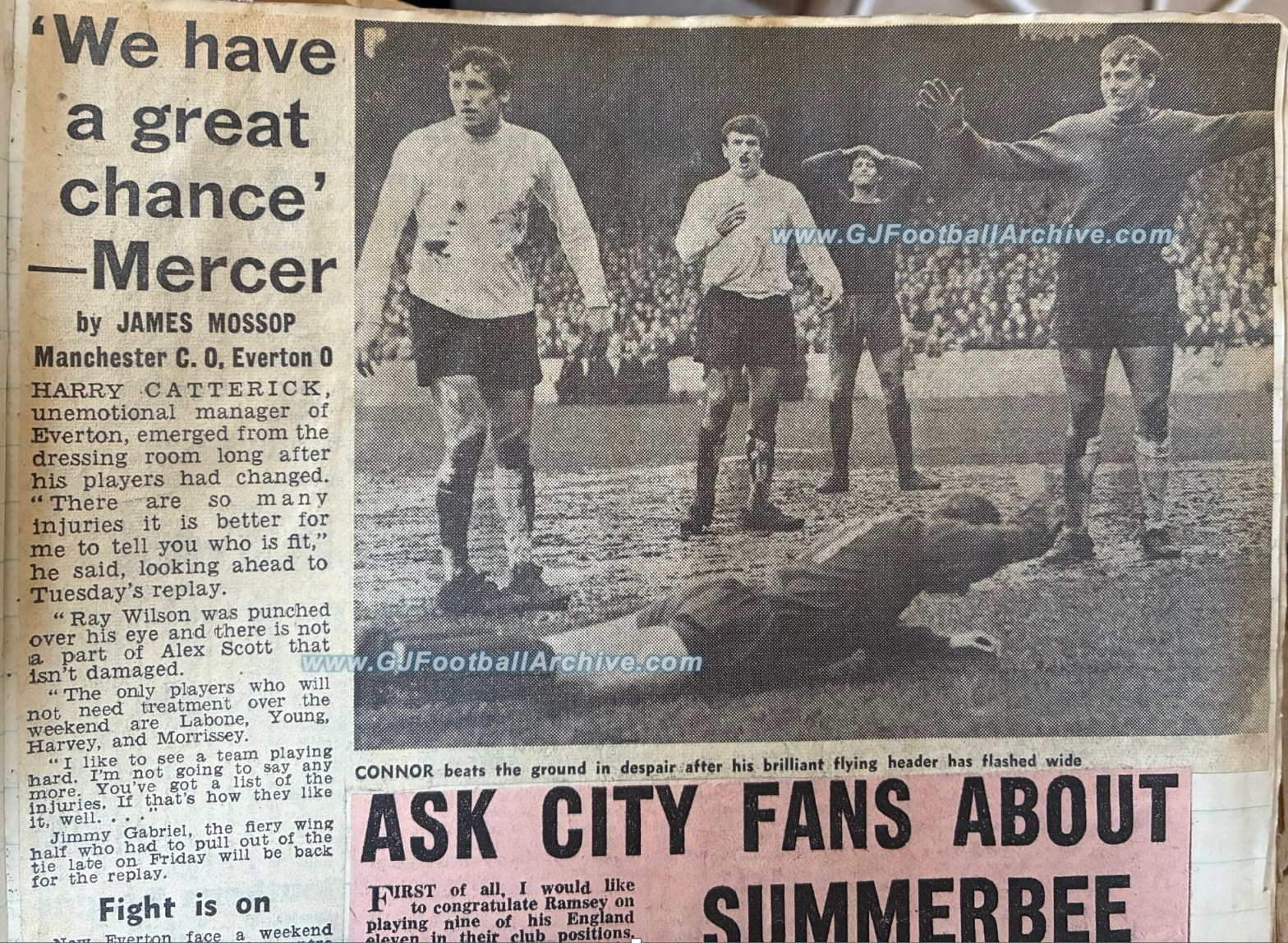
60 years ago today (26 March 1966) 63,034 watched a goalless FA Cup quarter final at Maine Road between Everton and Manchester City. It was a day that ultimately brought a lot of attention City’s way and City ‘keeper Harry Dowd was the star man according to some journalists. Here for subscribers are match reports and details of that day:
Subscribe to get access
Read more of this content when you subscribe today. It costs £3 per month (cancel anytime) or sign up at a discounted £20 per year. Every subscriber gets access to the 1000s of articles already posted and those posted throughout your subscription. This includes the full Manchester A Football History and my first City book published in 1989
If you enjoy all the free material on my website and would like to support my research and keep this website going (but don’t want to subscribe) then why not make a one-time donation (or buy me a coffee). All support for my research is valued and welcome. It allows me to keep some free material available for all. Thanks.
The League Cup winners faced Wolves at Maine Road on this day (20 March) in 1976. The game looked like a certain defeat – or at best a draw – for most of the match with Wolves dominating the early stages and even a Dennis Tueart scissor kick was unable to find the net (saved by goalkeeper Phil Parkes). Wolves took the lead via a low shot from future Blue Steve Daley in the 29th minute.
The second half saw City play with more fluidity and came close to scoring when 17-year-old debutant Gary Owen fired in a low shot following a free kick. Parkes managed a good save at the foot of the post. Eight minutes into the half City did equalise through another young player, Ged Keegan.
After 81 minutes Wolves took the lead again with a Kindon header. Three minutes later a handling offence in the area gave City a penalty which Tueart blasted past Parkes to equalise.
Only a minute later, and with the game entering its final five minutes, Mike Doyle stormed in to head City in front, making it 3-2. The victory for Tony Book’s side was a little harsh on Wolves, particularly after some excellent saves from Parkes, but it demonstrated the never-say-die attitude that seemed to be a key feature of City at this time.
Post match much of the talk was on City’s final flourish, but journalist Peter Gardner was also keen to write about Gary Owen, claiming: ‘Owen provided one of the most startling League debuts I have ever seen… he is essentially an exciting player with abundant flair and ability. He shows too, a crispness in the tackle that comes from a stocky build reminiscent of an early Ball or Bremner. Doubtless his display exceeded the expectations of many as City rallied after the break to come up on the post and snatch victory from the grasp of a Wolves side ready to celebrate.’
You can read more on the 1975-76 season with this 5,320 word article – a season which saw Tony Book guide the club to major success. If you want to know more on this incredible decade for Manchester City Football Club then why not subscribe and read it all? You could even subscribe for a month and see what you think. The following 5,320 word article is on the 1975-76 season and is available to subscribers below. Enjoy!
Subscribe to get access – Monthly
Read more of this content when you subscribe today. It costs £3 per month (cancel anytime) to access everything posted since 1 October 2022 or there’s a special annual rate below which gives greater access and works out much cheaper.
Read more of this content when you subscribe today. It costs £3 per month (above) or £20 a year (here) to access everything posted since the site was created in December 2020. This special rate works out about £1.67 a week and gives access to everything posted, including PDFs of 3 of my books.
If you enjoy all the free material on my website and would like to support my research and keep this website going (but don’t want to subscribe) then why not make a one-time donation (or buy me a coffee). All support for my research is valued and welcome. It allows me to keep some free material available for all. Thanks.
If you enjoy all the free material on my website and would like to support my research and keep this website going (but don’t want to subscribe) then why not make a one-time donation (or buy me a coffee). All support for my research is valued and welcome. It allows me to keep some free material available for all. Thanks.
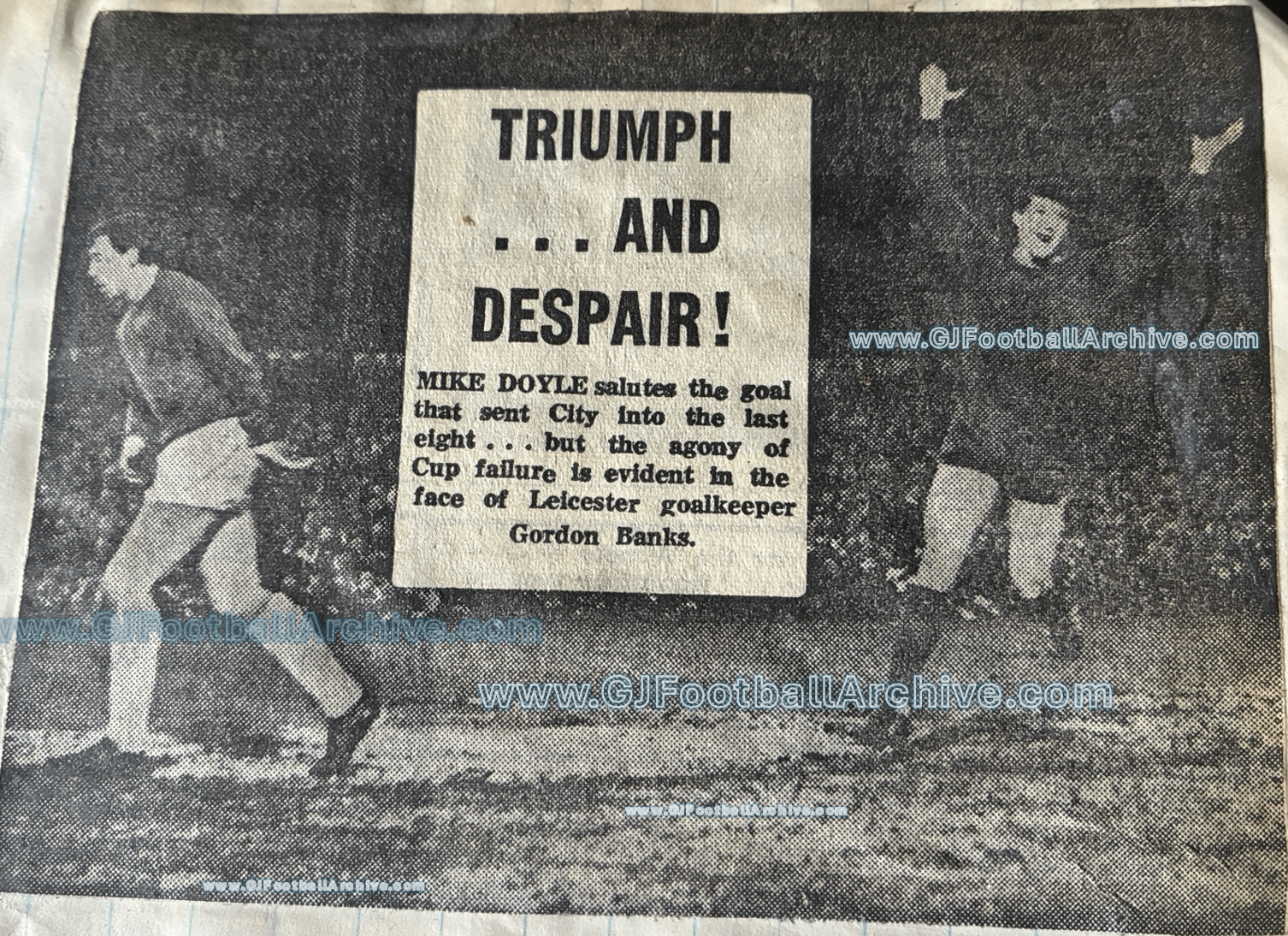
Today (9 March) in 1966 Second Division Manchester City defeated First Division Leicester City 1-0 in a FAC 5th round replay. Gordon Banks was the Leicester ‘keeper and City gained many plaudits from this display. More was to follow as the football world began to notice how City were revitalised under manager Joe Mercer and his assistant Malcolm Allison. Were you there that day? If you were please feel free to add your comments.
Here for subscribers are some contemporary match reports from this game:
Subscribe to get access
Read more of this content when you subscribe today. It costs £3 per month (cancel anytime) or sign up for a year at a time at a discounted price of £20 per year. This gives access to every article, book, interview etc. posted to the site so far. Why not sign up for a month and see what you think?
You can find out more on Manchester City during the 1965-66 season by reading the following 4100 word article. As with most of the other features in this series it includes words from interviews I have performed with those who were there. This is a subscriber article (see below).
Subscribe to get access
Read more of this content when you subscribe today. It costs £3 per month (cancel anytime) or sign up for a year at the discounted price of £20 per year (works out £1.67 per month). Subscribers access the 1000+ articles posted so far and the others scheduled during the life of your subscription.
If you enjoy all the free material on my website and would like to support my research and keep this website going (but don’t want to subscribe) then why not make a one-time donation (or buy me a coffee). All support for my research is valued and welcome. It allows me to keep some free material available for all. Thanks.
On this day (March 7) in 1970 Manchester City defeated West Bromwich Albion 2-1 in the League Cup final. City’s goalscorers were both grandfathers of modern day player Tommy Doyle (currently on loan to Birmingham from Wolves). They were Glyn Pardoe and Mike Doyle. Sadly both men have since passed away. As you can see below I interviewed Glyn a few times over the years, including one of my first ever interviews back in the early 1990s (it was for my biography of Joe Mercer and Glyn was a wonderful, welcoming man).
Janice Monk (former City Store), Glyn Pardoe and Steve Mackenzie at the launch of Manchester The City Years
This photo is of Glyn with Janice Monk and Steve Mackenzie at one of my book launches. Back in January 2004 I interview Glyn for my then regular Manchester City match programme series In Search of the Blues. Here is that interview as it was written up for the programme:
Glyn Pardoe holds the record for the youngest player to make his debut with the Blues. At the age of 15 years and 314 days he played in City’s 11th April 1962 meeting with Birmingham City. He went on to play throughout City’s glorious late sixties period and made a total of 374 (plus 2 as substitute) appearances.
Gary James, author of Farewell To Maine Road, caught up with Glyn to discuss his playing career and his present day activities.
Let’s start with your role today, I’m sure many of our readers will have heard you on local radio this season. Can you explain your role?
I work with Ian Cheeseman, Jimmy Wagg and the others at GMR to provide my views on what’s happening on the pitch. Part of that is actually sat next to Ian summarising, and part of it is after the match when I am one of the guys talking to callers and generally talking about City. It’s a great role and I love chatting to fans. Ian and Jimmy are nice lads as well, and the great thing for me is that I enjoy it. I love listening to supporters giving their views and I like to stress that the game is still all about opinions. It doesn’t matter what else changes, football is a great game to talk about.
How did it all come about?
You have to go back to the eighties when I was still working for the Club. Back then Ian Cheeseman was doing the Club videos of each game, while I was working with the Reserves and the Youth teams. I was asked to give my opinions of each first team game for the Club videos, and so I’d work with the Reserves in the morning, then head off up to the old commentary gantry at Maine Road for the first team.
Eventually that stopped of course, but then a few months ago I got a call from Ian. Totally out of the blue really… I didn’t ever consider I could do the same thing on radio. Ian asked if I could help for one game, so I did, then afterwards they kept asking me back.
Did you find it difficult?
At first it was hard, although I don’t think any of that came across. Unlike the old days of working on the video, I was not too familiar with every one of the first team squad, so it took some time to work out the characteristics of each player. I also have a day job of course – it’s security reception work – so that had to be taken in to consideration. Nevertheless, it has been a great experience and I do enjoy doing it.
Going back to your early career, making your debut at such an early age must have been a shock?
Well you’d think so, and I’m sure it was, but I did actually get to find out a few days before, so that helped. If I’d have found out on the morning I don’t know how I’d have coped. I don’t think I ever thought about my age. I’m sure others did, but to me it was just a great opportunity.
Your debut came against Birmingham in 1962. Do you remember much about the game?
Not really, except we lost 4-1 at home and I was up against a tough centre-half called Trevor Smith. I wore the number nine shirt for that game – I later played in almost every position! I don’t think I did a great deal, but I know I kept my place for the next 3 games.
These were not particularly good days as far as fans were concerned, but how did it feel to be a player during those first few years of your career?
The great side of the 1950s had disintegrated really. We still had a few of the players in the side like Trautmann and Hayes, but the rest of the side was mainly youngsters finding their feet. It was difficult because there was a general air of despondency. We’d go to places like Blackburn and expect to win. We’d take the lead, but end up losing 4-1 (1st May 1963) and I think that said it all. We didn’t know how to win matches. At the time I knew nothing else really, but when you do start to find success you suddenly realise how bleak the atmosphere inside the Club had been just a couple of seasons earlier.
Because you made your debut at such an early age did you think ‘this is it, I’ve made it’?
Not a chance! They’d never have allowed me to think like that anyway. I remember playing on the Saturday, and then walking up to the ground on the Monday and having to knock to be allowed in. As far as everybody was concerned I was a Reserve – or even a youth player I suppose – not a first teamer. You never actually ‘made it’ until you were a first team regular and even then you could never be complacent. Even when we were winning all the trophies there was a very real fear that your contract would not be renewed. I remember worrying each summer, thinking that I’d be forced to move on.
In those days the Club had total control and as a player you were simply glad to be there. We’ve gone to the other extreme now, but for me I don’t think I ever felt I’d made it. Even when we were the most successful side in the Country.
How do you feel the mid-sixties transformation of the Club’s fortunes came about?
Joe Mercer and Malcolm Allison came in. That’s it really. I remember when the Club was at its lowest and we had no hope, ambition, or direction and as a player you really worried about where we were heading and who the new guy might be. I was still only about 18 and had no idea how it would all pan out of course. Then Joe arrived, followed by Malcolm, and everything started to improve. Training improved considerably and so you started to realise how football could be improved and enjoyed.
What were your first impressions of Mercer & Allison?
Joe was a very respectable figure. We knew what he’d achieved as a player and he had a great approach. He was quiet but very supportive. A real calming influence. Lovely.
My first impression of Malcolm – remember I was still only a lad – was that he was very loud. He liked to shout a lot! Naturally, I got used to that, but at first it was a bit of a shock. Malcolm was a terrific coach and we all learnt so much from him. He was fantastic once you got to know him, and together they both turned us into a great side.
In the 1965-6 promotion season I only missed the opening game, so it was their arrival which made me a regular first teamer. I’d had good runs before that of course, but once they arrived I hardly missed a match, and enjoyed the successes.
The 1970 League Cup Final saw you score the winning goal 12 minutes into extra-time – presumably a great moment?
Fantastic! It’s always a great feeling when you score, but when you score in a cup final it’s tremendous. A truly great memory.
Not too long after that you suffered with a serious leg injury sustained in the Manchester derby. Did you realise how bad it was at the time?
I knew very little at the time. It was the December 1970 game at Old Trafford and there was a collision between me and George Best. Apparently I broke my leg and an artery was trapped, but I have no memory of what followed. I’ve been told that I was within twenty minutes of losing my leg. They had decided that removing my leg would save my life, but fortunately the operation they eventually did meant that my leg was saved as well. I was in a daze for at least four or five hours and really have no idea of the worry my family and friends went through.
You were only 24 when the injury occurred, and it was a long struggle back to fitness after that wasn’t it?
I missed the rest of that season, all the next, and didn’t play again in the first team until November 1972. Even then my appearances were limited. I managed 32 League appearances during 1973-4 and played in the League Cup Final with Wolves, but my career was really over.
Even now I still haven’t got full movement back, but I do feel fortunate that I am still alive and I still have my leg.
Personally, considering your age at the time I feel the blow you suffered was equal if not greater than the tragedy suffered by Paul Lake and by Colin Bell. Presumably you regard it as your worst moment?
I don’t like thinking about worst moments. Football was all about enjoyment to me. I feel very lucky to have been in such a successful side, and to play during a great period. Not many people are given the opportunity in the first place, so it all has to be great.
Which players were you closest with during your career?
Alan Oakes is my cousin of course, so I’d been playing with him since I was very young. The two of us, plus Mike Doyle and Colin Bell were known as the Big Four because we were always together. We played golf a lot and so were always seen together, but the whole of the playing staff was close in those days. We had a great team spirit.
After your playing days finished you continued to work with the Club. Did you enjoy that period?
I worked with the youth sides, and winning the Youth Cup against United in 1986 was a great moment. The lads had so much enthusiasm – Paul Moulden, Paul Lake, Steve Redmond, Andy Hinchcliffe, Ian Brightwell and the others. That gave me great satisfaction but people forget that we came close to winning it again three years later. Watford beat us in the final, but that side contained players like Neil Lennon, Ged Taggart and Ashley Ward. To think that so many of the players from those two sides went on to play international football or make a name for themselves at other clubs makes you appreciate the quality we had at the time. Those kids had ability, and it brought me and the others a lot of satisfaction.
Finally, how did the fans treat you during your time at the Club?
Always great. They were very supportive – even when we were struggling at the start of my career. They gave me fantastic treatment throughout my career, and I still enjoy meeting and talking with them today.
Here’s film of that 1970 final:
A reminder that you can still watch my 1 hour plus talk on Manchester City crowds, support, chants and Maine Road here. It’s free to watch:
I’m keen to hear thoughts on the idea of doing other talks like this for subscribers to my site. If you’re interested then please get in touch and let me know what you’d like me to talk on. I have quite a few ideas I’m keen to do and am also open to suggestions. Thanks.
If you enjoy the talk then please subscribe to my site. I am a self employed historian and spend all my working week writing, researching and publishing my work. I am not an employee of any organisation (I know some think I’m employed by a football club but I’m not an employee of any club). I am independent of any organisation and care passionately about the quality and accuracy of my work.
A limited amount of content will always be free for anyone to read but those subscribing will have access to everything on this site for as long as they subscribe. For subscribers I guarantee to post a minimum of 4 articles alongside adding material from my archives each month (in practice it’s been much more than this!). To subscribe costs £3 a month or £20 a year (a reminder that the 2010 edition of Manchester A Football History cost £24.95 when published and is now out of print but available to subscribers as a downloadable pdf as part of their subscription.).
If you’re uncertain whether to subscribe or not then why not subscribe for a month at £3 and see if you’re getting value for money. The £20 annual subscription works out about £1.67 a month for a guaranteed 4 new articles per month and access to everything else posted in the archive.
You can subscribe here:
Subscribe to get access
Read everything on this website when you subscribe today.
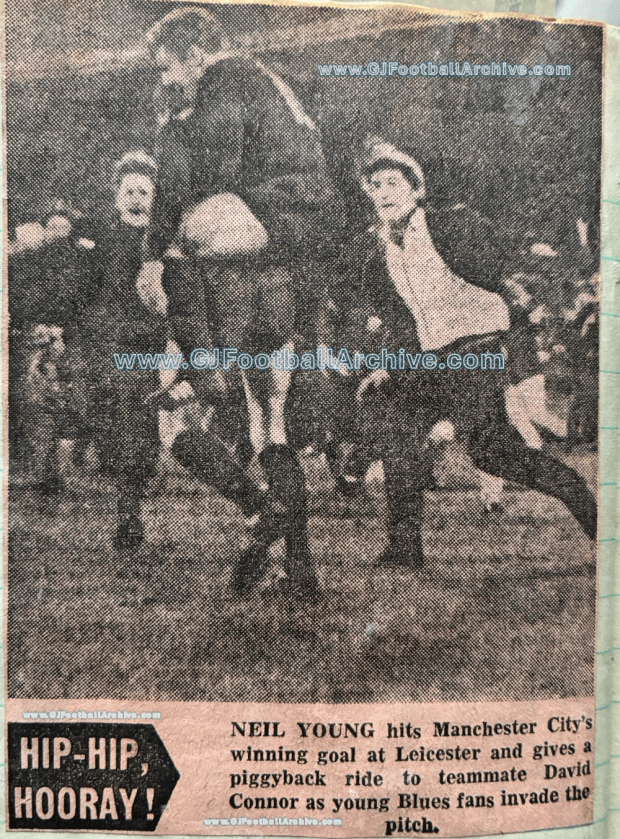
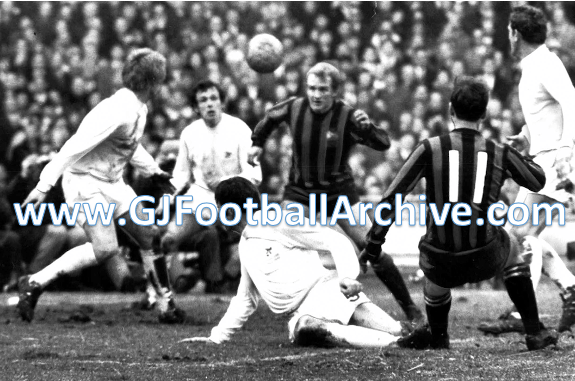
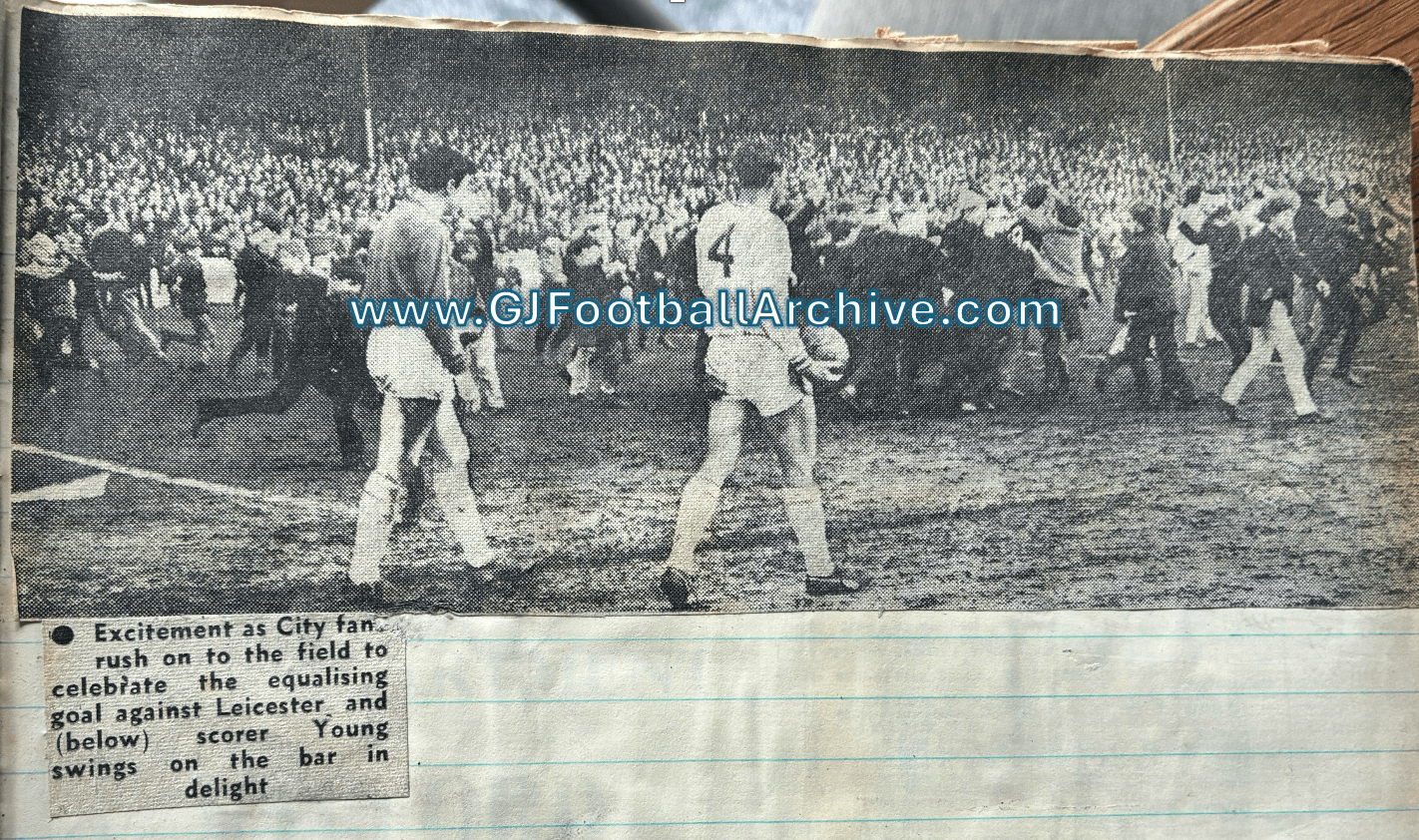
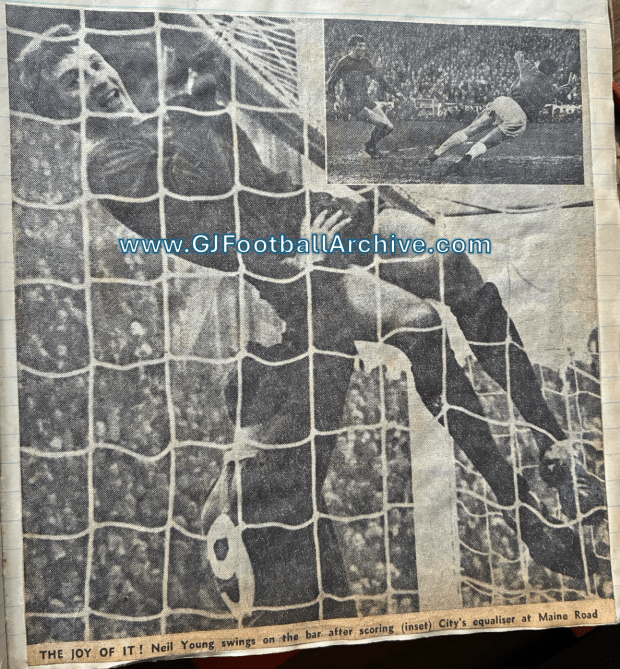
Today (5 March) in 1966 two goals from Neil Young helped Second Division Manchester City to a 2-2 draw against First Division Leicester City in the 5th round of the FA Cup. Gordon Banks was the Leicester ‘keeper and City gained many plaudits from this display. More was to follow as the football world began to notice how City were revitalised under manager Joe Mercer and his assistant Malcolm Allison. Were you there that day? If you were please feel free to add your comments.
Here for subscribers are some contemporary match reports and images from this game:
Subscribe to get access
Read more of this content when you subscribe today. It costs £3 per month (cancel anytime) or sign up for a year at a time at a discounted price of £20 per year. This gives access to every article, book, interview etc. posted to the site so far. Why not sign up for a month and see what you think?
You can find out more on Manchester City during the 1965-66 season by reading the following 4100 word article. As with most of the other features in this series it includes words from interviews I have performed with those who were there. This is a subscriber article (see below).
Subscribe to get access
Read more of this content when you subscribe today. It costs £3 per month (cancel anytime) or sign up for a year at the discounted price of £20 per year (works out £1.67 per month). Subscribers access the 1000+ articles posted so far and the others scheduled during the life of your subscription.
If you enjoy all the free material on my website and would like to support my research and keep this website going (but don’t want to subscribe) then why not make a one-time donation (or buy me a coffee). All support for my research is valued and welcome. It allows me to keep some free material available for all. Thanks.
Manchester City travelled to Wembley for the League Cup final on this day (28 February) in 1976. Here’s a story of that day…
The huge demand for tickets had seen City secretary Bernard Halford take the unusual step of writing to all the other League clubs, apart from Newcastle of course, asking for any spare tickets from their allocations for the final. Many clubs obliged but still thousands of Blues were denied tickets.
Reaching Wembley was an extraordinary achievement considering the injuries (most notably Colin Bell) and suspensions, and demonstrated a wonderful team spirit that had been galvanised by manager Tony Book and captain Mike Doyle following the controversy surrounding former captain Rodney Marsh earlier in the season. Doyle told the media: ‘The success of this City is the complete team work – and individuals don’t count. I’m sorry Colin [Bell] hasn’t made it, but I’m damned sure it hasn’t weakened our chances, because we’ve proved it. We’ve been without him for three months and still reached Wembley.’
Significantly, every member of the side had already played at Wembley except youngsters Peter Barnes and Ged Keegan. When questioned whether those players would be the weak links Doyle said: ‘Peter is not only a tremendously talented player – he’s got his head screwed on the right way. He just isn’t the sort to get all worked up. In fact, I’ll bet that he could prove the biggest success of the whole match. He’s a natural. He does things superbly without having to think or worry. Keegan is in the same mould. He’ll feel at home, because he’s already one of the City first team pool. If he wasn’t something special, he wouldn’t be in it!’
The final began with both teams playing attractive football. Newcastle seemed to have the edge for a while, but a foul by Newcastle’s Keeley on Joe Royle brought an important free-kick. Hartford sent the ball to Royle, who headed the ball across the face of the goal. Barnes stormed in to fire a half-volley into the net to give City an eleventh minute lead.
Barnes, who would be announced as the PFA Young player of the Year that weekend, immediately ran off the pitch towards the stands in celebration.
Twenty-four minutes later Newcastle’s Macdonald sent in a low centre. Watson and Corrigan raced for it, but Newcastle’s Gowling managed to get to it first and stab home the equaliser.
The second half started with City determined to get an early goal – and they did! Years later Dennis Tueart explained: ‘The goal itself… [Donachie’s] going, I’ve gone to the far post, then come away from the far post because Tommy [Booth’s] gone there. But as I’ve checked back into the centre, I’d gone in too far, the ball’s gone over to Tommy. Tommy’s got half a head on it and knocked it back. It just went a wee bit behind me. Well, I’d always been fairly good at volleying right from an early age, and I’d scored a goal, probably it was the first or second game of the season, against Norwich. Which I think was technically a better goal, it flew in the net, overhead kick. I’d scored overhead kicks at school, I’d side volleyed which is slightly different, but timing and volleying had always been a strength, and it just came… Any balls that come to you as a forward, no matter which way they come to you, you just try and twist your body and get some kind of contact onto it. Because you know the general area where the goal is, and I connected pretty well, it went across and bounced in.
‘It was important because it was the 46th minute, just after half time, when we got ourselves back in front.’
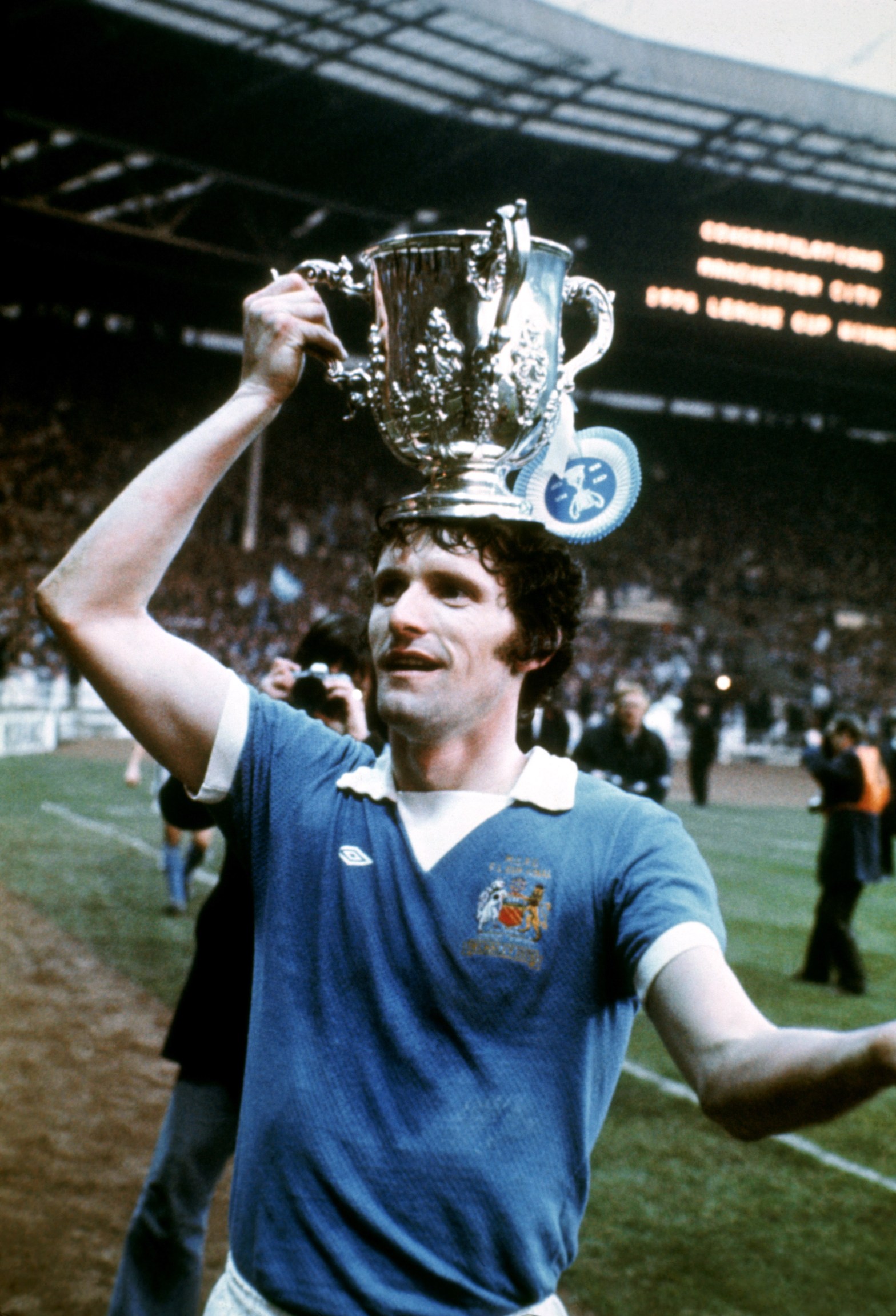
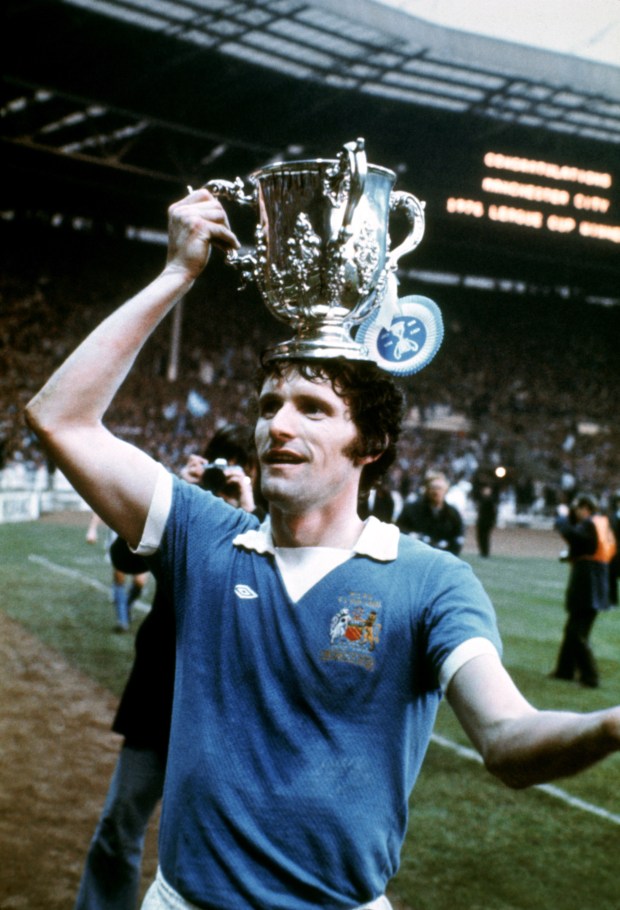
Manchester City’s Mike Doyle celebrates with the League Cup (PAPhotos/Alamy)
Manager Tony Book, who became the first man to win the trophy as a player and as a manager, was delighted with City’s 2-1 win: ‘This was my greatest moment. It was a tremendous final and Tueart’s goal was something special… quite out of this world.’
On the Sunday, City returned home to an incredible tour of Manchester. It was a great day of celebration, and the final would be shown on ITV later that day. In the days before the League Cup was shown live on television, this gave those unable to get a ticket the chance to see the game for the first time.
Match Stats
28 February 1976
Manchester City 2 (Barnes & Tueart)) Newcastle United 1 (Gowling)
Attendance 100,000
If you enjoy all the free material on my website and would like to support my research and keep this website going (but don’t want to subscribe) then why not make a one-time donation (or buy me a coffee). All support for my research is valued and welcome. It allows me to keep some free material available for all. Thanks.
You can read more on the 1975-76 season with this 5,320 word article – a season which saw Tony Book guide the club to major success. If you want to know more on this incredible decade for Manchester City Football Club then why not subscribe and read it all? You could even subscribe for a month and see what you think. The following 5,320 word article is on the 1975-76 season and is available to subscribers below. Enjoy!
Subscribe to get access – Monthly
Read more of this content when you subscribe today. It costs £3 per month (cancel anytime) to access everything posted since 1 October 2022 or there’s a special annual rate below which gives greater access and works out much cheaper.
Read more of this content when you subscribe today. It costs £3 per month (above) or £20 a year (here) to access everything posted since the site was created in December 2020. This special rate works out about £1.67 a week and gives access to everything posted, including PDFs of 3 of my books.
If you enjoy all the free material on my website and would like to support my research and keep this website going (but don’t want to subscribe) then why not make a one-time donation (or buy me a coffee). All support for my research is valued and welcome. It allows me to keep some free material available for all. Thanks.
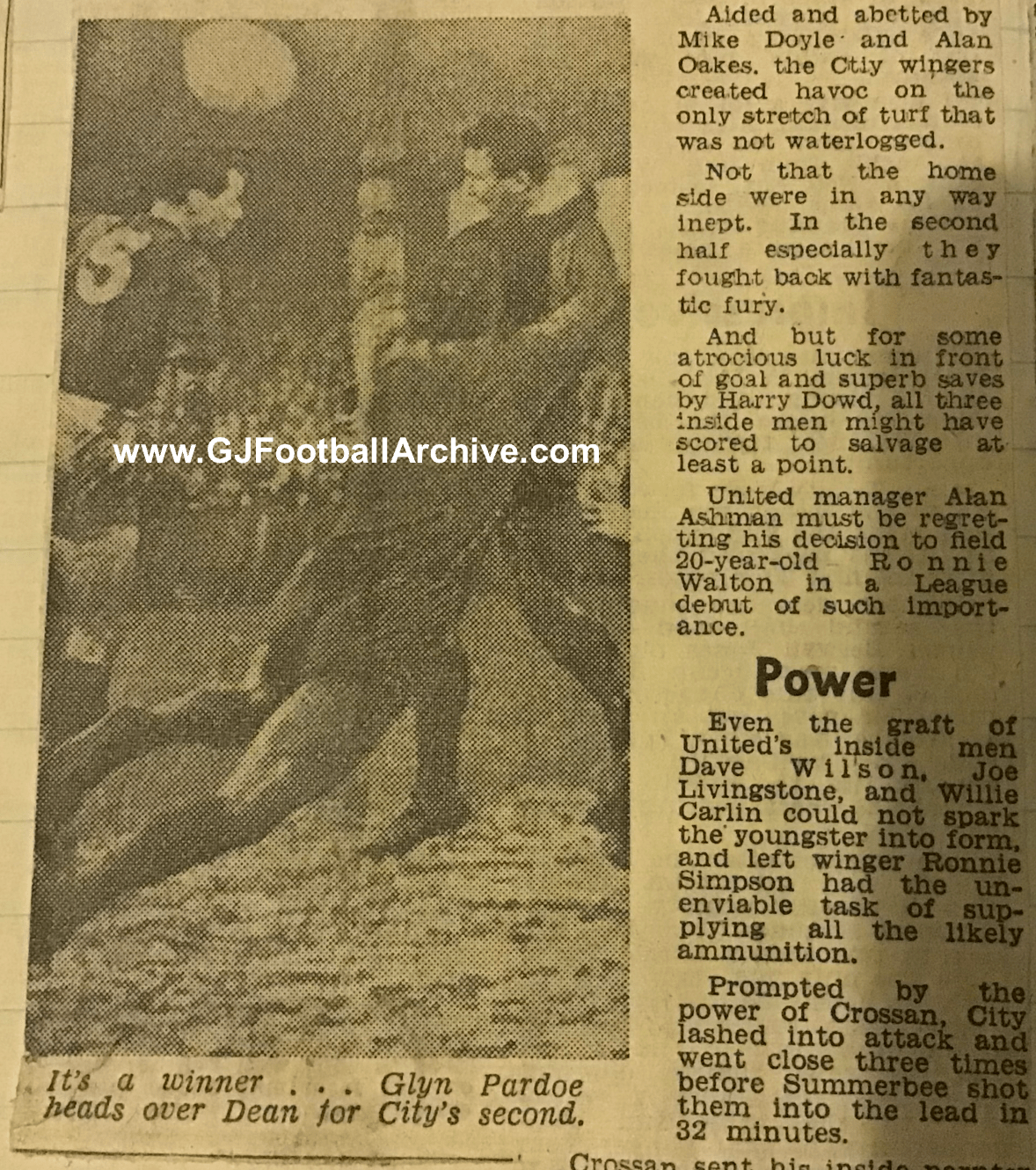
Today (26 February) in 1966 goals from Mike Summerbee and Glyn Pardoe gave City a 2-1 win at Carlisle. Were you there that day? If you were please feel free to add your comments. Here for subscribers is a contemporary match report from this game:
Subscribe to get access
Read more of this content when you subscribe today. It costs £3 per month (cancel anytime) or sign up for a year at a time at a discounted price of £20 per year. This gives access to every article, book, interview etc. posted to the site so far. Why not sign up for a month and see what you think?
You can find out more on Manchester City during the 1965-66 season by reading the following 4100 word article. As with most of the other features in this series it includes words from interviews I have performed with those who were there. This is a subscriber article (see below).
Subscribe to get access
Read more of this content when you subscribe today. It costs £3 per month (cancel anytime) or sign up for a year at the discounted price of £20 per year (works out £1.67 per month). Subscribers access the 1000+ articles posted so far and the others scheduled during the life of your subscription.
If you enjoy all the free material on my website and would like to support my research and keep this website going (but don’t want to subscribe) then why not make a one-time donation (or buy me a coffee). All support for my research is valued and welcome. It allows me to keep some free material available for all. Thanks.
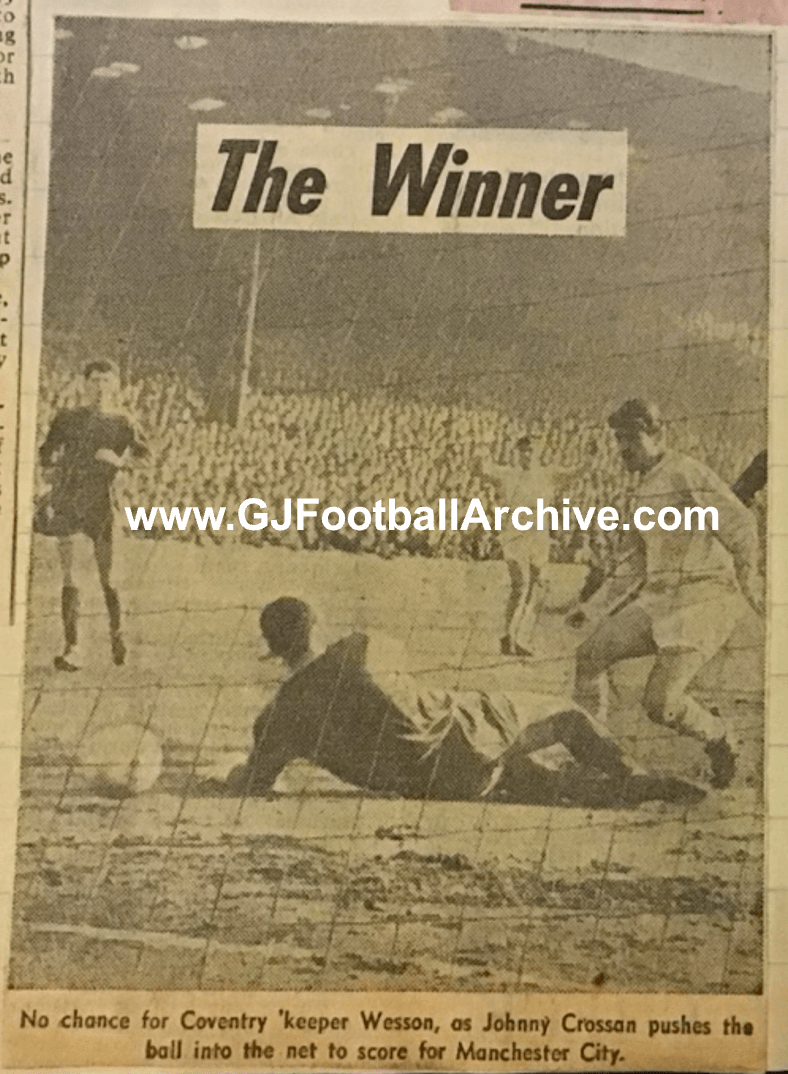
Today (19 February) in 1966 a goal from captain Johnny Crossan brought City a 1-0 win over Jimmy Hill’s Coventry City and prompted City boss Joe Mercer to say that his side were not good enough for promotion. He was joking after some criticism that day and was able to point to the League table which showed City top of the Second Division. Were you at Maine Road that day? If you were please feel free to add your comments. Here for subscribers is a contemporary match report from this game:
Subscribe to get access
Read more of this content when you subscribe today. It costs £3 per month (cancel anytime) or sign up for a year at a time at a discounted price of £20 per year. This gives access to every article, book, interview etc. posted to the site so far. Why not sign up for a month and see what you think?
You can find out more on Manchester City during the 1965-66 season by reading the following 4100 word article. As with most of the other features in this series it includes words from interviews I have performed with those who were there. This is a subscriber article (see below).
Subscribe to get access
Read more of this content when you subscribe today. It costs £3 per month (cancel anytime) or sign up for a year at the discounted price of £20 per year (works out £1.67 per month). Subscribers access the 1000+ articles posted so far and the others scheduled during the life of your subscription.
If you enjoy all the free material on my website and would like to support my research and keep this website going (but don’t want to subscribe) then why not make a one-time donation (or buy me a coffee). All support for my research is valued and welcome. It allows me to keep some free material available for all. Thanks.
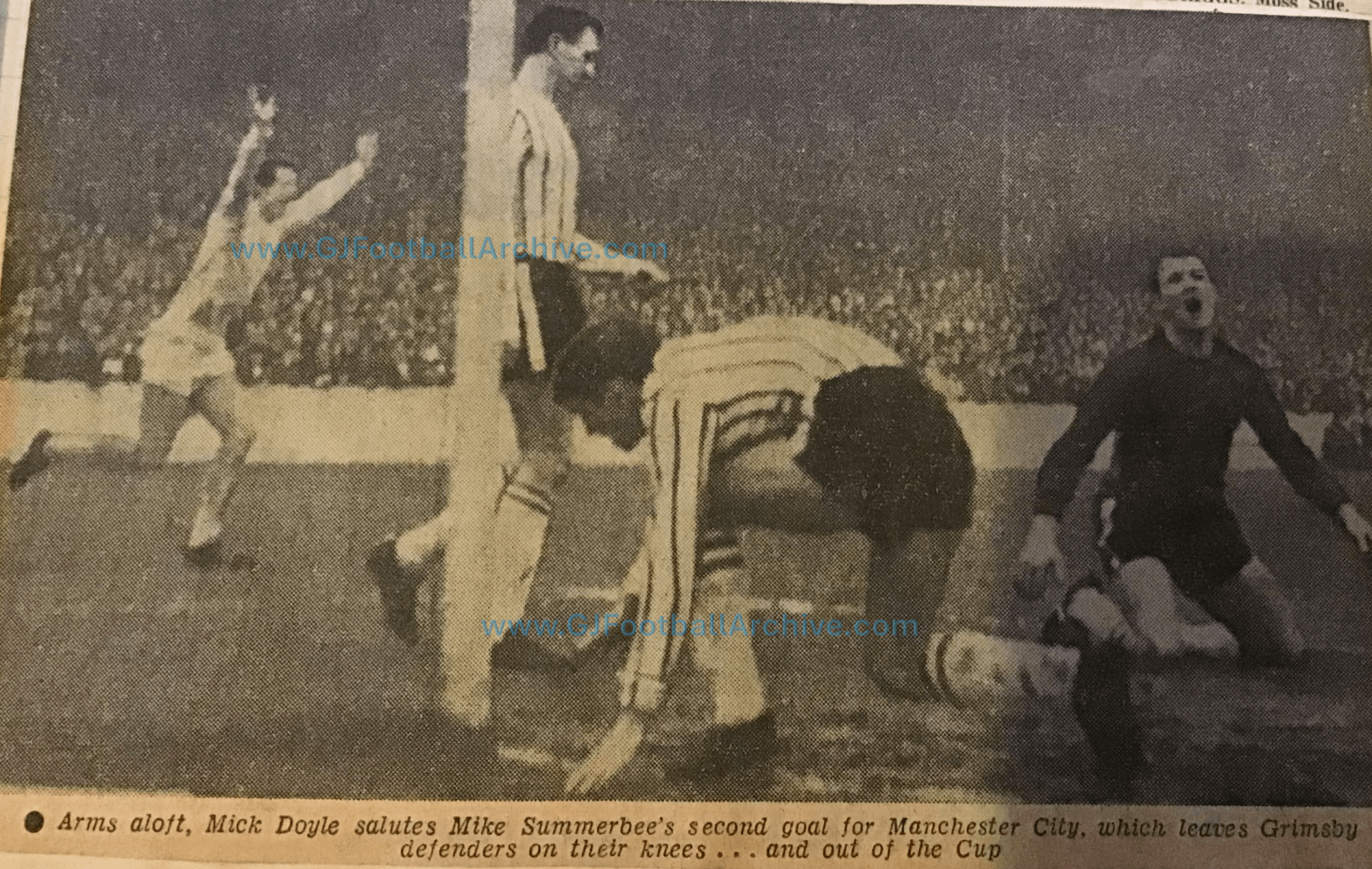
Today (12 February) in 1966 a goal from Mike Summerbee and an own goal brought City a 2-0 FA Cup win over Grimsby Town. The victory brought great praise City’s way. Were you at Maine Road that day? If you were please feel free to add your comments. Here for subscribers are match reports from this game:
Subscribe to get access
Read more of this content when you subscribe today. It costs £3 per month (cancel anytime) or sign up for a year at a time at a discounted price of £20 per year. This gives access to every article, book, interview etc. posted to the site so far. Why not sign up for a month and see what you think?
You can find out more on Manchester City during the 1965-66 season by reading the following 4100 word article. As with most of the other features in this series it includes words from interviews I have performed with those who were there. This is a subscriber article (see below).
Subscribe to get access
Read more of this content when you subscribe today. It costs £3 per month (cancel anytime) or sign up for a year at the discounted price of £20 per year (works out £1.67 per month). Subscribers access the 1000+ articles posted so far and the others scheduled during the life of your subscription.
If you enjoy all the free material on my website and would like to support my research and keep this website going (but don’t want to subscribe) then why not make a one-time donation (or buy me a coffee). All support for my research is valued and welcome. It allows me to keep some free material available for all. Thanks.

 Gary James' Football Archive