Ardwick Association Football Club

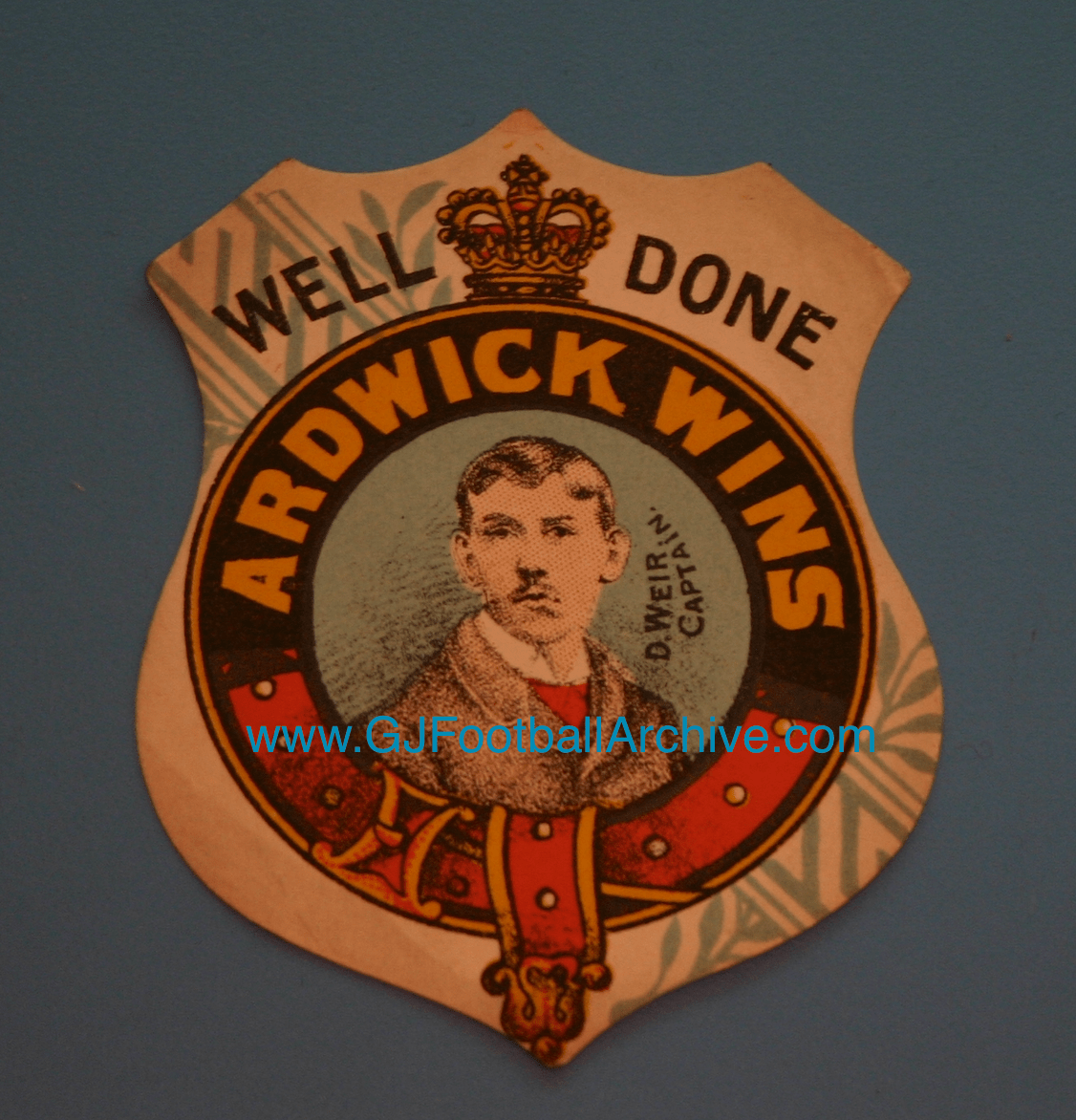
The other week I posted this card from John Baines (he used to produce these cards in Bradford, West Yorkshire) featuring Ardwick AFC’s captain Davie Weir. It made me realise that perhaps I should post more on the Ardwick years of City and so here’s a small piece on the birth of Ardwick in 1887. That year was to prove perhaps the most important year of the decade as far as the club was concerned. Gorton AFC’s leaders decided in which direction the Club should go after spending a couple of seasons playing at the Bull’s Head in Reddish Lane, on the very edge of Gorton.  This was really as far away from the Club’s Clowes Street origins as the side could go while remaining in Gorton. The Club’s identity was in danger of disappearing.  

Association Football was becoming more popular in the area and sides, such as Newton Heath, were beginning to progress, winning trophies such as the Manchester Cup.  Professionalism was beginning to develop and Gorton had to decide on whether their future was to be as a good local side, such as a modern day pub team, or as a professional outfit.

The decision was taken to become a progressive and professional outfit.  The committee also wanted Gorton to return to their Clowes Street roots.  They recognised that this was not entirely possible – Clowes Street remained one of Manchester’s most densely populated areas – but they did manage to find an area of wasteland not too far away.  Legend tells us that Club Captain Kenneth McKenzie lived in Bennett Street, Ardwick, and every lunchtime he would take a short cut from Bennett’s Timber Yard, off Hyde Road, through the L&NWR railway arches, and across the wasteland to Bennett St.  He believed that with a little effort this land could become Gorton’s home.

After a great deal of effort and negotiation with the railway company which owned the land the pitch was ready for its first match by the end of August 1887.  In addition, steps were taken to relaunch the Club.  The name of Ardwick AFC was chosen as the new ground was just within the boundaries of Ardwick and not Gorton, although it has to be stressed that this ground was closer to Clowes Street than any other Gorton venue used by the Club after its first season.

The nearby Hyde Road Hotel became Ardwick’s headquarters.  Stones from this building, demolished in 2002, formed part of the Club’s Memorial Garden at the City Of Manchester Stadium when it was opened.

Gradually Ardwick increased their support and it’s fair to say that by the summer of 1888 Ardwick were Manchester’s most popular club, or at least on a par with Newton Heath.  In 1889 Ardwick built a grandstand capable of holding 1,000 spectators, and for the sum of £5 15s the club’s first pay box – turnstile was not an appropriate name – was erected.  
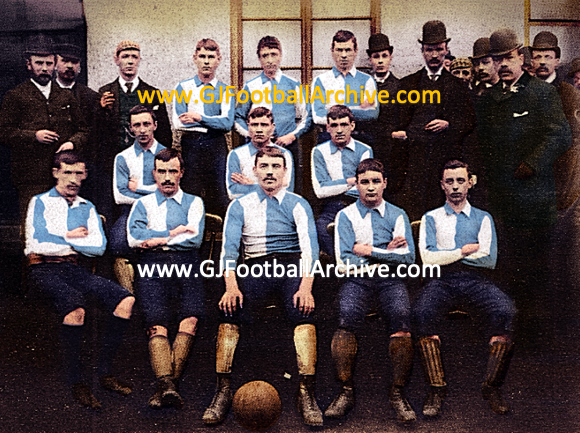
From that point on the side grew at a rapid rate and managed to recruit several good quality and well known players.  Perhaps the best known at the time was Davie Weir (seen on the card at the top of this page) who joined Ardwick in May 1890.  Often described as individualistic, Weir was an England international when he arrived at Hyde Road after playing in the 6-1 victory over Ireland in March 1889 and a 3-2 defeat by Scotland the following April.  Against Scotland he was credited with scoring England’s second goal, although there remains some dispute as to who got the final touch.

At City Weir played as a forward, but he had previously been known for fulfilling a variety of roles most notably centre-half.  Football was still developing of course, but the key point concerning Weir’s pre-Ardwick days is that he was known as a great goalscorer whatever position he played at Bolton.  He’d only missed one match during Bolton’s first two seasons of League football, and had netted a 21 goals in 43 League games.  During 1889-90 season he scored an incredible 10 goals in only 4 FA Cup ties.  Clearly for Weir – a player only in his late twenties – to leave League side Bolton to join a side that had yet to compete in any formal league says a great deal about the ambition of Ardwick.

At Hyde Road Weir was immediately popular and he netted two hat-tricks in his first four games.  He also scored the first Ardwick goal in the FA Cup, and was a key member of the side that competed in the Alliance League in 1891-2.  His career also saw him feature in the Club’s first season in the Football League where he became Ardwick’s top goalscorer, despite returning to Bolton midway through the season in January 1893.

In later life he became the Glossop manager in 1909 and remained with the Division Two side until April 1911 when he was approached by Stuttgart to become their coach.  He passed away in November 1933 at the age of 70.
Missing: A City Blue Plaque

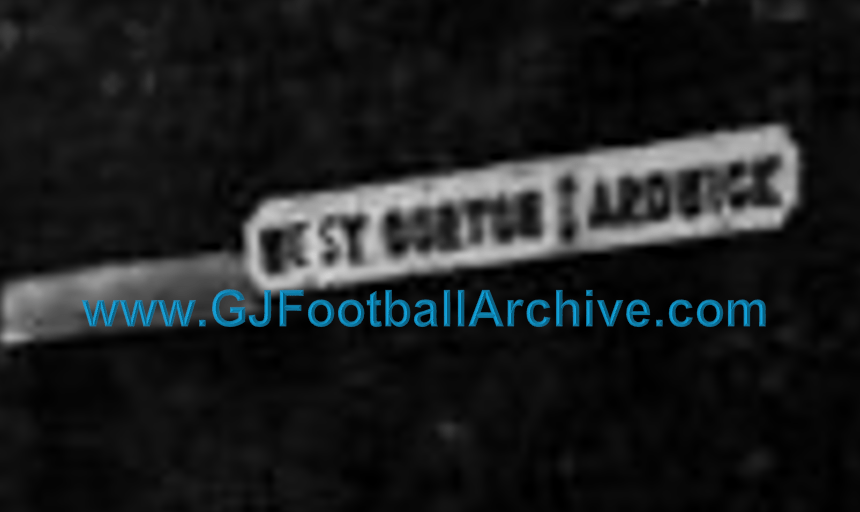
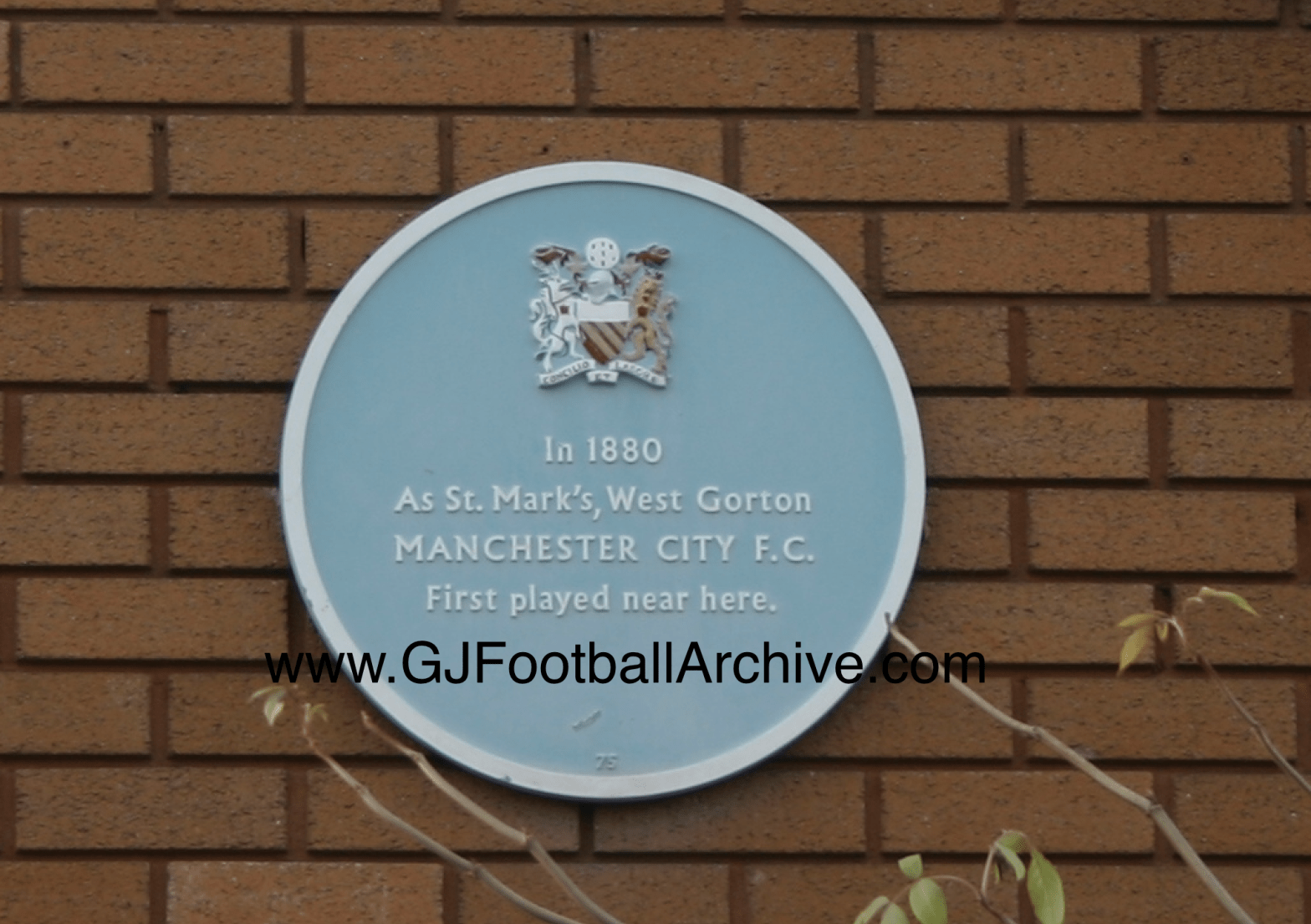
There are not many blue plaques in Manchester dedicated to football – There’s the Manchester Corinthians blue plaque (see elsewhere on this site for details of the campaign); the Football League first meeting (a red plaque); Newton Heath’s first pitch (a red plaque which is the standard colour for Manchester sites); the Fallowfield FA Cup final (black if I remember right) and that’s about it. Oh, there’s also the Bank Street plaque for United’s former home (just behind the velodrome/BMX centre). There used to be one to mark Manchester City’s birth positioned on the Aces public house close to Clowes Street in West Gorton BUT this vanished shortly after the pub closed many years ago. This image shows the plaque as it looked when I took this photo in the early 2000s. It’s seeing this plaque years ago that first got me thinking about marking footballing sites in Manchester.

What happened to it? It was obviously stolen but where is it today?

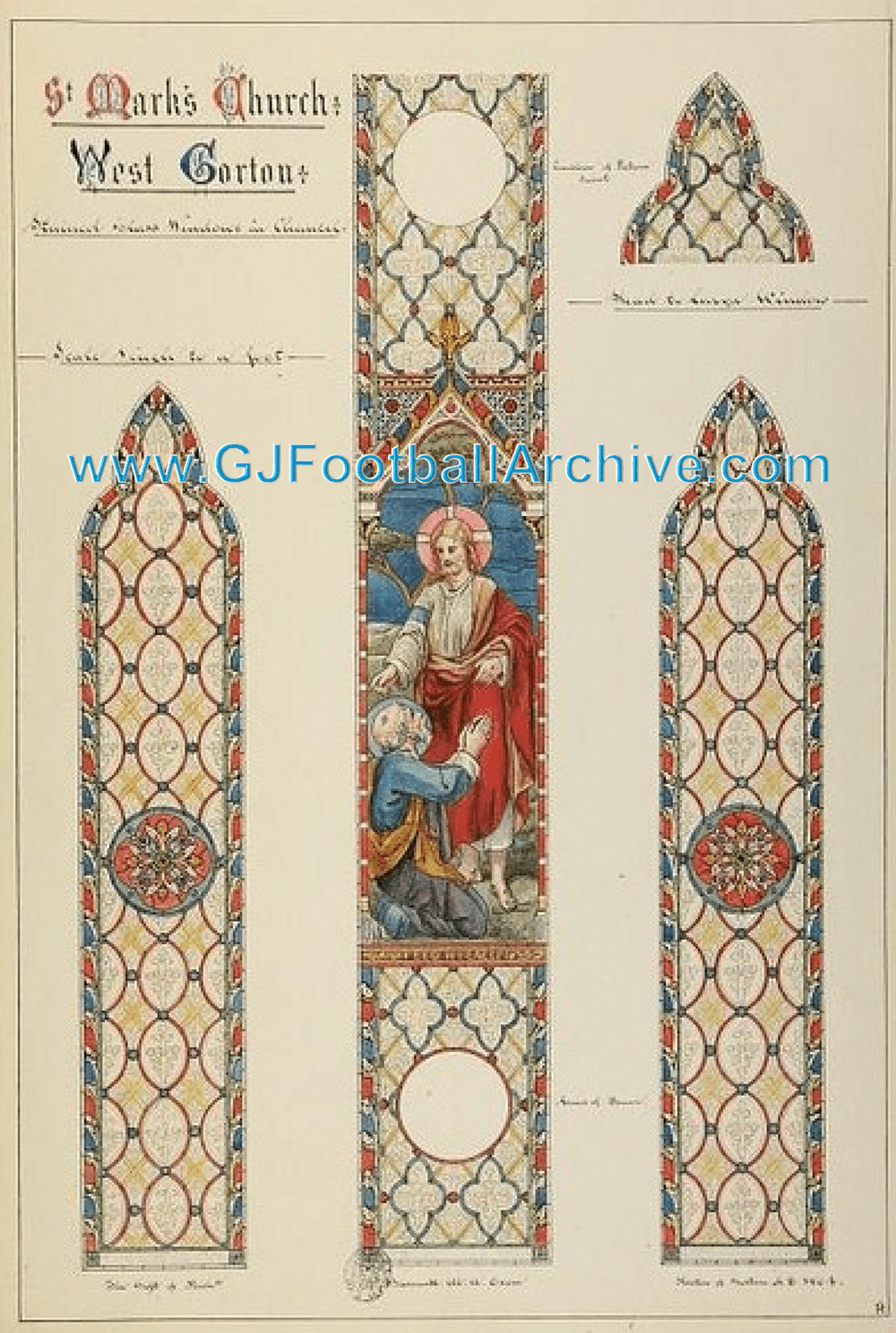
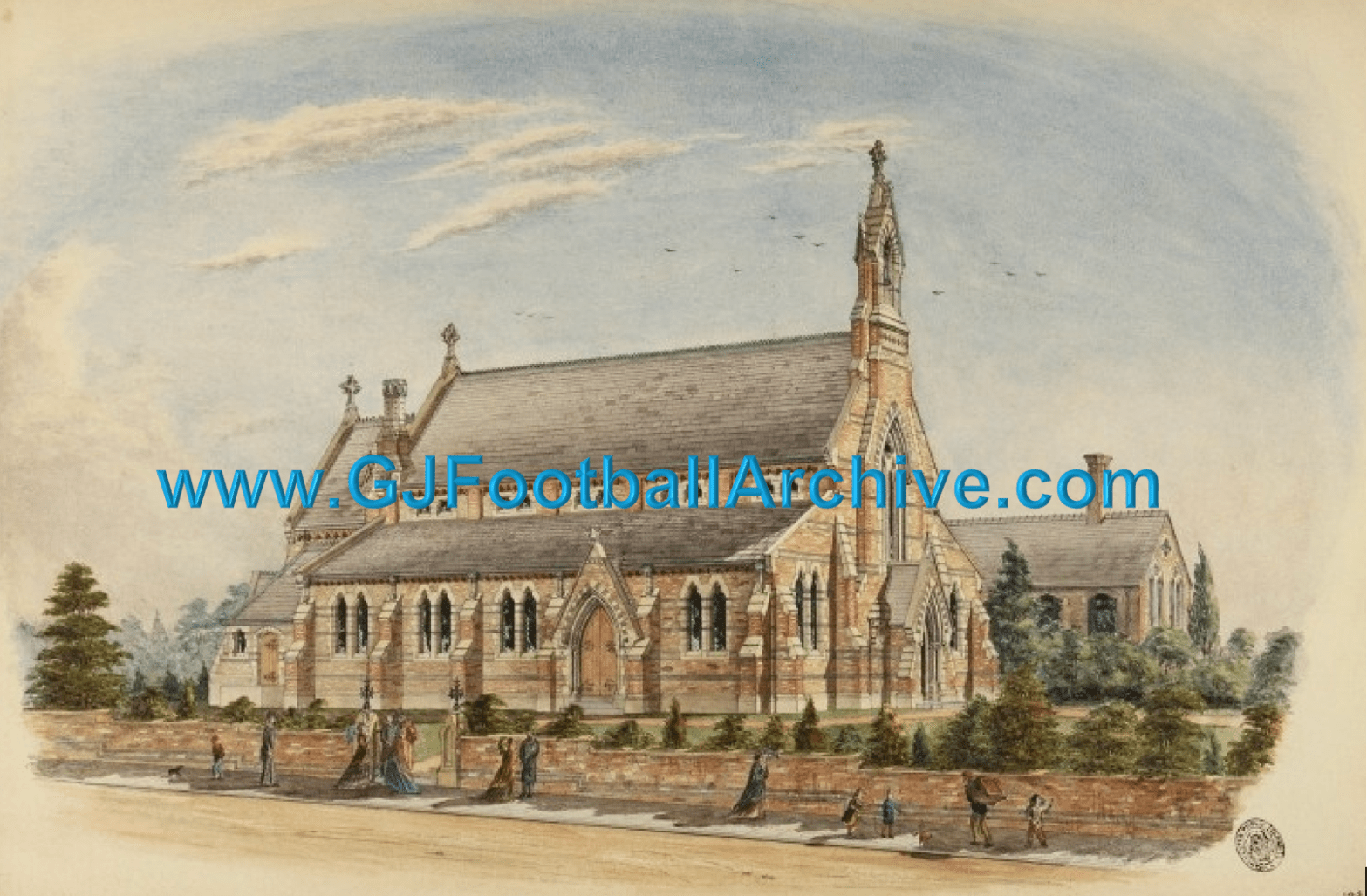
It was positioned incorrectly and should have been a few streets away to mark the actual first pitch of St Mark’s or maybe even the church itself.

If anyone knows where this plaque is today then please get in touch. Incidentally, I think the plaque marking United’s Newton Heath birth is missing too but I’ve not checked on it recently.

There are other plaques around Greater Manchester connected with football, for example the one at Stalybridge for Bert Whalley (again, see elsewhere on the site for the details of that).

The Origins Of Manchester City: The Late 1870s

Continuing here: the story of Manchester City’s origins. Today’s feature is on the late 1870s. Association football clubs were in existence in Manchester during this period and the steps that led to the formation of St Mark’s West Gorton occurred too. Below is a 2,500+ word article on that period and the latest part of a series looking at Manchester City’s origins prior to 1890.

Already there are seasonal articles on every season from 1890-91 (Ardwick) through to 2009-10 and now, throughout February, I’ll be adding the history of the Club prior to 1890. I’ll be telling via a series of articles the story of key individuals/origins/moments that contributed to the establishment of a football club. The series continues below with this feature on the late 1870s.

Subscribe to get access

These articles will be available to subscribers to this site. It costs £3 per month (cancel any time) or sign up for a year for the discounted price of £20 per year (works out about £1.67 a month to access every article on this site). To date in excess of 1,500 articles/features have been posted including interviews, talks and more.

The Origins Of Manchester City: The Early 1870s

Continuing here: the story of Manchester City’s origins. Today’s feature is on the early 1870s. Association football clubs were starting to develop in Manchester, although the clubs that led to the formation of Manchester City were still a few years off. Below is a 1000+ word article on that period and the latest part of a series looking at Manchester City’s origins prior to 1890.

Already there are seasonal articles on every season from 1890-91 (Ardwick) through to 2009-10 and now, throughout February, I’ll be adding the history of the Club prior to 1890. I’ll be telling via a series of articles the story of key individuals/origins/moments that contributed to the establishment of a football club. The series continues below with the second feature on the early 1870s.

Subscribe to get access

These articles will be available to subscribers to this site. It costs £3 per month (cancel any time) or sign up for a year for the discounted price of £20 per year (works out about £1.67 a month to access every article on this site). To date in excess of 1,500 articles/features have been posted including interviews, talks and more.

The Origins Of Manchester City: The 1860s

Continuing here: the story of Manchester City’s origins. Today’s feature is on the 1860s. As I’ve mentioned previously, this was before association football clubs were in existence in East Manchester but steps were taken in the this decade that would ultimately lead to the establishment of teams in West Gorton. Below is a 1500+ word article on that period and the second part of a series looking at Manchester City’s origins prior to 1890.

Already there are seasonal articles on every season from 1890-91 (Ardwick) through to 2009-10 and now, throughout February, I’ll be adding the history of the Club prior to 1890. I’ll be telling via a series of articles the story of key individuals/origins/moments that contributed to the establishment of a football club. The series continues below with the second feature on the 1860s.

Subscribe to get access

These articles will be available to subscribers to this site. It costs £3 per month (cancel any time) or sign up for a year for the discounted price of £20 per year (works out about £1.67 a month to access every article on this site). To date in excess of 1,500 articles/features have been posted including interviews, talks and more.

The Origins Of Manchester City: The 1850s

Starting here: the story of Manchester City’s origins, beginning with the 1850s. This was many years before association football clubs were in existence in East Manchester but steps were taken in the 1850s that would ultimately lead to the establishment of teams in West Gorton. Below is a 1000+ word article on that period and the first part of a series looking at Manchester City’s origins prior to 1890.

Already there are seasonal articles on every season from 1890-91 (Ardwick) through to 2009-10 and now, throughout February, I’ll be adding the history of the Club prior to 1890. I’ll be telling via a series of articles the story of key individuals/origins/moments that contributed to the establishment of a football club. The series starts below with the first feature on the 1850s.

Subscribe to get access

These articles will be available to subscribers to this site. It costs £3 per month (cancel any time) or sign up for a year for the discounted price of £20 per year (works out about £1.67 a month to access every article on this site). To date in excess of 1,500 articles/features have been posted including interviews, talks and more.