On this day (5 September) in 1927 legendary Manchester City coach Malcolm Allison was born. To commemorate that day and remember his life here’s a 2500+ word article for subscribers on the great man. Enjoy! The article includes comments from a variety of interviews I have performed. Allison’s views on then young footballer Shaun Wright-Phillips are captured and comments from various people who know Allison well are included.
Subscribe to get access – Annual
Read more of this content when you subscribe today. It costs £20 per year (equivalent to about £1.67 a month) to subscribe annually or if you’d prefer a month at a time then it’s £3 per month (see below). Annual subscribers access all the interviews, books, articles and features posted here since the site was launched in December 2020.
Read more of this content when you subscribe today. It costs £3 per month (cancel any time) or £20. a year (see above). Monthly subscribers access all the interviews, books, articles and features posted here since 1st October 2022.
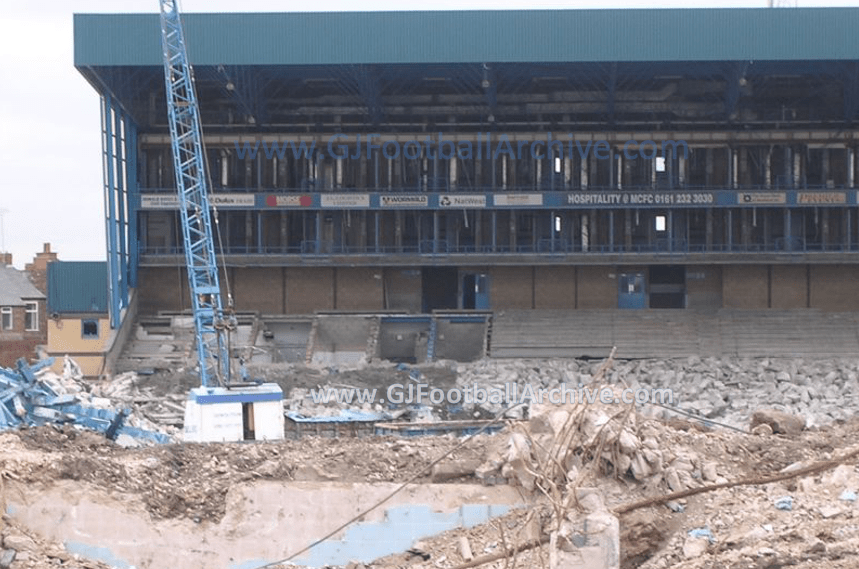
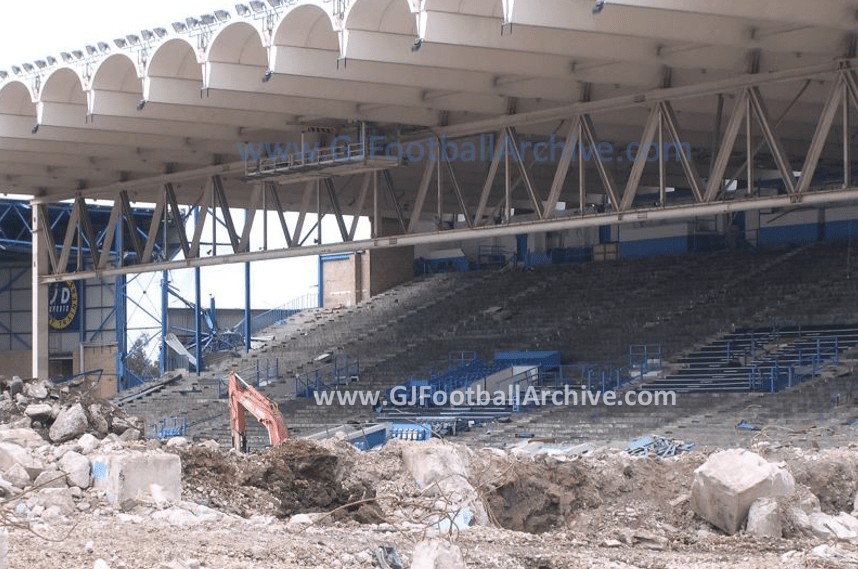
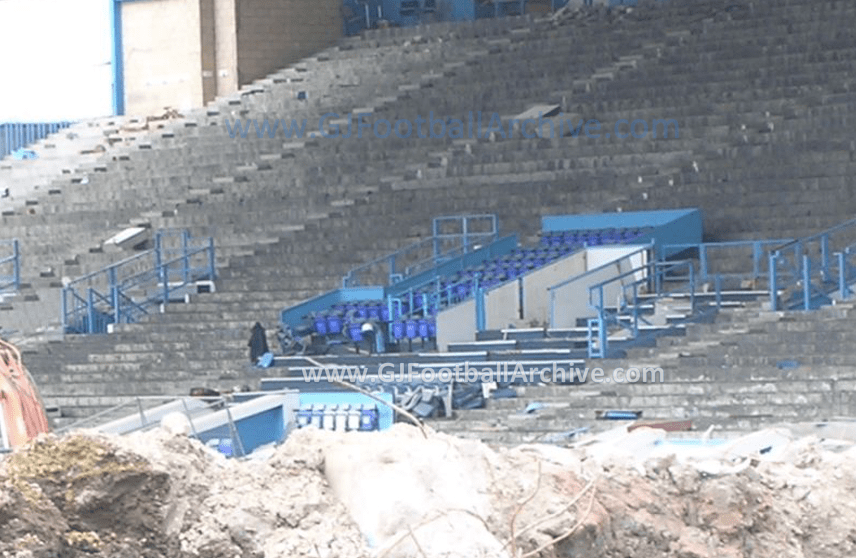
It’s day 39 of my posts counting down to the centenary of Maine Road’s opening game and today’s feature follows on from yesterday’s. It’s the demolition of the Platt Lane Stand during 2003-04.
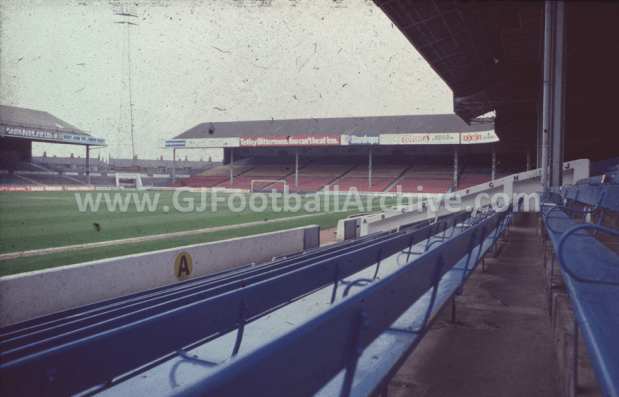
Here are some images of that end at other times. This was the 1935 version of the stand:
The Main Stand’s benches with the Platt Lane Stand’s maroon and yellow benches in the backgroundThe Platt Lane Stand, 1991
Here’s the 1930s stand during demolition in 1992:
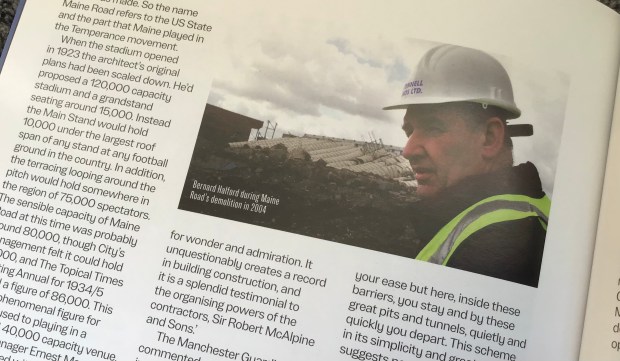
I went with club photographer Ed Garvey and secretary Bernard Halford to have a look at the old place in 2004 as it was being demolished. It was a sad sight.
During the 2022-23 season I did a feature on Maine Road for the match programme at City and included a photo of Bernard Halford from our visit.
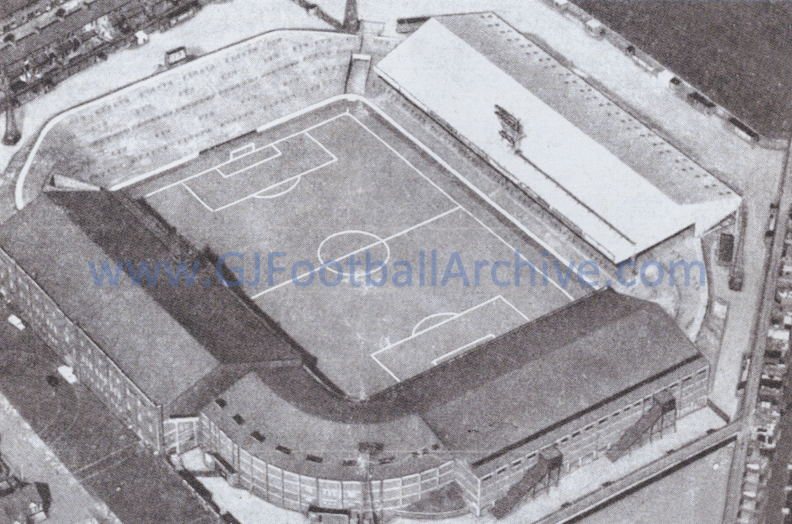
For those unfamiliar with Maine Road this photo may help locate the Platt Lane Stand. The 1930s stand is number 4 & 5 on this image taken in 1971.
Maine Road aerial 1971 from Farewell To Maine Road
If you’d like to read more on the history of Maine Road, take a look at Farewell To Maine Road, which can be downloaded from this page:
If you enjoy all the free material on my website and would like to support my research and keep this website going (but don’t want to subscribe) then why not make a one-time donation (or buy me a coffee). All support for my research is valued and welcome. It allows me to keep some free material available for all. Thanks.
It’s day 38 of my posts counting down to the centenary of Maine Road’s opening game and today’s feature is of a sad scene: The demolition of the Main Stand during 2003-04. Apologies but it had to be shown one day.
I went with club photographer Ed Garvey and secretary Bernard Halford to have a look at the old place in 2004 as it was being demolished. It was a sad sight.
Ed Garvey photographThe directors’ box during demolition 2004. Ed Garvey photograph
During the 2022-23 season I did a feature on Maine Road for the match programme at City and included a photo of Bernard Halford from our visit.
Ed Garvey photographEd Garvey photograph
Warning: tomorrow I’ll post another demolition image.
For those unfamiliar with Maine Road this photo may help locate the Main Stand. It’s number 1 on this image taken in 1971.
Maine Road aerial 1971 from Farewell To Maine Road
If you’d like to read more on the history of Maine Road, take a look at Farewell To Maine Road, which can be downloaded from this page:
If you enjoy all the free material on my website and would like to support my research and keep this website going (but don’t want to subscribe) then why not make a one-time donation (or buy me a coffee). All support for my research is valued and welcome. It allows me to keep some free material available for all. Thanks.
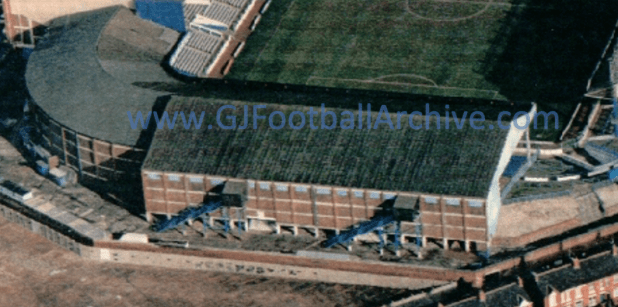
It’s day 32 of my posts counting down to the centenary of Maine Road’s opening game. Today – A behind the Kippax image from 1993. This photo has so much going on despite it looking fairly bland. I’ll explain:
When the Kippax was roofed in 1957 the original terracing had to be squared off and so, instead of reducing the terracing City decided to extend it where its started to curve. You can see in this image that the end of the stand is on stilts/stanchions over the original banking where it was extended.
At the time the stand was enlarged in 1957 local residents objected to it. Some claimed they’d lost TV signal and were no longer able to get Granada TV which had started broadcasting in May 1956.
When this photo was taken in 1993 that area was for away fans and if you look carefully you can see the segregation fence to the left of the tunnel and going up the banking.
The tunnel and steps in the foreground of the photo are the original 1923 construction but these steps were no longer in use as an entry point. They were blocked off at the top and tended to be used as a seating area by fans instead. They’d been blocked off after the Ibrox Stadium disaster in 1971 when steps like these had to be remodelled to prevent a build up of fans flowing down at speed. This staircase was not altered but others were and remained in use.
Notice also the paved slope. This had been a simple slope of grass and rubble (as can be seen on the 1971 image lower down this page) for most of the stand’s life but general crowd disorder at football had led to City deciding to pave this section to prevent fans from grabbing stones and lobbing them over the segregation fence at rival fans. When I spoke with Bernard Halford many years ago, he was quite proud of this ‘flagging’ of the slope and said it did prevent some significant issues which could have had repercussions for the club.
This image from 1961 shows this part of the extended/squared off Kippax to the right of the photo.
Here’s a view from 1971 showing the back of the Kippax as it looked. The away staircase is to the left of number 8 and to the left of that you can see the squared off part of the stand on stilts. The staircase that is on the 1993 image is the one between 7 and 8 below.
Maine Road aerial 1971 from Farewell To Maine Road
If you’d like to read more on the history of Maine Road, take a look at Farewell To Maine Road, which can be downloaded from this page:
If you enjoy all the free material on my website and would like to support my research and keep this website going (but don’t want to subscribe) then why not make a one-time donation (or buy me a coffee). All support for my research is valued and welcome. It allows me to keep some free material available for all. Thanks.
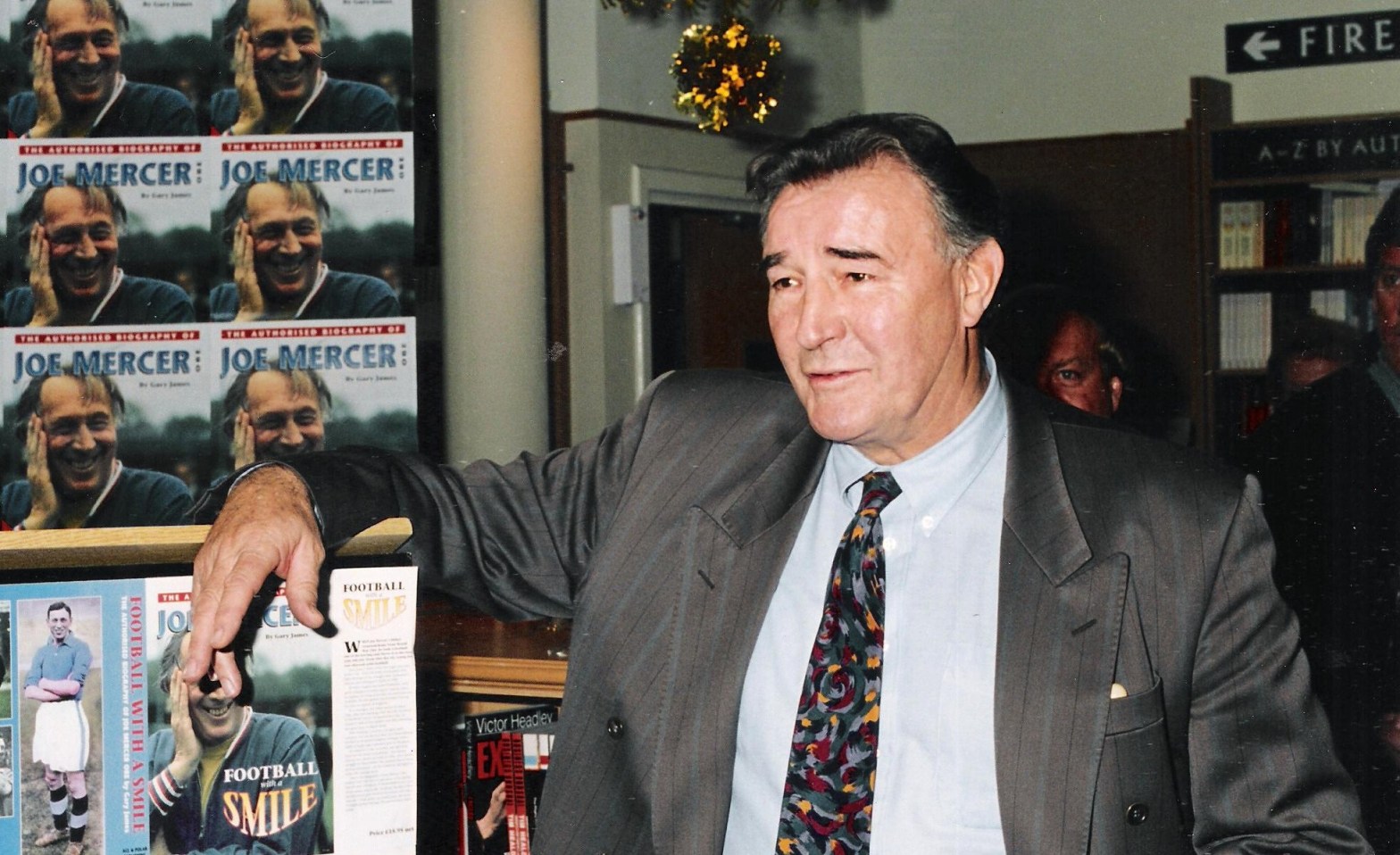
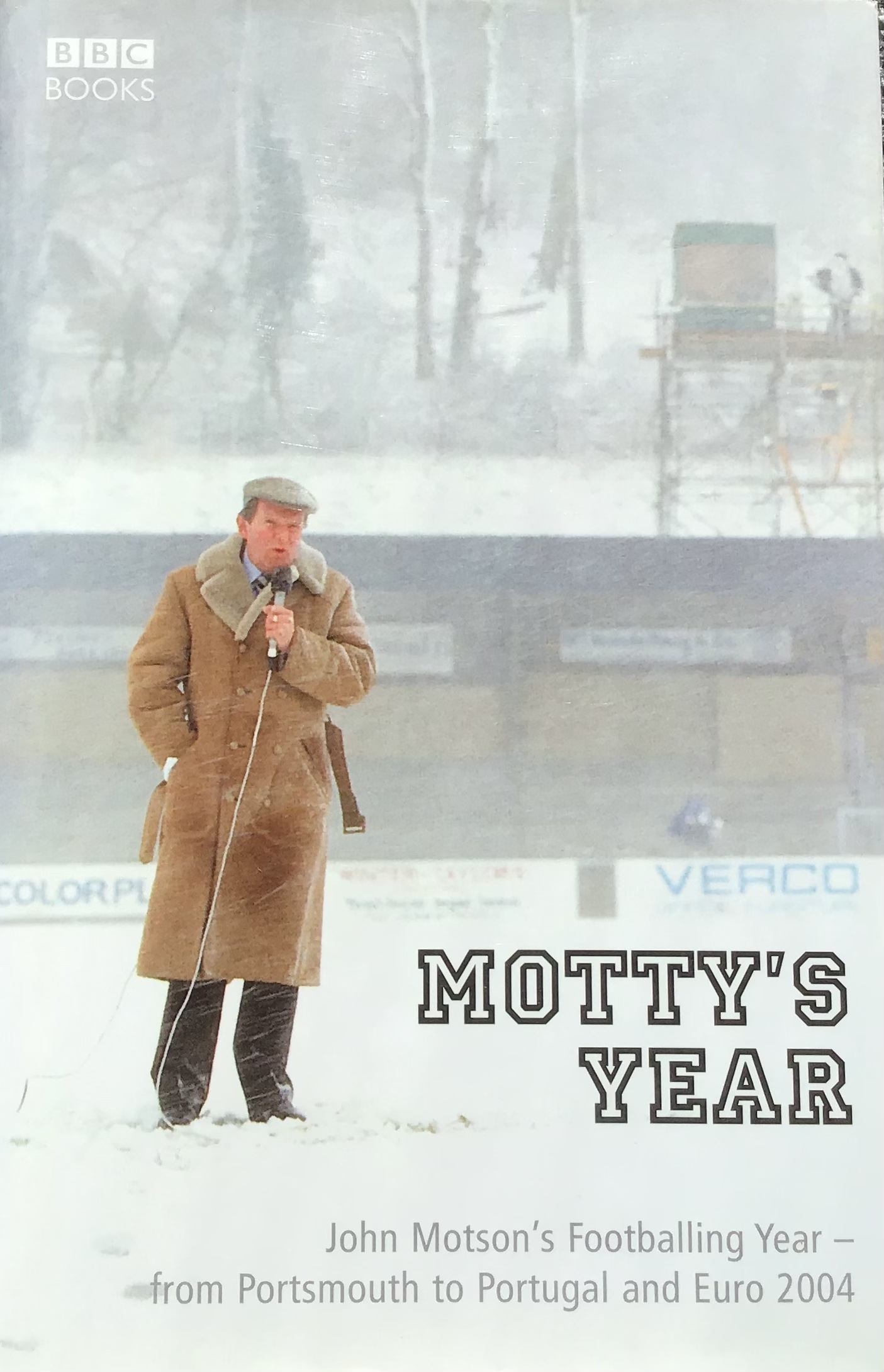
Sorry to hear the news about John Motson, who has died. I’ve several Motty anecdotes that I’ll always cherish. I wrote to him over 30 years ago about Joe Mercer not really expecting a reply but he phoned me up at 10.30pm to share his memories. Wonderful stuff though it did initially worry me that someone was phoning from a number I didn’t recognise at that time. I answered the phone thinking that there could be some sort of family emergency only to hear the voice on the other end say: ‘Is that Gary James? This is John Motson. How are you doing old boy?’
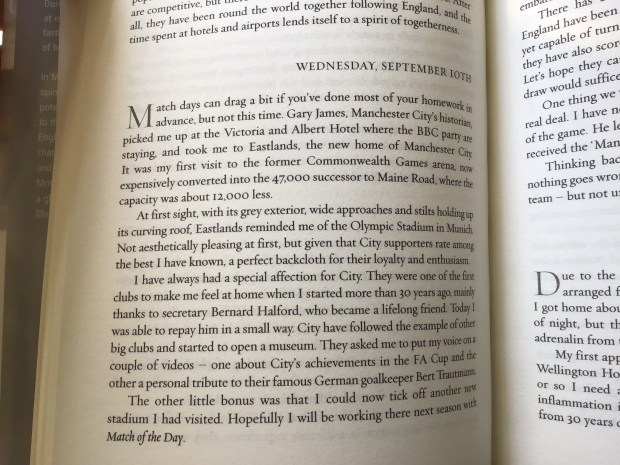
Another time there was also a surreal moment when I drove him to his 1st visit to the COM Stadium (now Etihad of course). I’d asked him to do some voice over work for the new MCFC museum – I was project managing the development as a freelance consultant. Throughout the 20 mins journey he bombarded me with statistical questions before I managed to divert his attention on to a few of his anecdotes. I’d never been questioned so much on long lost players and records. That journey even made it into Motty’s book….
A page from Motty’s Year. John Motson’s book.
Though he didn’t reveal how he’d kept me on my toes throughout the journey and our meeting that day!
The recordings we were due to do that day were delayed considerably as I’d invited City’s Secretary Bernard Halford over for lunch. Bernard and Motty were great friends and they spent several hours talking about various people and clubs. It was a wonderful insight into how their minds worked.
When we did get around to do the recording John had a few questions about the scripts I’d written. There was one bit that he told me off about! I’d written about the 1981 FA Cup final when Tommy Hutchison scored both for City and against City. My words said something like: ‘Then tragedy struck as Hutchison diverted the ball into his own net.’ Motty looked at me and said: ‘Now then Gary. It wasn’t a tragedy.’ I replied something like: ‘It was to City. It cost us the game and everything that followed.’
‘Yes, but Gary that’s not a tragedy. Heysel’s a tragedy. Conceding a goal is a misfortune.’ Motty was of course absolutely right and while football is full of hyperbole ever since that day I’ve always tried to focus on the specific meaning of words like that. An own goal or defeat is a misfortune.
Thanks Motty for your help that day and on the other occasions over the decades we’ve chatted etc.
On this day (7 January) in 1977 the BBC in the northwest showed this incredible profile. On several occasions over the last decade myself & Will McTaggart have included this video profile of MCFC chairman Peter Swales in our Boys In Blue film show. Each time those who missed it have asked if they could see a video of it. That wasn’t possible until a few months ago. You can see the Swales profile here…
I would urge all MCFC fans and others to watch this in all its glory. Some of you may wish to jump to the David Brent-esque clip at 3 mins 20. Others may want to see the Ian Niven roof plan that was thwarted by signing Dave Watson at 1 min 45 secs. Then there’s the scene where Swales gives Watson financial advice (45 secs) and it ends with Swales telling us he was a bit like Kevin Keegan (4 mins).
Here it is online at last! On several occasions over the last decade myself & Will McTaggart have included a video profile of MCFC chairman Peter Swales in our Boys In Blue film show. each time those who missed it have asked if they could see a video of it. That’s never been possible until now! At long last you can now see the Swales profile here…
The BBC have included it in a series of films recently released. I would urge all MCFC fans and others to watch this in all its glory. Some of you may wish to jump to the David Brent-esque clip at 3 mins 20. Others may want to see the Ian Niven roof plan that was thwarted by signing Dave Watson at 1 min 45 secs. Then there’s the scene where Swales gives Watson financial advice (45 secs) and it ends with Swales telling us he was a bit like Kevin Keegan (4 mins).
On this day (July 16) in 1986 Queen played Maine Road. This was often considered to be the first major concert at Manchester City’s old stadium. However, it wasn’t. The first was actually a concert by David Cassidy in May 1974. This feature takes a look at that concert and the one by Queen which set the tone for legendary music performances at Maine Road.
Subscribe to get access
If you would like to read this and all the in-depth articles on this site (including the entire Manchester A Football History book) then please subscribe. It works out about £1.67 a month if you take out an annual subscription (£20 per year). Each subscriber gets full access to the 250+ articles posted so far and the hundreds scheduled to be posted in the coming year.







 Gary James' Football Archive