Manchester City 4 Mansfield Town 2

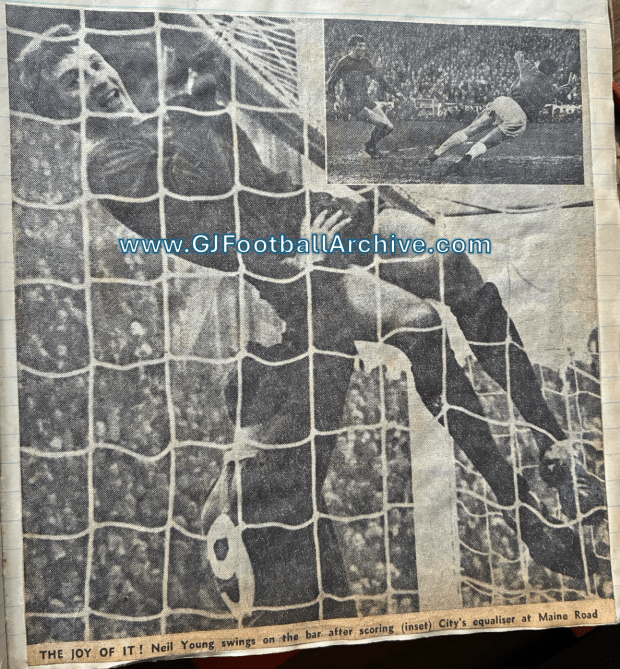
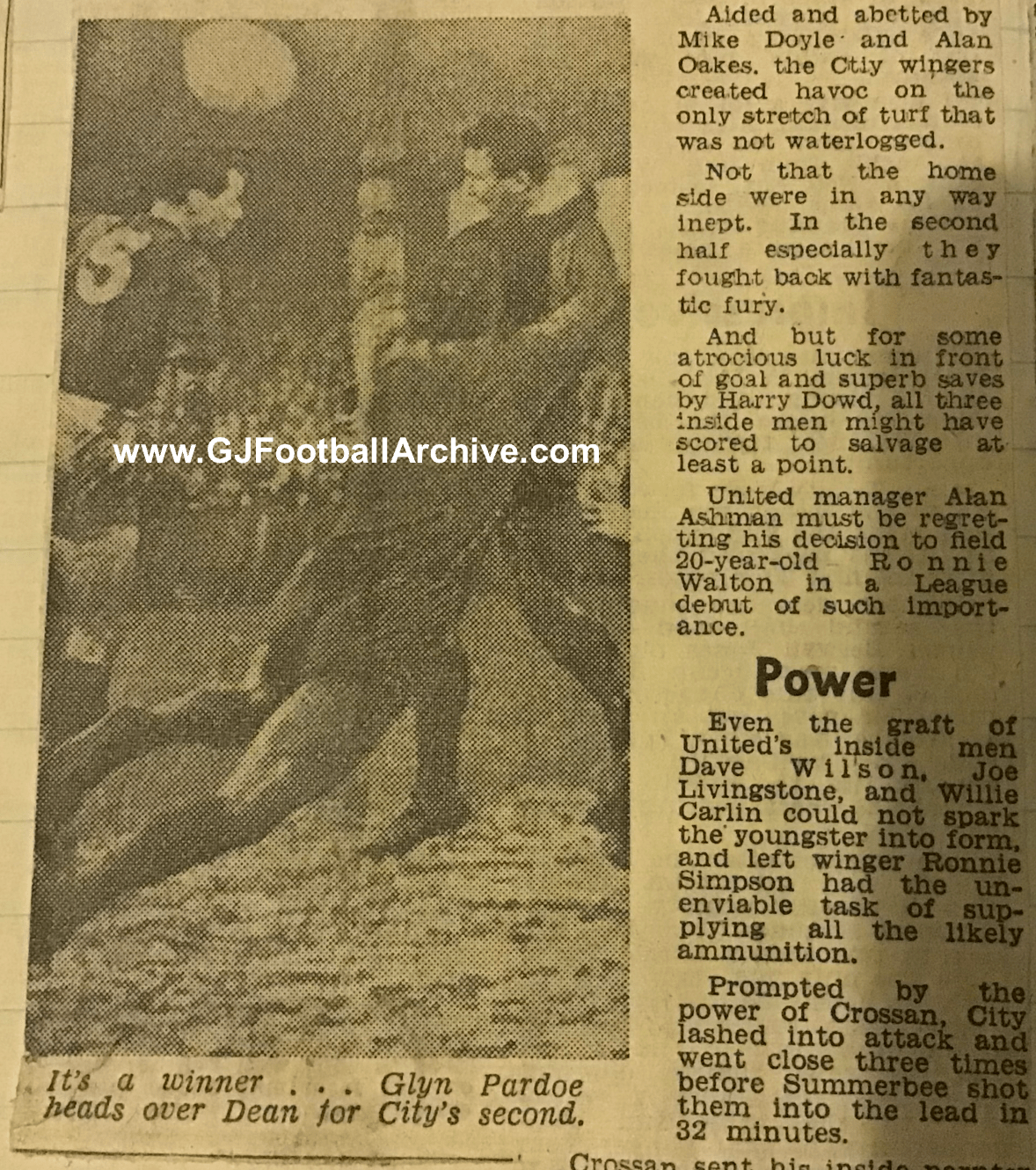
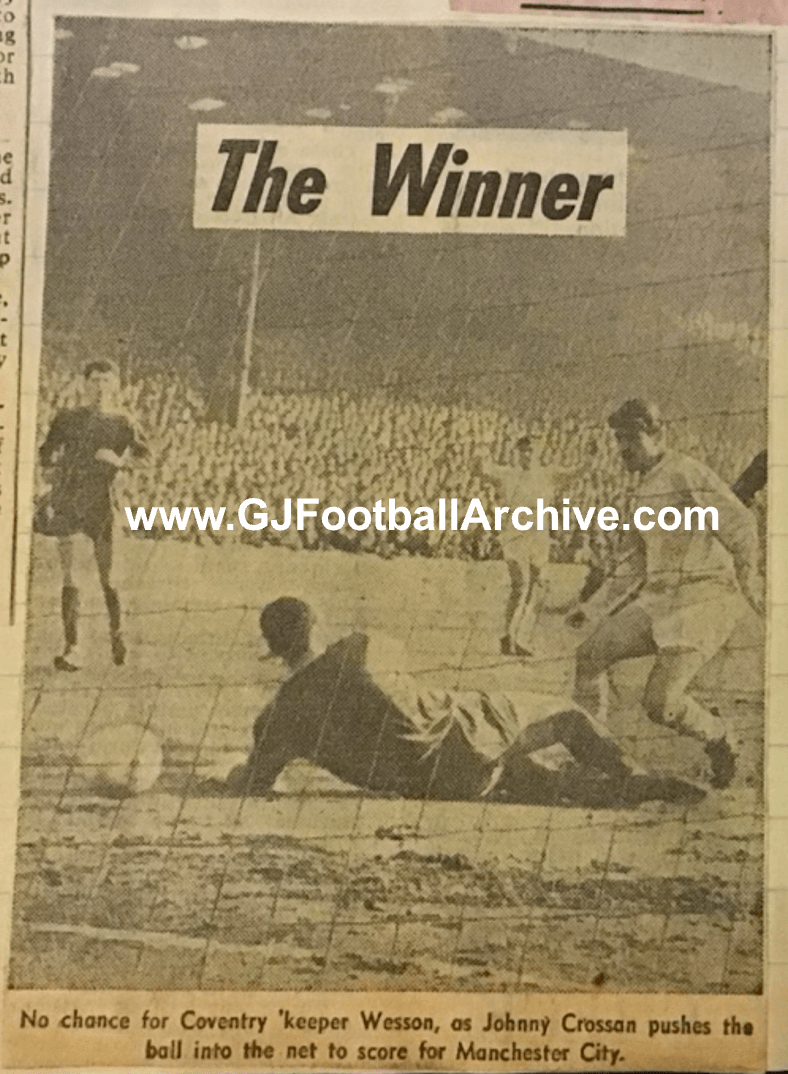
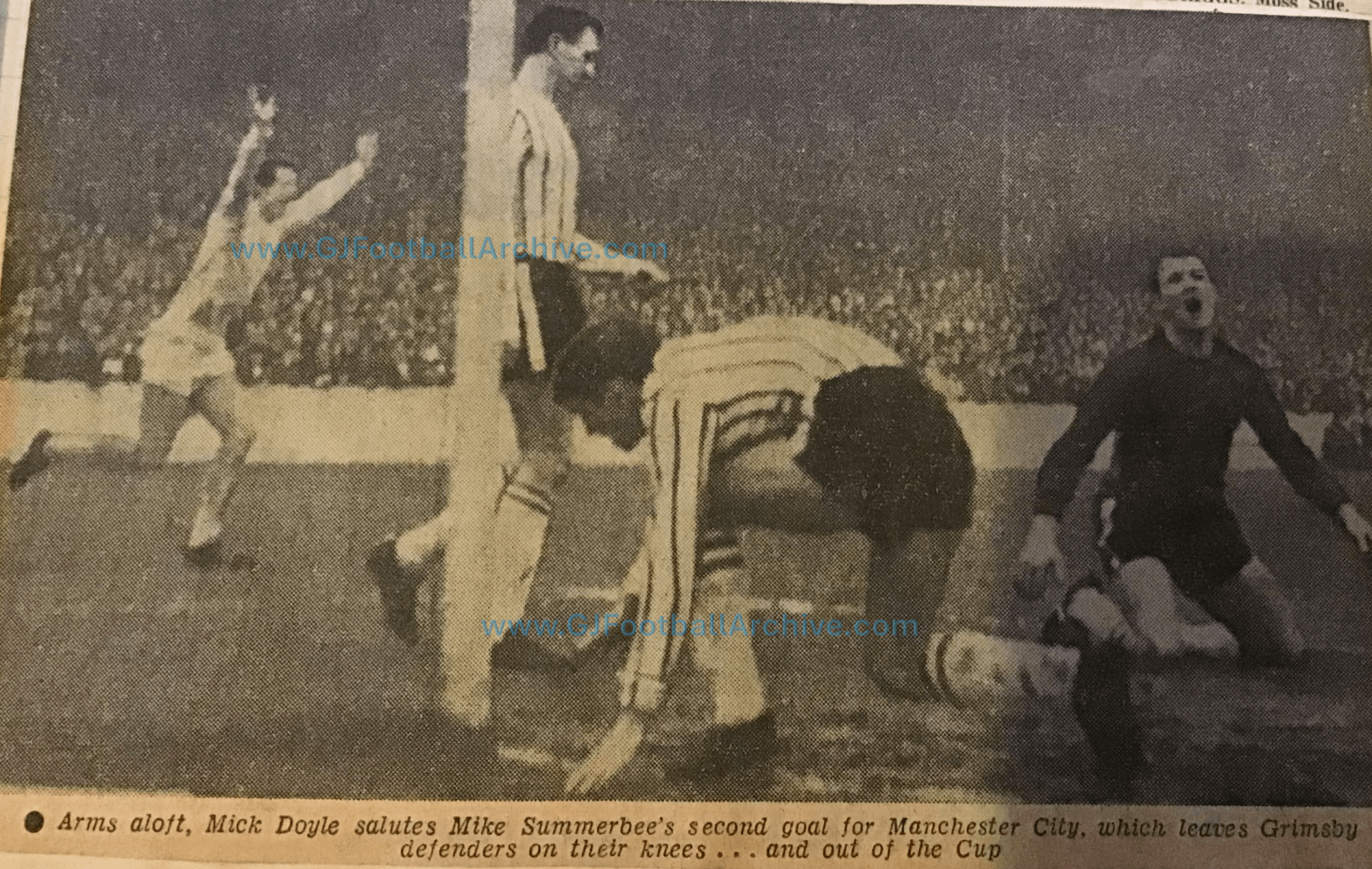
Fifty years ago today (3 December 1975) Manchester City defeated Mansfield Town 4-2 in the League Cup. Subscribers can read all about the game below.

Subscribe to get access

Read more of this content when you subscribe today. It costs £3 per week (cancel anytime) or sign up on a yearly basis for the discounted price of £20 per year. Subscribers access every article, interview, feature etc. on the site throughout their subscription.

The 1960s: Allison’s Plymouth

On this day (3 April) in 1965 Manchester City defeated Plymouth 2-1 thanks to goals from Alan Oakes and Trevor Ogden. Mike Trebilcock scored for Plymouth. Tony Book played for Plymouth that day while Malcolm Allison was their manager. The following summer Allison would arrive as number two to Joe Mercer and the year after that Tony Book would become a Blue too. Incredible success followed of course!

The 1964-65 season was remarkable and, perhaps, demonstrated how bonkers things were at Maine Road before Mercer and Allison arrived. This was the season when a City director held meetings, hoping to merge City and United! If you’d like to read the following 2350 word article on that season, plus all other articles on the site, then please subscribe (see below). As with most of the other features in this series it includes words from interviews I have performed with those who were there.

Subscribe to get access

Read more of this content when you subscribe today. It costs £3 per month (cancel anytime) or sign up for a year at the discounted price of £20 per year (works out £1.67 per month). Subscribers access the 1000+ articles posted so far and the others scheduled during the life of your subscription.

The 1960s: 1967-1968 Leeds v Manchester City

On this day (23 March) in 1968 came a game between two title challenging teams – Leeds Utd and Manchester City. The view was that this game could knock City out of the title race if it went Leeds’ way. So what happened? Here’s film of the game:

You can find out more aboutthe potential impact of this game by reading this subscriber article on Manchester City during the 1967-68 season. If you’d like to read this 7,600 word article (yes, 7,600 words on one season!), plus all other articles on the site, then please subscribe (see below). As with most of the other features in this series it includes words from interviews I have performed with those who were there.

Subscribe to get access

Read more of this content when you subscribe today. It costs £3 per month (cancel anytime) or sign up for a year at the discounted price of £20 per year (works out £1.67 per month). Subscribers access the 1000+ articles posted so far and the others scheduled during the life of your subscription.

The 1950s: The 1959-1960 Season for Manchester City

The series of features on the 1950s continues with this subscriber article on Manchester City during the 1959-60 season. If you’d like to read this 1200 word article, plus all other articles on the site, then please subscribe (see below).

Subscribe to get access

Read more of this content when you subscribe today. It costs £3 per month (cancel anytime) or sign up for a year at the discounted price of £20 per year (works out £1.67 per month). Subscribers access the 1000+ articles posted so far and the others scheduled during the life of your subscription.

The 1960s: Neil Young’s Fifth League Goal

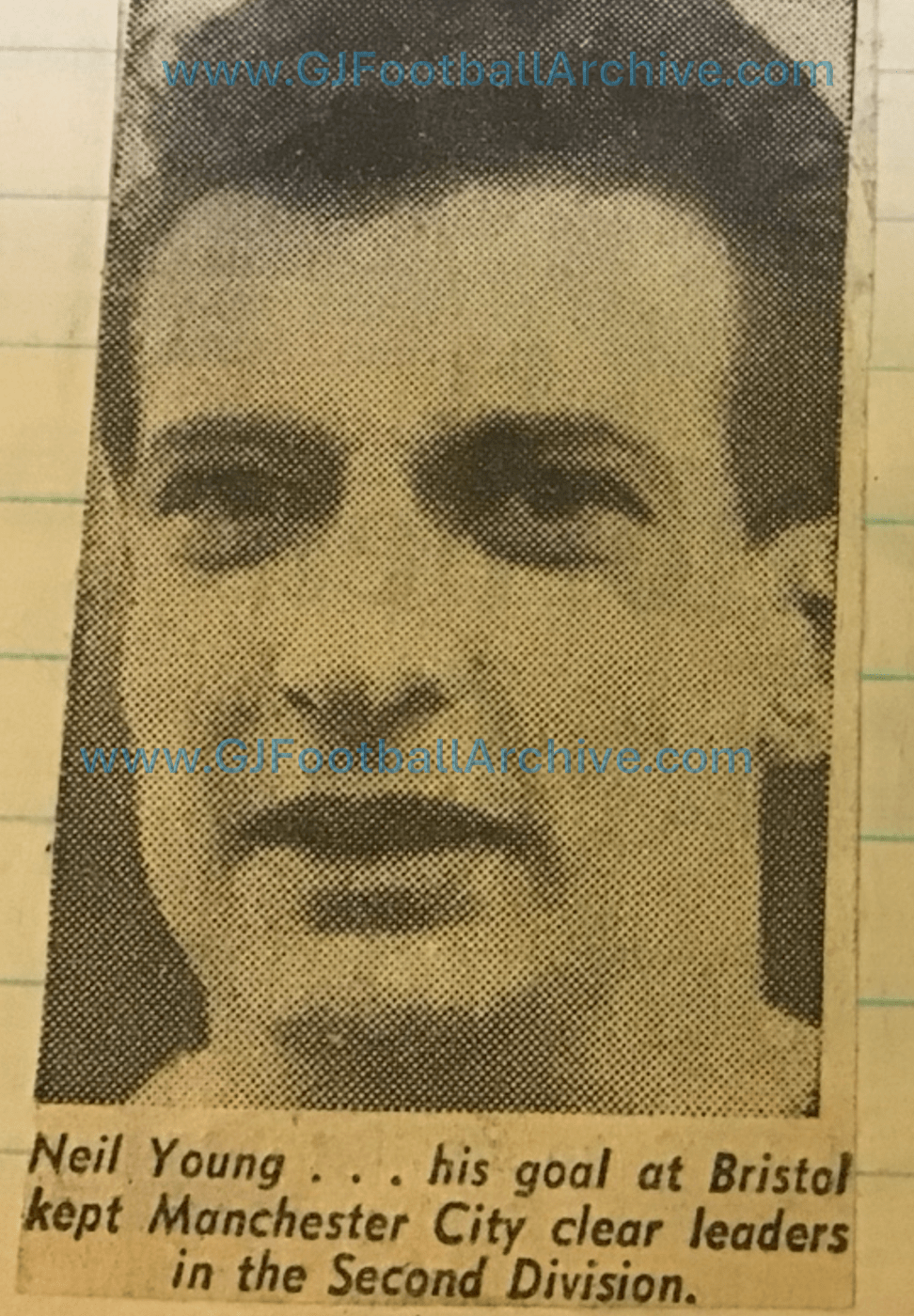
On this day (21 February) in 1962 Neil Young scored his fifth League goal for Manchester City in only his 11th League game after making his debut earlier in the season. It came in a 3-1 victory over West Bromwich Albion. The other scorers were Peter Dobing and Alan Oakes. Subscribers can read more on City’s 1961-62 season below. The Young photo here is from the start of the following decade of course! If you’d like to read the 1600 word article, plus all other articles on the site, then please subscribe. As with most of the other features in this series it includes words from interviews I have performed with those who were there.

Subscribe to get access

Read more of this content when you subscribe today. It costs £3 per month (cancel anytime) or sign up for a year at the discounted price of £20 per year (works out £1.67 per month). Subscribers access the 1000+ articles posted so far and the others scheduled during the life of your subscription.

Remembering Tony Book

It’s Tony Book’s funeral today and, all being well, I intend being there. Tony was one of the most important figures in the entire history of Manchester City and deserves to be remembered for ever more. Please spare a moment today to think of him. Over the years I met and interviewed Tony on many occasions. I last spoke with him at the MCFC Former Players Dinner earlier this season. As a tribute to him I’m posting here an interview I did with him back in May 2015 (I’ve posted this before but think it’s an appropriate moment to post it again). It wasn’t the first interview I did with him (that was in 1992 about Joe Mercer), but it is a reflective piece with Tony talking about his career.

I always think it’s important when someone passes away to use their words where possible to talk about their career. You can read it below. I’ve posted this exactly as it was written and published in 2015 so, obviously, references are to that era and before.

TALKING CITY WITH GARY JAMES

Tony Book joined City in 1966 and went on to become manager, winning the League Cup in 1976.

Let’s start with your birth certificate and the story that this was altered to give the impression you were a bit younger when signing.  Is this true?

Ah, it’s true, but I didn’t actually alter it. My birth certificate had been folded with a heavy crease down it, and I needed it when I was moving from Bath to join Plymouth where Malcolm Allison was the manager. He told them I was 28 but I was 30. Luckily, when I opened out my birth certificate the fold had meant that the final number in the year wasn’t clear, so they just took Malcolm’s word for it!  When I came here in 1966 I was 32 – for real – and we never hid my age.

It’s a good job, otherwise you’d have been celebrating your 80th two years late!  When you signed for City Malcolm had to persuade Joe Mercer to ignore your age didn’t he?

Yes. Joe was a similar age when he joined Arsenal, as you know Gary, and Malcolm said “look at what you did at Arsenal Joe” – he captained them to a couple of League titles and the FA Cup.  Little did we realise that something similar would happen to me at City. I always wanted to be a full time professional footballer and Malcolm gave me the chance.  I went playing in Toronto – it was the first time I’d trained in the day because I was a bricklayer by trade and had to train at night back home – before Plymouth and Malcolm came and talked with me after I’d played against a team of Italians over there.  He told me how much he liked my play and, well, after that he signed me for Plymouth and then City.  I was always grateful to Malcolm, but joining City was perfect.  The club under Joe and Malcolm was about to take off and I recognised as soon as I got here that there was a good nucleus of young lads who were ready. Doyle, Pardoe, Oakes, Dowd, Young… the list goes on.  I came in just after they’d got promoted and everything felt right.  I made my debut at Southampton on 20 August 1966 and, although that match ended goalless, it was clear those lads were enjoying their football.  Of course, Summerbee and Bell had been added and then Francis came in October 1967. That’s when we really took off. 

Tony Book 1969

How did it feel to be made captain of this team?

When Johnny Crossan left I was made captain because of my experience in football, not because of experience at the highest level because I didn’t have that.  But what I did know was football and the way a team operates.  I came to professional football late, but back then non-league teams did have quite a few former League players.  Some actually gave up League careers because, in the end, they could earn more in non-League and regular employment.  I always felt I had something to offer the younger guys because of that experience.

Being totally honest, what did you feel you’d do at City?  Did you think you’d be there for as long as you were?

I hoped I’d get a couple of years.  That’s all I felt I could get and I would have been very happy with two years at Manchester City, of course.  Back then City owned some club houses and I went in one – paying about £2.50 a week!  Because of what happened and the way the success came in my second year, Gary, I felt I could go on again. Winning the League in 1968 was like a spark and I wanted to keep the flame going.

Thinking about the title winning season of 1967-68, there were quite a few standout games. What are your memories of those?

There was the Spurs game at Christmas when we sharpened our studs to keep a grip on the surface and we really played a graceful, stylish game.  There was the derby at Old Trafford when I made a mistake. I was playing the sweeper role, I let the ball bounce, and George Best went through and stuck it right in the net in the first minute!  I couldn’t believe it and the lads lifted me and, Gary, we went on to play a brilliant game. We won 3-1 and that set us on course, but we still had nine games to play.  None of us had ever won a major trophy, but Malcolm and Joe were brilliant during that period.  Malcolm was great at relaxing us and there was never a doubt in his mind, and then in our minds, that we wouldn’t win it.  We believed in ourselves and with Colin Bell, Mike Summerbee and Francis Lee we knew we had that something special that champions need. I always felt that if we went behind one of those three would get us out of trouble. We had a great team throughout of course, and we complimented each other well across the park.  We all knew our roles.

After winning the League you suffered an Achilles injury, did you think that was the end?

No, but I was desperate to get back.  I tried everything. My leg was in plaster and as soon as they took it off I tried.  I played in a reserve game and Sidney Rose, the doctor who was also a director, saw me struggle. I felt it go again.  He stuck a needle in me and I had to rest. In the end I went to Christie’s, had a shot of radium, and that seemed to take the sting out of it all.  I don’t know whether that was the right treatment or not, but I began training and came back to the first team in January. 

Clearly, losing your influential captain for such a large period of the season had its effect on City in the League and in their first European Cup campaign, but once you returned you guided City to FA Cup success.  Was this another fairytale season for you?

I guess it was because winning the FA Cup was amazing. It was important for us to keep our success going and the FA Cup was viewed as something special, but I have to tell you Gary, that now, when I look back, I realise that we were not consistent in our challenge for the League.  We consistently challenged for trophies, but not in the League.  Today, we have such a wonderful team that has been able to challenge for the League season after season, but back then we were more inconsistent. We had good days and bad days, but almost any team in the division could challenge back then. There were no easy games.  In 1969 I also shared the FWA player of the year with Dave Mackay, so it was a good season.  People had suggested I’d win it the year before because I’d played every game and we’d won the League.  I was getting a lot of praise but George Best won it that year. So, the year I won it, it was a surprise.  A great feeling and I remember being at the award dinner.  For me though, it was an achievement for the entire team.  You need a good team around you to win awards like these, and we certainly had a great team.

What are your memories of City in Europe during that time?

There was Malcolm’s boast about scaring Europe which set us up, but then in the ECWC 1969-70 we did.  The final is the strongest memory but mostly because of the rain. We had a great following of fans, but few locals and Gornik fans were there, and they were all drenched.  I felt so sorry for them.  We won the cup, of course, and that season we’d also won the League Cup.  I wanted to go on forever by that time.  I was enjoying it and those two years became four and I was 36.  I couldn’t wait for the next season.  I was like an 18 year old who had just been given his chance.

1971 ECWC v Chelsea. Tony Book and mascot Paul Todd. Photo by Alan Jubb

Is there anything from your playing career that you would change if you could?

Ah, yes. I gave the referee an elbow at Ipswich! He’d disallowed a goal. At Ipswich, you had to go down a corridor as you went in at half time and as I turned I deliberately elbowed him. He went down.  I was called to an FA disciplinary meeting and the first question they asked was “would you like your past record to be taken into consideration?”  Well, I’d only been a pro for a couple of years so I said yes, thinking it’ll be great.  They then brought out information going years back from my non-league days and it all worked against me!

When it came time to retire from playing, was that your choice?

No.  Johnny Hart had been manager but was ill and Peter Swales asked me to take over on a temporary basis in October 1973. I managed the team for about five weeks until Ron Saunders came in and he had a chat with me suggesting I was needed more as a coach/assistant than a player.  I wish now I’d said I wanted to finish playing at the end of the season because I think that would have helped him more.  There were issues between him and some of the playing squad and I think I could have helped him, had I been a player. He was insistent though. 

Ron Saunders, Peter Swales and Tony Book at Saunders appointment in November 1973

It’s a shame because we got to the League Cup final (1974) and with you in that team, maybe things would have gone differently.  Saunders didn’t last as manager and was gone in April that year. How did you feel?

You see things happening but are unable to change it.  It was tough. I ended up being given the manager’s job and it was a strange period because we’d had turmoil over that season.  I also had to start looking at my pals, the players I had won trophies with, and explain that they needed to move on.  I didn’t want to do that and I found it very hard. Awful! 

As a manager I was proud that in the five years that followed we won the League Cup, finished runners up by a point to Liverpool, and we were in Europe for three consecutive seasons. I had some good players that came in – Dave Watson, Brian Kidd, Asa Hartford – and did an excellent job for me.  I felt we were on our way.

From the moment you took on the job it was progress all the way through and, just before Malcolm returned as ‘coaching overlord’ in January 1979, we had reached the UEFA Cup quarter finals. What was it that made you a success in that role?

The players.  It’s always about the players you manage to sign and what they do for you.  I was more like Joe Mercer as a manager and had good coaches working with me.  Bill Taylor was recommended to me by Don Revie and he was a great coach.

Tony Book, Peter Swales and Kaziu Deyna at Deyna’s signing for Manchester City

City may not have won many trophies during your spell as manager, but we came close, had some great players and, significantly, this was an exciting period to watch.  Then Malcolm came back. Did you welcome the return?

Malcolm is such an important figure in my life that I cannot say anything but positives about him as a man.  I will always be indebted to him.  But I knew that it couldn’t work when he came back.  I knew the chairman, I knew Malcolm, and I knew how they both worked. There was no way they would have been able to work together. It was as simple as that.  That’s what the main difference was between the 60s and 1979. In the 60s we had Albert Alexander as chairman who worked wonderfully with Joe and Malcolm, but it was different in 1979.  It was such a shame, because I thought we were going somewhere.

Silkman, Allison & Book after Peter Barnes scored v Tottenham 3 February 1979

On a day to day basis, what was it like working during that period?

It varied but there were players like Gary Owen and Peter Barnes who I felt had a lot to offer, but they were moved on. It’s difficult to go through it all, but as we know it failed and we were dismissed in October 1980.  I stayed briefly and then became Cardiff manager.  I missed Manchester but was delighted that under John Bond that season ended with the FA Cup final against Spurs.  I got a phone call from John Bond asking me back to City to look after the youth team and I said I’d think about it. In the meantime there was the FA Cup final and as it was the 100th final they invited all surviving captains of cup winning sides.  Myself, Roy Paul, and Joe Mercer (Arsenal) were on the pitch with the others and all of a sudden they announced my name and the City fans erupted into song.  It really got to me, emotionally, and I knew I had to come back. It was one of the best feelings I ever had.  Returning to City was the right thing and I had a wonderful time working with Ken Barnes, Glyn Pardoe and all those talented young lads.  We won the Youth Cup in 1986 and it was a real pleasure being there at the start of so many careers. 

This year I’ve interviewed quite a few of the players who had progressed through the youth team while you were there. Every one of them has talked with affection about your approach, driving them on.  I think it’s amazing really that your influence has been there at City year after year since 1966. How does it make you feel to have had three great distinct careers at the club?

I love this club and am grateful to all those who brought me here and involved me for so long.  Whenever I’ve been given a job to do I’ve always tried to give my best.  When it all came to an end in the 90s it hit me hard and there were issues that were well documented, but since then Francis Lee and I have resolved our differences.  Actually, I think it says something that so many of our former players come to games these days, and all of those players from that Mercer-Allison team are so proud of how this club is challenging once more.  We’re enjoying the success and the consistency season after season.  Having said that I loved my days as a player and would never swap them… I would have loved us to have these pitches though. They’re perfect. How great would the likes of Colin Bell have been on these surfaces?

If you enjoy all the free material on my website and would like to support my research and keep this website going (but don’t want to subscribe) then why not make a one-time donation (or buy me a coffee). All support for my research is valued and welcome. It allows me to keep some free material available for all. Thanks.

Choose an amount

£2.50
£5.00
£7.50

Or enter a custom amount

£

Your contribution is appreciated.

Donate
The 1960s: Dave Wagstaffe

Mancunian Dave Wagstaffe was a Manchester City and Wolves star who made his City debut in September 1960. Fifteen years ago I interviewed Dave and spent a really enjoyable afternoon chatting with him about every period of his career. This was a for an article on his time at City and the 3000 word article that eventually came out of that can be read below.

Sadly, Dave died in 2013 after a heart attack. He was only 70.

The following interview is available to subscribers to the site and is published here as it was written back in 2010 with Dave’s words written as he said them.

Subscribe to get access

If you’d like to read this article you’ll need to subscribe. It costs £3 per month (cancel anytime) or join up on an annual basis at the discounted amount of £20 per year. Subscribers get access to everything posted to the site. Why not join up for a month and see what you think?

Continuing the series of features on the 1960s, here’s a subscriber article on Manchester City during the 1960-61 season. If you’d like to read this 1200 word article, plus all other articles on the site, then please subscribe (see below).

Subscribe to get access

Read more of this content when you subscribe today. It costs £3 per month (cancel anytime) or sign up for a year at the discounted price of £20 per year (works out £1.67 per month). Subscribers access the 1000+ articles posted so far and the others scheduled during the life of your subscription.

The 1960s: Summerbee Treble

On this day (31 January) in 1968 Manchester City defeated Reading 7-0 in a FA Cup replay. As the players left the field the Elm Park tannoy announcer claimed:  ‘Ladies and Gentlemen, you have just seen one of the greatest teams England has produced in a long time.’

Goalscorers were Mike Summerbee (3), Colin Bell, Tony Coleman, George Heslop and Neil Young. This photo is of the Bell, Lee & Summerbee statue at the Etihad today.

Dozens of letters arrived at Maine Road commenting on City’s performance.  Many Reading fans wrote in saying they could have watched the Blues all night.  Other letters arrived commenting on how well behaved the City supporters were, while fans themselves commented on the cheerfulness of the Reading police.  

These points may seem trivial today, but in 1968 football had already begun to enter its hooligan period.  Football supporters had started to be seen as trouble causers and incidents of violence, or of vandalism, soon found their way into national newspapers.  Although City supporters were never totally blameless, during the late 1960s Blues fans continued to gain commendations rather than condemnation.

You can read more on this remarkable, trophy winning season below. If you’d like to read this 7,600 word article (yes, 7,600 words on one season!), plus all other articles on the site, then please subscribe (see below). As with most of the other features in this series it includes words from interviews I have performed with those who were there.

Subscribe to get access

Read more of this content when you subscribe today. It costs £3 per month (cancel anytime) or sign up for a year at the discounted price of £20 per year (works out £1.67 per month). Subscribers access the 1000+ articles posted so far and the others scheduled during the life of your subscription.

The 1960s: Summerbee Double

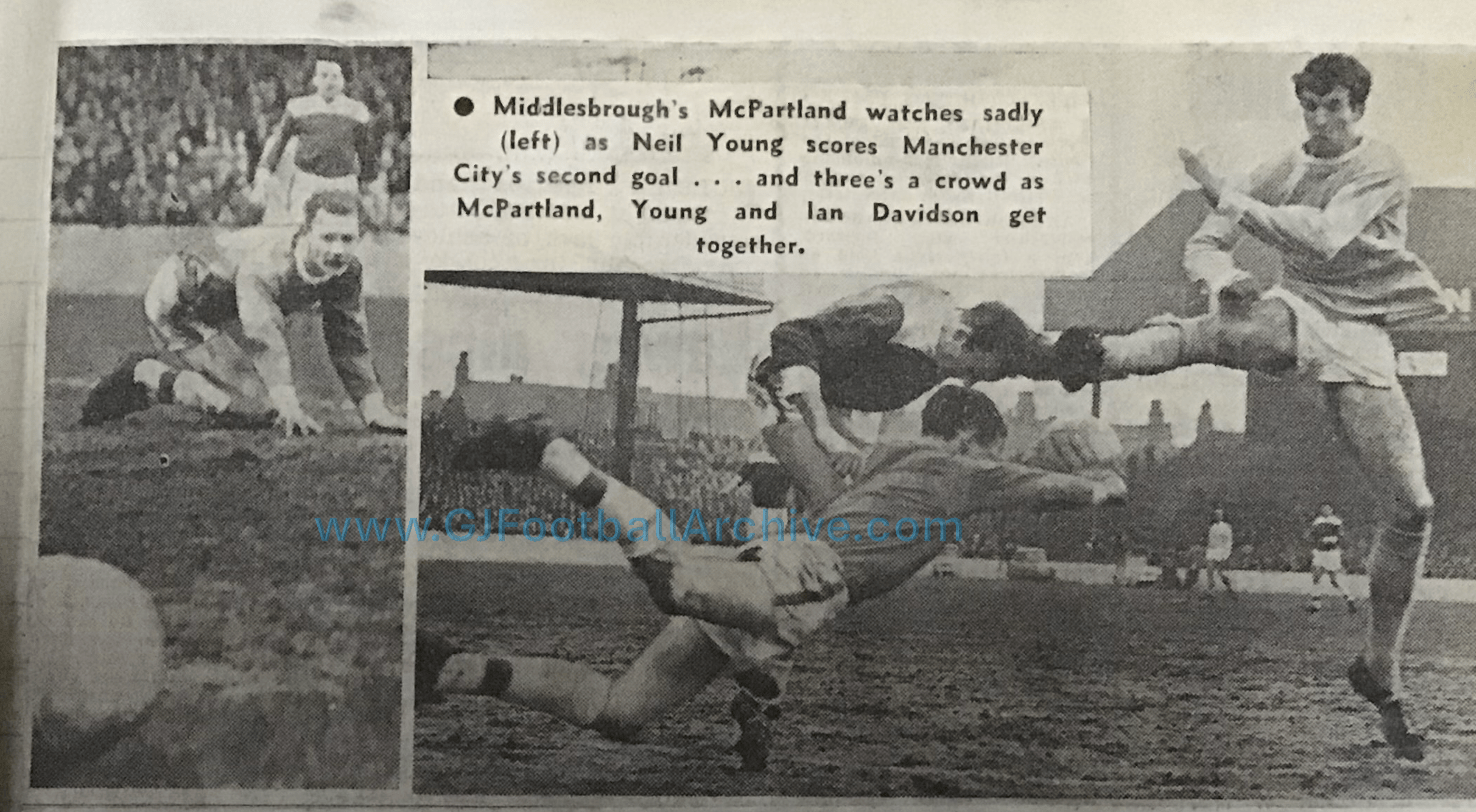
On this day (29 January) in 1966 Mike Summerbee scored twice as Manchester City defeated Middlesbrough 3-1. The other goal came from Neil Young (the photo is of course Neil Young in 1971 at Maine Road). 1965-66 was an important season in MCFC history and you can read more on it in the following 4100 word article. This (plus all other articles on the site) is available to subscribers (see below). As with most of the other features in this series it includes words from interviews I have performed with those who were there.

Subscribe to get access

Read more of this content when you subscribe today. It costs £3 per month (cancel anytime) or sign up for a year at the discounted price of £20 per year (works out £1.67 per month). Subscribers access the 1000+ articles posted so far and the others scheduled during the life of your subscription.

The 1960s: Law’s Expunged Six! 

On this day (28 January) in 1961 Denis Law’s six goals against Luton in the FAC were wiped from the records when the game was abandoned due to waterlogged pitch.  Manchester City were winning 6-2, and lost the replay 3-1 (Law scored City’s consolation). If you want to know more about the 1960-61 season then you can read the following 1200 word article. It’s a subscriber piece and if you want to read it (plus all other articles on the site) then please subscribe (see below).

Subscribe to get access

Read more of this content when you subscribe today. It costs £3 per month (cancel anytime) or sign up for a year at the discounted price of £20 per year (works out £1.67 per month). Subscribers access the 1000+ articles posted so far and the others scheduled during the life of your subscription.