Today (27 November) is the anniversary of the women’s team’s first game. It was payed at Boundary Park in 1988 and saw Oldham Athletic Ladies face Manchester City Ladies. I was there as my girlfriend, now wife, was playing. She scored two goals in the club’s 4-1 victory. Subscribers can read a 2,200 word long read on this historic first game. Enjoy!
Subscribe to get access
Read more of this content when you subscribe today. It costs £3 per month or £20 a year. This special annual rate works out about £1.67 a week and gives access to everything posted, including PDFs of 3 of my books.
If you enjoy all the free material on my website and would like to support my research and keep this website going (but don’t want to subscribe) then why not make a one-time donation (or buy me a coffee). All support for my research is valued and welcome. It allows me to keep some free material available for all. Thanks.
I’m absolutely delighted to say the the incredible Manchester Corinthians have been honoured with a special recognition award at the Manchester Sports Awards 2025. Special thanks are due to Paul Hulme at MCRActive for all his efforts in making this happen. Paul has been a great supporter of all we have tried to do to recognise and promote the Corinthians’ stories over the last five years or so. He was extremely helpful when we established the Blue Plaque campaign a few years back and I know he put a lot of effort into making this award happen too.
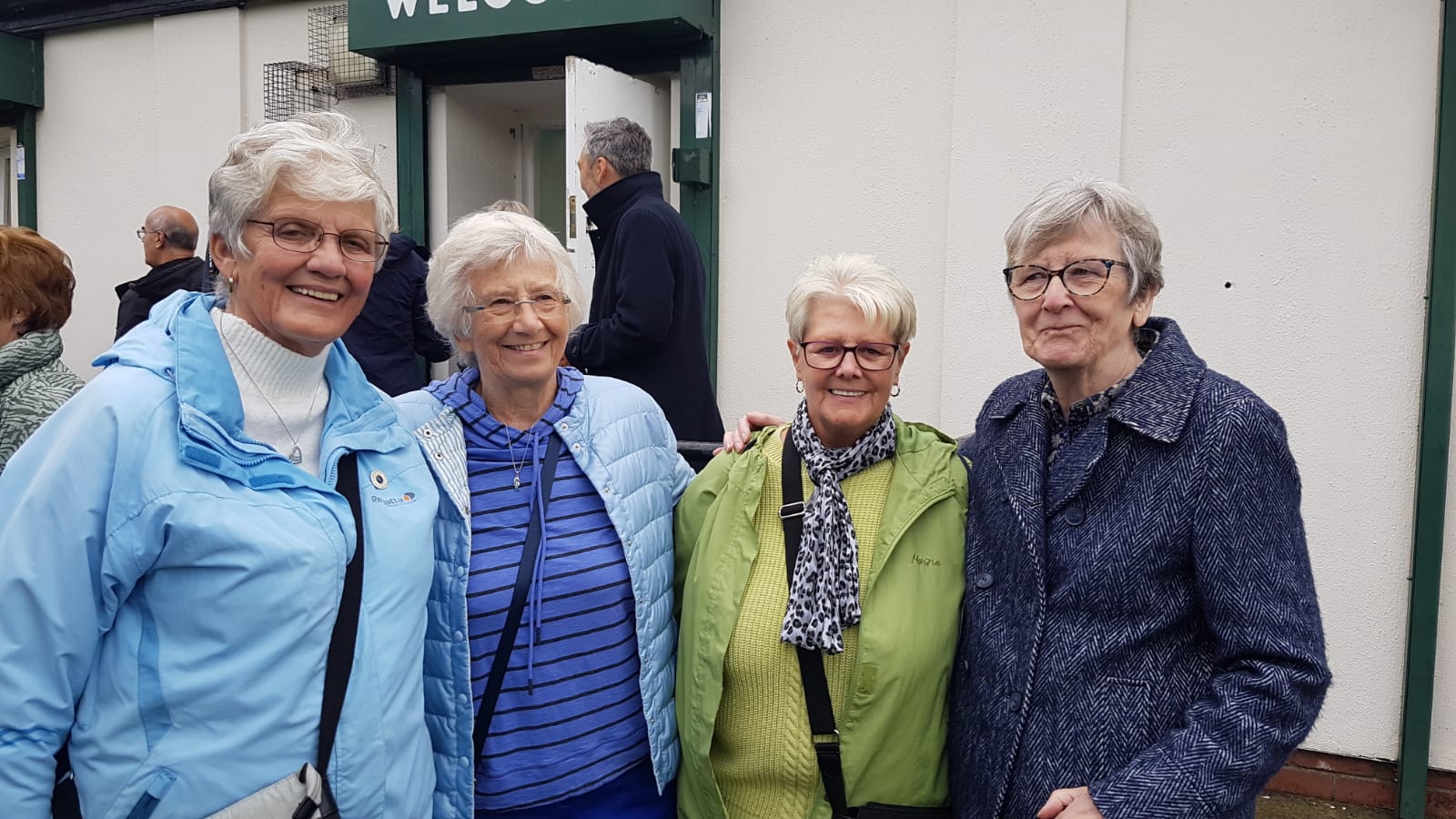
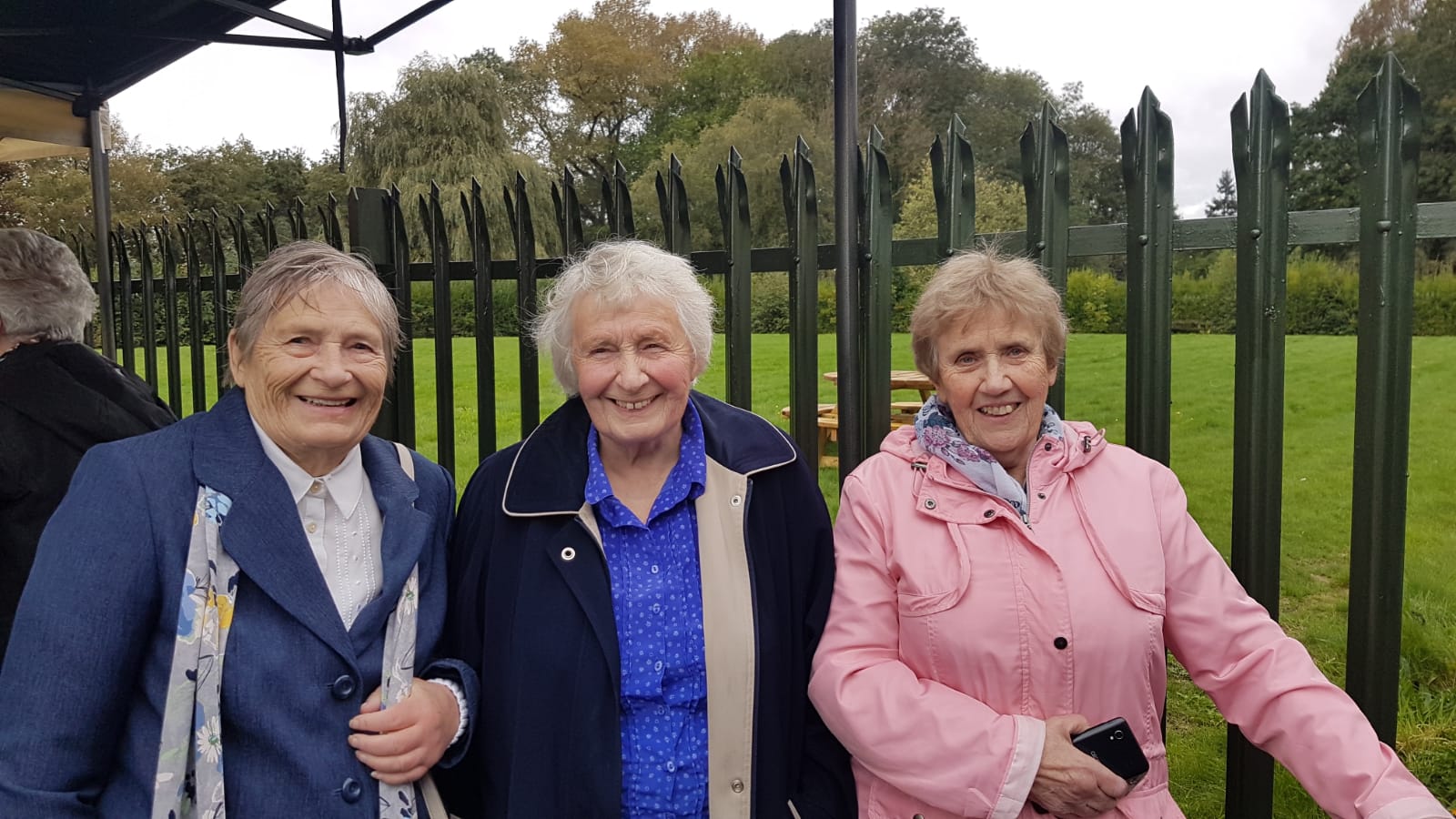
The Corinthians are wonderful people who toured the globe promoting Manchester, football and female endeavour over a forty year period. I was sat with Corinthians who had played for the club in the 50s, 60s, 70s and 80s. I was particularly pleased for Margaret Whitworth, Margaret Shepherd and Jan Lyons, who had worked hard over many years to get the stories of the club listened to and worked with me to get the Blue Plaque campaign established.
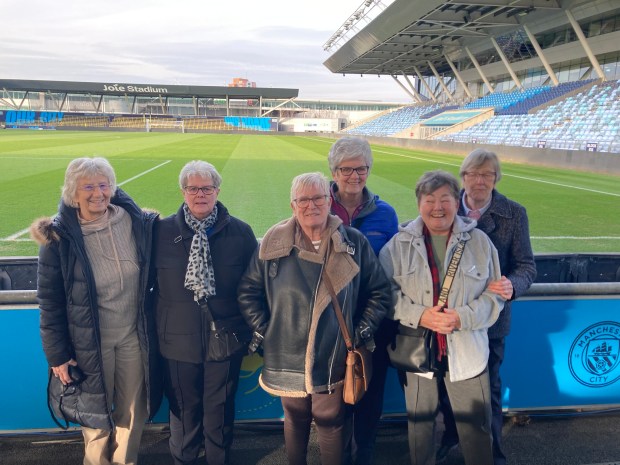
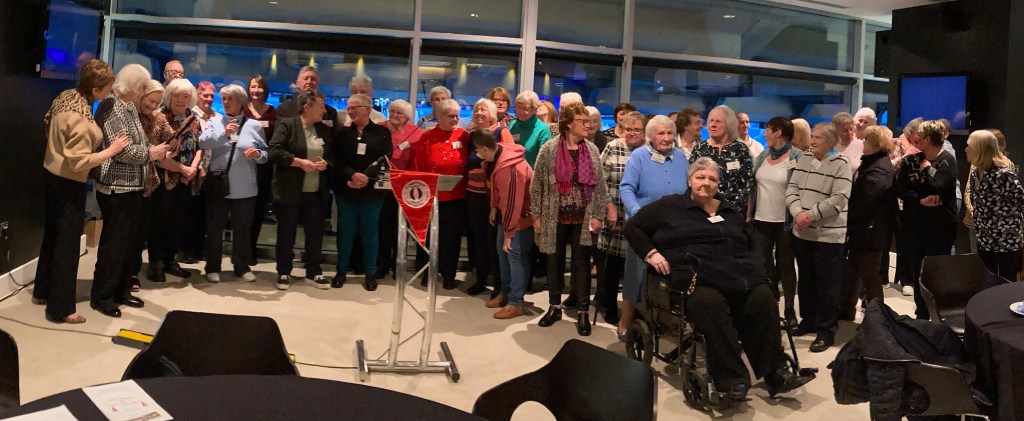
Altogether we managed to get 14 Corinthians at the event tonight (15 November 2025) – a fraction of the number we’ve found during my project to capture the stories of Corinthians from every season of the club’s history. Over 50 Corinthians have been interviewed by me and in December last year my wife Heidi (who played with some former Corinthians at Manchester City in the 80s and 90s) and I managed to get eighty former players/families of former players together for a Reunion at the Etihad Stadium. It was great to see them catch-up with each other.
You can find out more about the Corinthians and watch moments from their reunion, when they sang their club song, here:
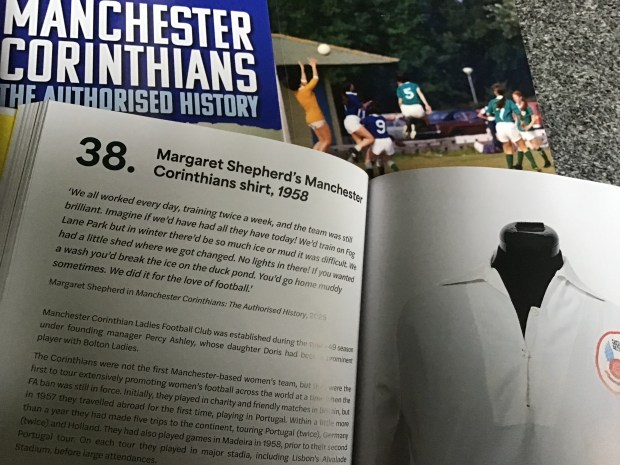
I’m delighted to say that in addition to Manchester Corinthians: The Authorised History (published at the start of the year, see below) and Histories of Women’s Football in Britain and Ireland (published last month) I’ve written a feature for another book which mentions the Corinthians. The book tells the story of football (focusing on England) in 100 objects. I’ve written a few of the features for this National Football Museum book (alongside Marek, Alex & Wiebke from the museum) and one of these is on Margaret Shepherd’s Corinthians shirt. The shirt is currently on display at the museum too.
This feature, together with mentions by myself and others in the Histories book and the Authorised History, helps spread the word about these remarkable women.
Some of you are aware of my obsession to document and promote the history of women’s football in Manchester over the last decade, but for those uncertain I’d like to post a few links and bits of information here on the remarkable stories of the Manchester Corinthians who, before the men’s teams of City & United, found international success.
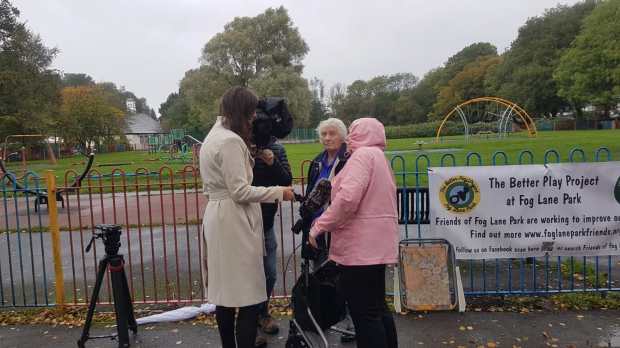
Some of the Friends of Fog Lane Park at the last meeting before the Corinthians plaque unveiling
Dorothy Alcock, Manchester Corinthian from formation in 1949
Margaret Whitworth with the Manchester Corinthians blue plaque
Washing in the duck pond, Manchester Corinthians by Artist Gavin Renshaw
Some of the trophies won by the Manchester Corinthians
Over the last decade I’ve been interviewing women who played football in Manchester, or for Manchester based teams, during the 1940s to modern years. This includes Maureen Charlton, Dorothy Allcock and Flo Cloake (who played in the 1940s & 50s) and players like Steph Houghton, Karen Bardsley and Jill Scott (who of course played in more recent times). For me the stories of all are inspiring but it is those who played for the Corinthians that I’m most keen to promote at the moment. These women played prominent roles in football’s development and some are still contributing significantly today.
In 2021 the blue plaque appeal was launched to recognise the Corinthians and elsewhere on my site you can read about the success of that and the unveiling in 2023. In addition in December 2024 I staged a reunion where over 90 attended (most Corinthians with some in their 90s). You can watch scenes from that here:
I gave a speech explaining why the Corinthians matter that day:
There were some wonderful words from Margaret Shepherd which I am truly grateful for. Margaret has been one of the key figures promoting the club’s endeavours and she certainly inspired me during my research:
We’ve also inspired Imprint Films to put together this 18 minute overview of the Corinthians’ story, including interviews with some of the players:
Of course there is the book too and I’m absolutely delighted with this from Matt Williams, a longlist judge for the William Hill Sports Book of the Year 2025 award. He has posted the following video about the Manchester Corinthians book as his ‘What are we reading this week?’ post on social media. It really does please me and demonstrates why I’ve been so keen to get the Corinthians story out there. The book hasn’t won any prize but the comments mean a lot to me.
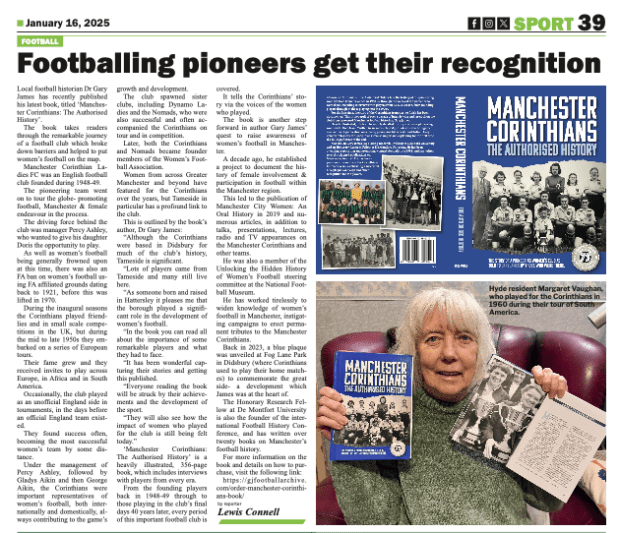
For those interested Manchester Corinthians: The Authorised History is a must for anyone interested in Manchester or women’s football and consists of 356 pages. Getting it into Manchester bookshops, particularly Waterstones, is proving difficult so if there’s anyone reading this who can help please get in touch. We can organise events if that helps?
Thanks to everyone who has helped so far to promote the Corinthians and their stories. We still need to bang the drum so please do all you can to spread the word on this remarkable team. If you need more info then there’s lots on this website, just search Corinthians. There’s also the books of course….
The Authorised History is illustrated throughout and you can order it now for £25 (including UK postage and packaging). I’ll sign all copies ordered direct from me below.
If you live outside the UK then please contact for details of additional postage costs.
You do not need to have a PayPal account to order – use the ‘Pay with PayPal’ button above and it will give you the option to pay by credit/debit card without creating a PayPal account.
UK ONLY – Manchester Corinthians: The Authorised History
The story of a pioneering women’s club as told to Gary James by those who were there. This will be published in late December 2024. This is UK only at £25 (incl UK postage and packaging). Outside UK contact for additional postage costs.
Sadly, we’ve lost another footballing figure from Manchester. Two days ago Margaret Allen (nee Temple) passed away. She was one of the Manchester Corinthians I was privileged to interview over the last few years and her stories were remarkable. She talked openly and honestly about her footballing career in the 60s and 70s, about touring abroad with the club and also about her support of Manchester City. She was another inspirational figure.
Screenshot
My thoughts are with her family, many of whom I met in November 2023 when I interviewed Margaret in Didsbury. That day I was able to take her to Fog Lane Park where we’d erected the plaque and other tributes to the Corinthians.
Thanks to Margaret and all her family for their welcome and support.
It’s hard to believe but today marks two years since an amazing day when Manchester came together, along with a wonderful community of former footballers, to recognise the pioneering women’s team the Manchester Corinthians. It was an incredible day made possible with the support of so many individuals, groups and community leaders. So often we highlight issues, problems or moments where communities separate or fail but the long running campaign to bring recognition to the Corinthians has seen so many come together for something extremely positive.
Personally, I was touched by the support received for this campaign I’d established several years ago. The plaque unveiling was the biggest visible sign that it was succeeding with huge TV audiences tuning in. One news broadcast alone featuring the Corinthians’ plaque unveiling had 2.7 million live viewers. Add to that downloads and all the news features experienced on TV and radio that day and the number rockets significantly. There were also newspaper articles and more.
The aim, back in 2019 when I first raised the idea of erecting permanent tributes publicly in an article I wrote, had been to bring recognition and wider public awareness to the exploits of these remarkable footballers. The media coverage certainly did that and also other Corinthians came forward who had seen the coverage.
I’d particularly like to pay tribute to Jam Williams-Thomas from ITV Granada who promised me he’d ensure Granada Reports would have a camera crew there many, many months before the exact date had been finalised. That support was vital. In the end David Chisnall came from Granada Reports and did a wonderful feature on the plaque and recognising the Corinthians. Thanks to you, Jam and all at Granada Reports. It really helped (there are links to some of the TV coverage at the bottom of this article).
2019 was the year when the campaign received a lot of support. Back then I contacted many key Manchester and national institutions with the concept. Manchester City FC immediately supported the idea and that year several Corinthians, plus myself, were invited to City to attend a WSL game, where they met England international Karen Bardsley and England women manager Phil Neville. The Blues also included features in their match programme and on their website on the history of the Corinthians.
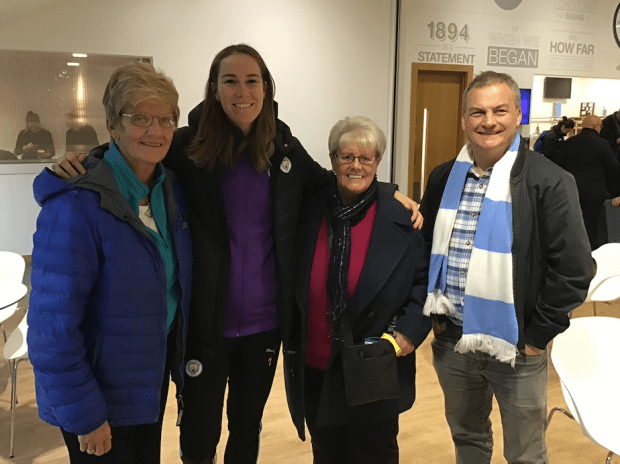
Margaret Whitworth, Karen Bardsley, Margaret Shepherd & Gary James. Several Corinthians were guests of Manchester City for a WSL game.
They’ve continued to support and promote the Corinthians’ story ever since. I don’t know how many millions read their website today but again, like the national news coverage, this level of readership is significant. I’m not daft enough to think everyone reading the stories or watching the news will want to know more about the Corinthians, but if just 1% do then that in itself is an incredible number of people who previously may not have known or understood how the Corinthians toured the globe promoting Manchester, football and female endeavour.
Simon Mullock at the Sunday Mirror helped with an excellent feature too back in the early days. That support from a national tabloid was so important in widening the news and soon, in general conversation, people were mentioning the Corinthians and their achievements. I loved that! We were getting somewhere and Simon, together with later features by renowned journalists focusing on women’s football in other newspapers, was a big part of that.
Another major supporter since the start has been the Manchester FA’s Colin Bridgford. Again in 2019 we met up to talk about what we could do to promote the Corinthians’ story and I wrote several articles for the Manchester FA’s website. That support was important and helped raise the profile of what we were trying to achieve. We also arranged a meeting with Manchester FA staff and several of the Corinthians, including Margaret Whitworth, Margaret Shepherd and Jan Lyons – three of the Corinthian stalwarts who have worked tirelessly to rightly highlight the story of their team. Plans were put in place to do other activities with the Manchester FA but sadly Covid hit and plans had to be abandoned. Colin and his team did, of course, support the plaque unveiling last October.
The FA have helped too. In fact they have not only helped promote the story but also provided significant funding to ensure permanent tributes could be made. My connection with Rachel Pavlou at The FA came via Caterina Loriggio. Cat led a major project in partnership with the Women’s Euros the other year and I acted as the Heritage Lead for Trafford Council. Via the UEFA & FA project a series of activities were established in each host city/borough and the Corinthians inevitably became part of that. I performed interviews with several Corinthians (borrowing some of their trophies and kit too for an exhibition) in Trafford and others were interviewed at Wigan & Leigh. These were filmed and are still available here:
When I discussed the idea of erecting permanent tributes with Rachel she immediately offered funds and other support to ensure the Corinthians were recognised. The FA and Cat also approved the wording for the plaque. For me this had to recognise all the Corinthians, not one person or individual moments (I knew we could pay appropriate tribute to all of that via the book I’ve been working on for several years, which will be published this summer).
The FA were not the only ones to get involved of course as the campaign brought together a wide range of people… as with every project like this there are many, unsung heroes who work tirelessly without seeking or receiving financial reward. In that category are the Friends of Fog Lane Park. They deserve immense praise, especially Pamela & Alice and the others who attended various meetings along the way and performed many tasks that made the unveiling day such a success.
Some of the Friends of Fog Lane Park at the last meeting before the Corinthians plaque unveiling
I’d been introduced to the Friends by Manchester City Council and MCRActive, in particular Paul Hulme. Jan Lyons and I had met Paul at an early meeting we’d arranged. We’d hoped there would be support from the Council and sure enough Paul was interested, particularly when Jan told some of the Corinthians’ story. Her words and experiences brought it all to life and demonstrated perfectly why we needed to get this story out there. Paul immediately set up a meeting with the Friends of Fog Lane Park and other council officials and employees.
At that meeting in the Fog Lane Park Café me, Margaret Whitworth, Margaret Shepherd and Jan Lyons, explained about the Corinthians with the former players telling their stories while the Friends were enthralled. I put it all into context in terms of the wider football and Manchester stories, then explained about the attempts to raise public awareness and how we wanted to get a Blue Plaque erected. We agreed that the Blue Plaque appeal would be established in the name of the Friends of Fog Lane Park – they had a dedicated committee of passionate individuals and the opportunity to publicly recognise the Corinthians in the park that had been their home for over two decades was wonderful.
One of the Friends of Fog Lane Park meetings where we discussed the erecting of permanent tributes, 20 May 2022
Those who donated to the appeal to erect permanent tributes to the Corinthians were: Pam Barnes, Dan Mooney, Adam Turgoose, ‘Ben’, ‘Jean J’, Jonathan Kaye, Megan Riley, Helena Byrne, Dawn Burrows, Clare Wilkins, Linda Foley, Debbie Enever, John Carrier, Jacqui McAssey, Michael Cottam, Karen Phanco, David Hoyle, Daniel Rubin, Heidi James, Gary James and the Dick, Kerr Ladies Foundation. There were a couple of anonymous donations too. It was gratifying that many of those listed were not from Manchester but were connected with women’s football in other parts of the world. That was wonderful to see. It was also fantastic that via Gail Newsham the Dick, Kerr Ladies Foundation supported the campaign with a significant donation too, proving what a great community of women’s football enthusiasts and researchers we have.
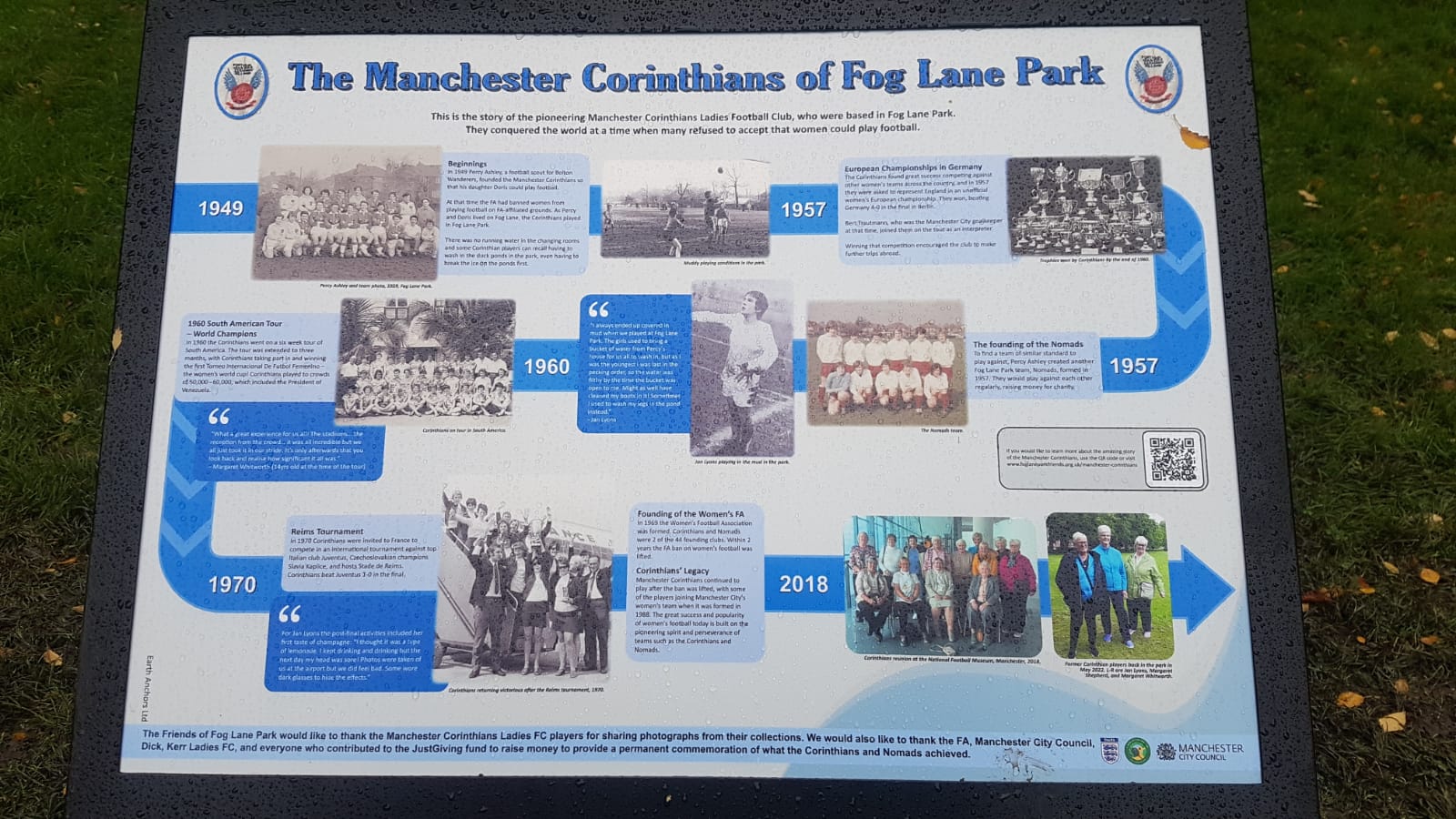
The Friends of Fog Lane Park managed to get matching funds from Manchester City Council too and the Friends had some wonderful ideas to really improve the park and tributes further. As well as the hoped for plaque and a lectern providing a Corinthians’ timeline, the Friends organised for some of the funds raised via the appeal and The FA to be spent on two impressive murals painted by artist Gavin Renshaw and for a handout to be produced for park visitors on the Corinthians. Now everybody who visits the park gets to see wonderful artwork (on a former graffiti covered building), the plaque, a lectern, an information board inside the café and the leaflet. All of this is helping get the story out there again and, for those young girls and boys kicking a ball around the park, is inspiring.
In the weeks building up to the unveiling day the Friends spent considerable time and effort tidying up the park, arranging some of the logistics, erecting the plaque itself, overseeing the mural work, organising sandwiches, baking cakes and more. It was a real community effort and all deserve thanking again.
Various media companies helped promote the plaque appeal with myself, Friends of Fog Lane Park, Margaret Whitworth, Margaret Shepherd, Jan Lyons and other Corinthians being interviewed on a fairly regular basis. Contacts I had with various stations helped enormously (you know who you are – thanks for your support) and brought airtime we couldn’t have managed with cold calls.
When it came to the plaque itself another who helped was Mark Metcalf. Mark had instigated footballing plaques at various locations and I’d been fortunate to be involved with a couple. Mark provided contacts with plaque manufacturers and helped ensure we got a decent price too.
There was also a wonderful night in Hebden Bridge in December 2021 where several Corinthians were interviewed publicly and I gave a talk on the history of women’s football. At the end of that event I announced publicly for the first time the campaign to erect a blue plaque and that brought significant interest from the people of West Yorkshire. Local businessman Geoff Matthews had funded the talk and event and that support was wonderful too.
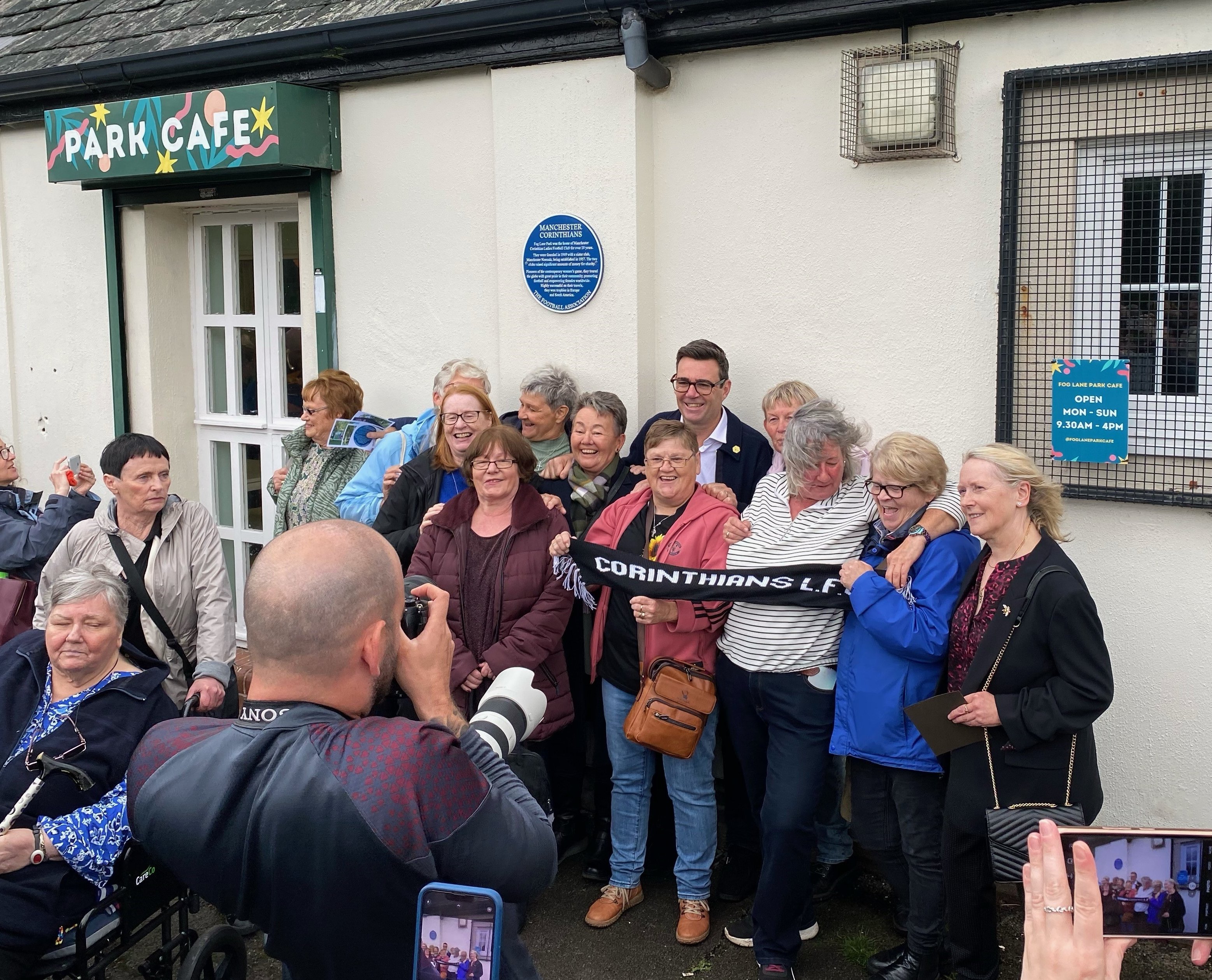
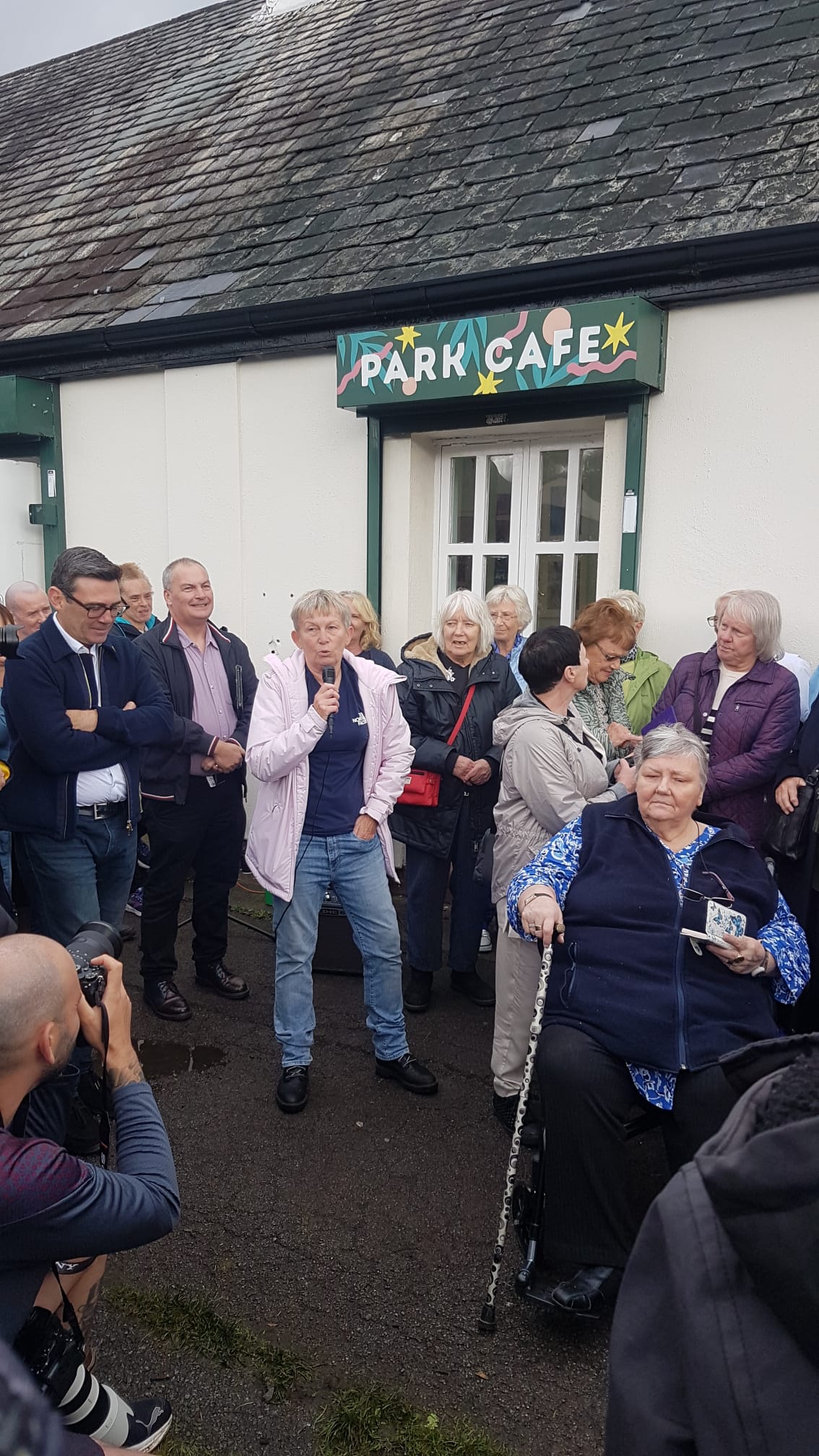
The plaque unveiling was supported on the day by Greater Manchester Mayor Andy Burnham, who spoke about the Corinthians as the suffragettes of football, and former England international Kerry Davis. She had actually played against many of the Corinthians in attendance that day too. Hundreds of people attended with strong support from fans of women’s football, including several key members of the Manchester City Women Supporters Club. Former City player Stacey Copeland was a key supporter that day (as she has been at other events, including the one at Hebden Bridge) and she has made efforts herself to promote the story and help the Corinthians frequently.
It really was quite remarkable the amount of interest demonstrated that day and how the story of the Corinthians has continued to receive attention.
I know this has been a lengthy piece but I think it’s both necessary and valuable to remember what a remarkable day the plaque unveiling was and to remember all those who contributed along the way. All of those involved, especially the Friends of Fog Lane Park, put considerable effort into that day and they quite rightly stood back to ensure the Corinthians’ achievements were recognised first and foremost. That day – and in the months leading up to it – a great community came together to ensure the Corinthians were thanked for all they had done for football and Manchester and the media support ensured that story was spread loud and clear.
I am really pleased and proud with the way it developed and how such a huge community has helped along the way.
The plaque unveiling and the campaign leading up to it has been included within the Authorised History I have written. The book details every season of the Corinthians, plus their legacy, and pays tribute to these remarkable players, their managers, coaches and supporting family and friends. Community again, working together. Over 50 Corinthians covering every single season from 1940s through to the club’s demise have been interviewed, while archives have been researched extensively to correct myths and add facts to the memories of those who were there.
Over the last decade contemporary articles and film of the Corinthians has been found and I’ve written for a variety of footballing and non-footballing national, regional & local publications and websites. Some have inspired others and some have helped re-unite former players.
I think, out of everything that has been achieved over the last decade or so it’s the re-uniting of players that is most satisfying, along with the support of a wide community of organisations, volunteers, footballers and more. Thanks. The reunion in December 2024 was a truly special event and brought together over 80 people from the Corinthians’ family at the Etihad.
Manchester Corinthians Reunion 2024
Manchester Corinthians: The Authorised History is available from Amazon and other online retailers or direct from me here:
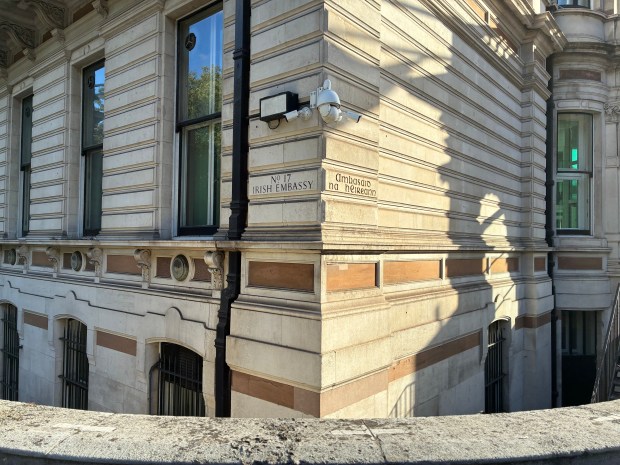
Last Monday was a special night when a book I’ve co-edited with Fiona Skillen and Helena Byrne was launched at the Embassy of Ireland in London. We were absolutely delighted with the evening and support we received from the Embassy. I’ve been fortunate to have my books launched in some pretty spectacular venues over the years, this was the first time any of my books have been launched at an embassy. In fact, it’s the first time I can recall ever being in an embassy.
The book we launched was ‘Histories of Women’s Football in Britain and Ireland’ and the launch was attended by academics, researchers, historians, practitioners, international footballers and many others who have helped us along the way. The whole event was hosted by the Embassy and we were delighted that Orla McBreen, the Deputy Head of Mission, was so interested in the book. Both Orla and the rest of the Embassy team, made us feel so welcome and Orla introduced us with a nice speech too. Thanks for that.
Orla said: ‘The book turns our attention to an area of history that has too often been overlooked. By tracing both regional and national developments, and by spotlighting the work of historians, heritage practitioners, artists, and documentary makers, this volume shows how academic research can travel beyond archives into public spaces, shaping attitudes, inspiring communities, and ensuring that the struggles and achievements of women in football are preserved.’
After Orla’s speech came a panel discussion between myself, Fiona and Helena and then we opened up the discussion to questions from the audience. Over 100 people attended and the whole event was a great success. It was wonderful to see so many former players and administrators there and to have key representatives from organisations such as the Irish FA (Northern Ireland) and the FA, as well as officials from the Embassy of Ireland of course.
I’d like to say special thanks to Helena Byrne who, on behalf of all the authors and editors, put so much effort into making this launch happen at the Embassy. I’d also like to thank everybody at the Embassy for their efforts and support. It really is appreciated and was a special night.
The book is the culmination of several years work and includes the following chapters (author names in brackets after each chapter):
Setting the Scene: The Origins Story of Women’s Football in Scotland (Richard McBrearty)
The First Tour of Women’s Association Football – 1881 (Stuart Gibbs)
Women’s Football in Wales, 1890–1950 (Craig Owen Jones)
‘Testimonial to Mrs Walter Scott’: A Brief History of Diana Scott (Alexander Jackson)
Excommunicating the Women’s Game: The English FA’s 1921 Ban Revisited (Dilwyn Porter)
The Media Framing of Women’s Football in Wales During the English FA’s 1921–1970 Ban (Beth G. Clarkson, Keith D. Parry, Rafaelle Nicholson and Alice Hunter)
‘Proving themselves no mean experts at the game’: Women’s Football in Scotland, 1914–1921 (Fiona Skillen)
The Development of Women’s Football in Trafford (Gary James)
A Hollow Victory: Exploring the Limited Impact of the Removal of Formal Restrictions on Women’s Football in Scotland on the Development of the Women’s Game in the 1970s and 1980s (Karen Fraser)
Surviving or Thriving? Women’s Football in 1970s Northern Ireland (Conor Heffernan)
The Development of Women’s Soccer in Dublin (Conor Curran)
The Trailblazers – Organised Women’s Football in the Interwar Period (Helge Faller)
The Dick, Kerr Ladies from Paris and Sydney: Globalisation the Image and Influence of British Women’s Football Overseas (Keith Rathbone)
Game Changer: Looking Back on the First UEFA Competition for Women (Helena Byrne)
Winning Working Women – the Story of Sweet F.A. (Paul Beeson)
The Representation of Women Within the Scottish Football Museum (Demi Boyd)
UEFA Women’s EURO 2022 Heritage Programme: A Case Study (Caterina Loriggio)
From Pitch to Screen – PurpleTV’s Documentary Films on Women in Scottish Football (Margot McCuaig)
The publishing blurb says: ‘This book brings together a range of researchers to explore the growth and development of the women’s game in Britain and Ireland. They are active across a diverse range of fields, from historians and heritage practitioners, to those from the arts such as playwrights and documentary directors. This edited collection draws together both regional and national studies to provide a more nuanced understanding of the history of the women’s game in Britain and Ireland than has been possible before. Chapters in this book explore new findings around the development of key teams, players, and organisations, and in doing so enrich the historiography of the game.
‘Often books on the history of football have taken a narrative approach focusing only on the research findings or ‘story’. This is of course important, but in this book the editors also wanted to reflect the ways in which research into the history of women’s football has been shared and explored within a range of spaces and communities. There is a huge untapped audience who want to engage with the history of the sport. By reflecting on previous arts/heritage-based projects we can explore new avenues regarding how academic research can be made accessible to the general public and in turn how arts/ heritage-based projects can inform academic research.’
The book has been published by academic publisher Peter Lang and is, inevitably, priced accordingly. If you’d like to read the book then I’d encourage you to ask your local library or archive to stock a copy. Thanks
It’s a bit early to say much about this but my research and book on the Manchester Corinthians has inspired the creation of a short video film aimed at a South American audience on the pioneering women’s team. The Corinthians toured South America and the West Indies in 1960 and it’s been a dream of mine to see something created specifically for South Americans to enjoy on the club.
I was approached a while back about the club’s stories and connections to South America and am delighted something is now being created on them. It’s wonderful to know that this story is spreading across continents again, just as the Corinthians did when they toured all those decades ago.
Some of the filming for the South American video occurred at Fog Lane Park, Didsbury – the club’s home for its opening couple of decades – with the Blue Plaque we unveiled in October 2023.
I’ve been told my book will appear in the film (a still below) and it’s been used for much source material too. One of the main reasons I did my research was I wanted to spread the word about these remarkable women.
Watch this space for more on the South American video. In the meantime, if you’d like to know why this club is so special take a look at the only Authorised History of the club. Details here:
If you’re interested in women’s football or in football in Trafford or Manchester then get your self a brew, settle down and enjoy this video of my talk. It was part of my work on the #WEuro2022 Heritage Lottery funded project and my long standing project into the history of women’s football in Manchester. Here goes:
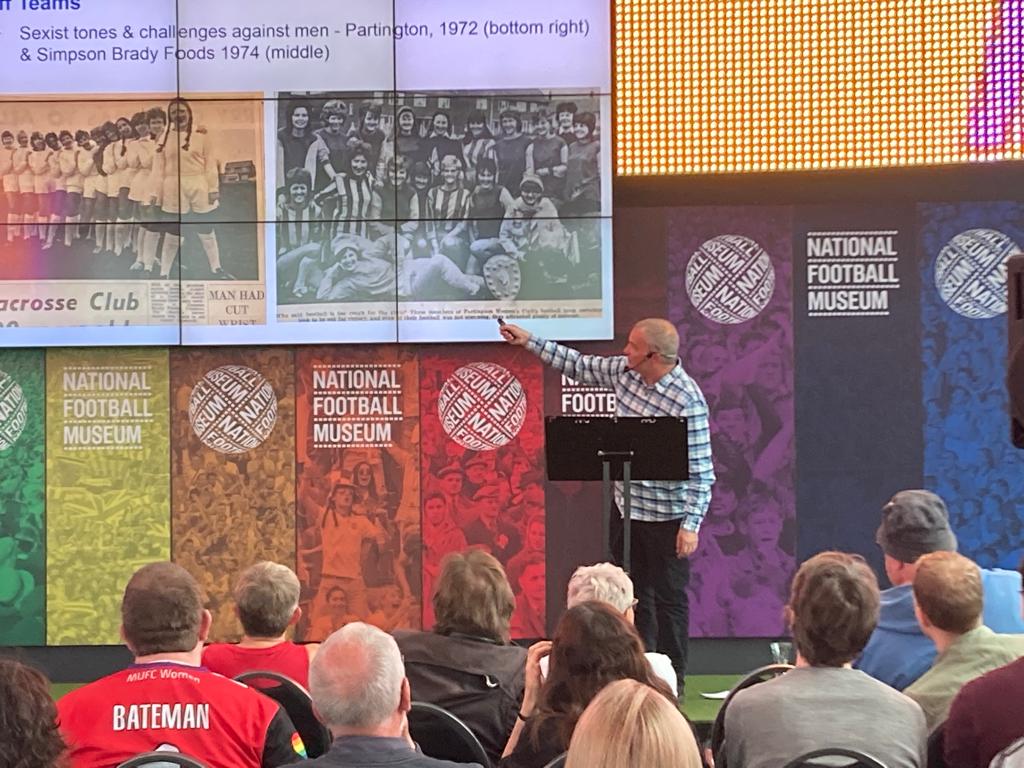
This talk on the history of women’s football was staged at the National Football Museum a few years back. The talk lasts about 47 mins. Enjoy!
The history of women’s football in Trafford is documented in the new book on women’s football I’ve co-edited. You can find out more about that here:
On Saturday 2 August we managed to stage another wonderful free event celebrating the pioneering Manchester Corinthians women’s team. This included a film show, talk and (most importantly) interviews with 6 Corinthians covering every era of the club’s existence. There were other Corinthians in the audience plus Wayne Murray (representing his mum and auntie – Elaine & Shirley Orange), Issy Pollard (Doncaster Belles & England) and Dennis Tueart (Manchester City, Sunderland and England).
Keeping to the best traditions of the Corinthians this free event also raised funds for the Hebden Bridge Women’s walking football team – several players were in attendance wearing their football shirts too.
Hebden Bridge was important to some of the recent promotion of the Corinthians’ stories. It was here in 2021 that I first publicly announced the idea of erecting a blue plaque. That was at an earlier free event and this year’s free event at the Hebden Bridge Picture House completed the journey to some extent. Thanks to the cinema for all their support too.
The film shown was by Imprint and one of the people behind it, John Tueart, was also present. Imprint have made their film free to download too so please watch the following and share the link widely ( let’s get everybody talking about the Corinthians). Here’s the link: https://m.youtube.com/watch?v=AWsGr3G_izE
Thanks again to all who attended, especially those who donated money for the local walking football team and those who bought the book (£5 from every book sold also went to the local team). Please keep spreading the word. Here are a few photos from the event:
It’s wonderful that England have won, once again, the Women’s Euros. It’s so important for moments like this to be celebrated and recognised for the significant achievement they are. During recent weeks much has been said about the first England women’s international against Scotland back in 1972. That’s great – the history of women’s football in this country goes back a long way – however I am a little disappointed that the role of one significant figure in the development of international football has not really been mentioned. That’s he role of Gladys Aikin, the first chair of the England Women International Committee.
Gladys was the manager of the Manchester Corinthians and she was one of the founding people behind the establishment of the Women’s FA. She was also someone who challenged the FA a ban and in the early 70s she worked with others to establish an England international team. She became the first chair (though she always described herself as Chairman using the convention of the time) of the England Women International Committee and was ultimately responsible for that first England squad (see letter).
I’ll be mentioning Gladys during the Free Corinthians event I’m staging at Hebden Bridge on Saturday 2 August (4pm-6pm) so why not come along and hear more on her and the Corinthians? Follow the link for tickets and details:



























 Gary James' Football Archive