MANCHESTER CITY – HALL OF FAME: Niall Quinn

“It’s a tremendous honour for me and my wife to be here tonight to be inducted into the Hall of Fame.  When I arrived here I was a kid who couldn’t get in to the Arsenal side, but by the time I left I’d had a wonderful time and had become a full international.  When I left, myself and Francis (Lee) sought to differ that I was getting a little bit too old.  I apologise for all that time Francis, but we were both trying to do our best for the club, and as long as everybody keeps doing that this club will always remain special.  I am very pleased with this award.  Thank you.” Niall Quinn collecting the Hall of Fame award in January 2004

Subscribe to get access

Read more of this content when you subscribe today.

Memorial Cards: Sledging Rivals in 1912

It is believed the memorial card seen here was printed to mark Manchester United’s 2-0 victory over Manchester City on December 28 1912. Cards like these were popular at most high profile games and in Manchester there was a significant industry behind football funeral cards.

They seem a bit macabre today in our half-half friendship version of professional football but back then cards were used to highlight games frequently. I’ve written and talked a lot on this over the years.

Here for subscribers I’d like to provide an overview of the industry, how it existed, what activities were carried out and provide a potted history of the funeral card business. This is about 3,500 words, so get yourself a brew and settle down to read…

Subscribe to get access

Read more of this and everything else on the site when you subscribe. It costs £20 a year or £3 a month to subscribe and you can access exclusive interviews, articles and more.

City Voices Project: More MCFC Fans’ Views Needed

An update on the City Voices project… It’s been over a year since I announced the project which will capture and archive the memories, stories and views of MCFC fans but, due to COVID, I’ve not been able to interview many fans. I’m still keen to gather these stories, which will be archived at MCFC for future generations too! Read on for more information…

Following on from my successful project capturing the stories of the women who played for and the people involved with Manchester City’s women’s team throughout its 30+ years of existence, a similar project was launched more than a year ago to capture the stories of Manchester City’s fans.

I will be capturing the stories of the club’s fans over the next year and you can help contribute to this great project. I’m keen to hear from and interview fans to ensure their stories and experiences are captured and retained for ever.

If you would like to help the project and provide your stories then please complete the questionnaire below and send it to gary@GJFootballArchive.com as soon as you can. Unfortunately, due to time constraints at the moment I will not be able to reply to all emails. I will certainly be reading every questionnaire and those stories will be captured for posterity. 

In addition, I will be interviewing some fans during 2022. Hopefully, this will be via face-to-face interviews may follow. If you would like to be considered for interview then please complete the relevant section on the questionnaire.

Updates on the project will follow over the coming months, including details of how these stories will contribute to our knowledge and understanding of what it has been like to support Manchester City over the decades. 

One important point to note is that I am keen to hear from fans of all ages based in Manchester, the United Kingdom and around the world. The greater the number that respond the better the archive of fans stories will become.

Please help this project and ensure the memories, stories and lives of City fans are captured for posterity. Thanks to those who have already completed the questionnaire – some of you are still on my list for potential interviews (apologies for the delays – COVID has been a bit of an issue for us all of course!).

Here’s the questionnaire:

https://gjfootballarchive.com/wp-content/uploads/2021/02/city-voices-modelconsent.docx

Thanks,

Gary

Climbing the Golden Stairs

I’ve always liked this cartoon since finding it during research back in 1989. It represents a game played on Boxing Day between Manchester City and Newton Heath (who later reformed as Manchester United in 1902). Manchester’s Blues won the match 4-0 and the cartoon was captioned ‘Climbing the Golden Stairs’. That caption referred to a promotion challenge.

At the season’s end City were promoted as Second Division champions, becoming the first Manchester side ever to gain promotion and the first to win a national competition of course. Newton Heath finished fourth in the Second Division while near neighbours Glossop were promoted in second place behind City.

Search the archive to read more about 1898-99 and about some classic derby matches too.

A Rare Action Photo From 1913 – MCFC V LFC

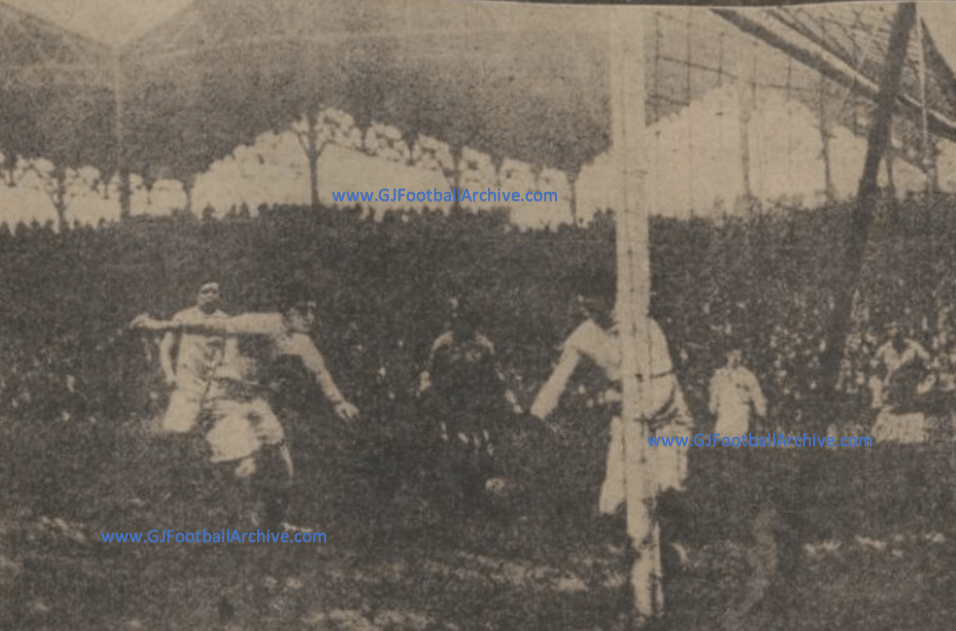
Here’s an image I found a few years back while researching Manchester City’s games against Liverpool. I know it’s a poor quality photo and so was unable to use it in the piece I was doing back then. However, I think it’s worth posting here to highlight that there are photos out there that appeared in newspapers of key games involving both clubs.

This photo shows City attacking the Liverpool goal. The game ended 1-0 to City with Fred Howard the goalscorer. Howard had scored two goals against Liverpool the previous day (yes, Christmas Day) at Anfield as well.

On This Day in 1977: Colin Bell’s Emotional Return

City 4 Newcastle United 0

Division One

26th December 1977

City Team: Corrigan, Clements, Donachie, Booth, Watson, Power (Bell), Barnes, Owen, Kidd, Hartford, Tueart

Attendance: 45,811

This match has entered Manchester folklore as one of those games you just had to experience to fully appreciate.  All of those present that night from players, to fans, club officials to newspaper reporters, talk of this afternoon as one of football’s most emotional nights.

The story of Colin Bell and his injury had become one of football’s most discussed issues.  The teatime BBC television news show Nationwide had profiled Colin’s tragic story and as a result the player received thousands of good luck messages from neutrals and ordinary non-footballing members of the public.  They had been touched by his long, hard training schedules; his lonely runs through the streets of Moss Side and Rusholme; and by his absolute determination to return to full fitness.  To them Colin’s story was incredible, to City and England supporters it was a deeply disappointing and tragic story.  

Colin’s gruelling training regime ensured he forced his way into manager Tony Book’s thinking by December 1977, and on Boxing Day he was named as substitute for the visit of Newcastle.  Anticipation was high as supporters believed this would be the day they would see their hero return to action.  

Chairman Peter Swales rated Colin highly and shortly before his death in 1996 the former Chairman explained:  “The supporters loved him.  You can never kid supporters.  They know great players.  It’s no good a manager saying, ‘this is the best player we’ve ever had’.  The supporters will know after a few weeks whether he really is the best.  Bell was the best.  No question.”

On the night itself Tony Book had planned to send Colin on as substitute for the final twenty minutes, but an injury to Paul Power meant the manager had to take decisive action.  The supporters didn’t realise, but as the players were making their way into the dressing room for the interval, it was decided that Colin would play the second half.  During the interval fans started to speculate as to when they would see their hero, with the majority believing he would come on for the final flourish, but then as the players came back out on to the pitch it was clear that Paul Power was missing and that Colin was coming on.  

The stadium erupted and the fans on the Kippax terracing began to chant his name.  It was a truly marvellous sight and the tremendous feeling of anticipation and excitement had never been felt midway through a match for any player before.  It was the most amazing individual moment witnessed at the old ground.  Dennis Tueart, a player on that day, remembers:  “He came on at half time, and it was like World War Three.  I’ve never known a noise like it in all my life!  The crowd gave him a standing ovation and he hadn’t even touched the ball.  I’ve never seen a guy work as hard to get back.  The hours and hours he put in.  The pain he went through…  it was a phenomenal amount of work and he definitely deserved that ovation.”

For the player himself the day remained one of the most significant memories of his life when I interviewed him in 2005.  “As I came down the tunnel I could hear a whisper go right round the ground.  I knew that reception was for me alone.  I was never an emotional player but that afternoon I got a big lump in my throat.  I’ve been lucky to win cups and medals and play internationals, but of all my great football memories, that is the one that sticks in my mind.”

“The City crowd and I had this mutual respect really, and that standing ovation from over 40,000 people brought a lump to my throat for the only time in my career.”

The substitution totally transformed the atmosphere and the result.  The game had been goalless, but the Blues tore into Newcastle as if they were playing in the most important game of all time.  Dennis Tueart played superbly and scored a hat-trick, with Brian Kidd also scoring, to make it a convincing 4-0 win for the Blues.  At one point Colin had a header which just sneaked over the bar, but the fairytale goal on his return did not arrive.

When I interviewed him years later a modest Colin felt he didn’t contribute a great deal:  “I don’t think I touched the ball.  It was ten men versus eleven, but the atmosphere got to our team and we ran away with it.”

‘The “Missus” gets her wages’ – Christmas Day 1904

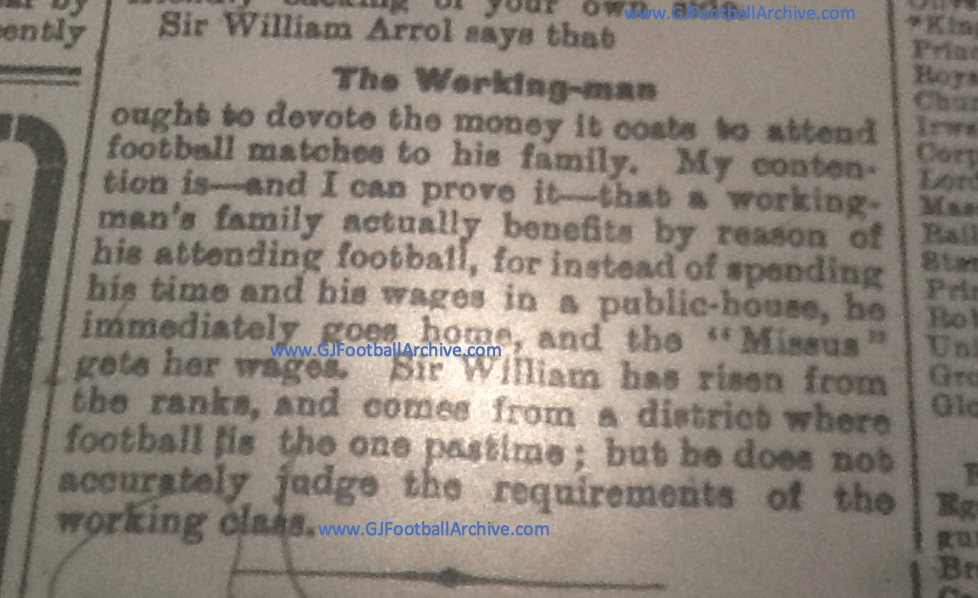
Here’s an interesting snippet from an article I found while researching something else. It was published in the Umpire newspaper on Christmas Day 1904. John Bentley, more commonly known as JJ Bentley, was a Manchester United & Bolton manager who also wrote for a variety of newspapers. He was often perceived as a knowledgeable football man and his views influenced many. If ‘JJ’ said something it was usually accepted as fact. So, when in 1904 there had been criticism of the money working class men were spending on football he spoke out.

As you can see by this brief cutting Bentley used his column to claim that the wives of working class men benefited by their husbands going to football because it meant he didn’t go and spend his money in the pub! Consequently, she got her housekeeping! What a ridiculous argument!

Can you imagine the justifiable furore today if Gary Lineker or similar said something like this? There are so many aspects to this simple piece that could be explored but perhaps I’ll save that for another day. It is also worth noting that many women did attend football matches themselves back then too.

Ah well! Happy Christmas.

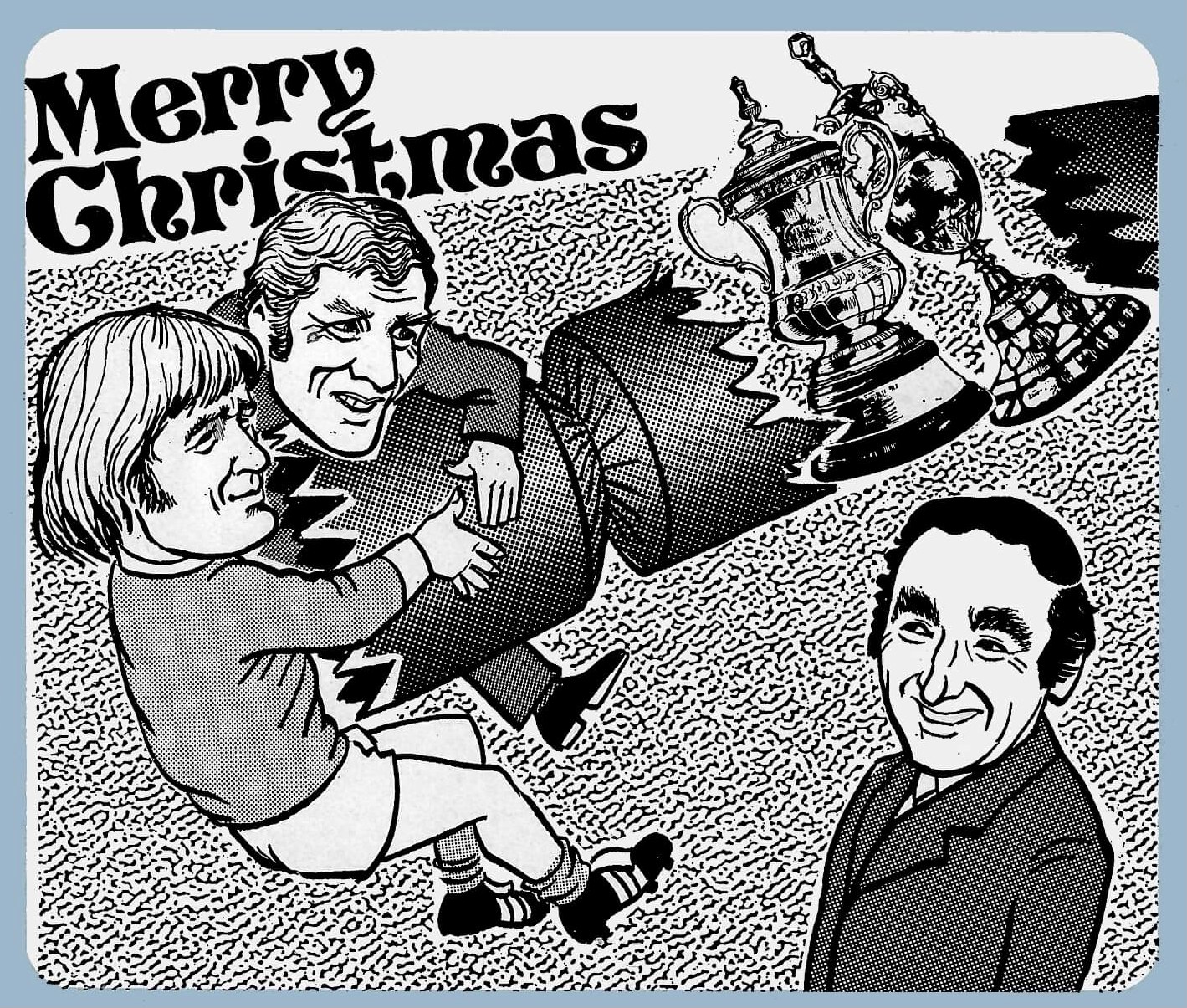
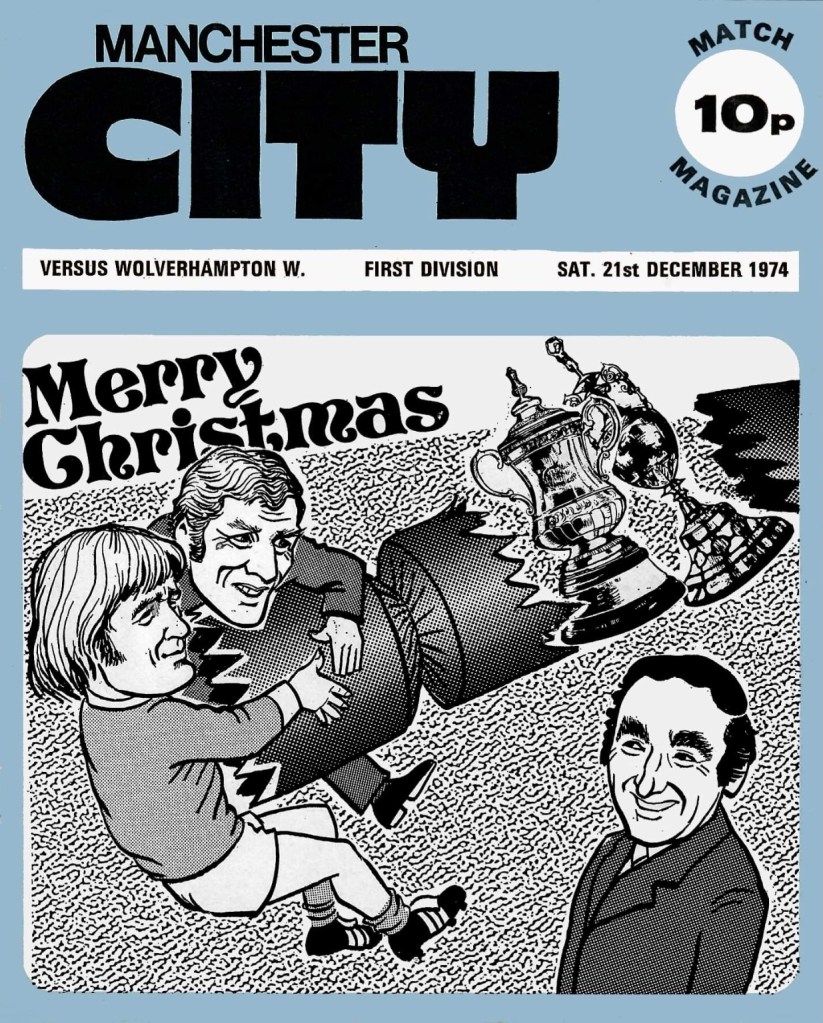
Merry Christmas

Wishing all my friends, followers, family and so on a happy Christmas. Let’s hope we all stay safe and enjoy the holiday period (and beyond). Best wishes to all. If you’re bored over the next few days (yeah, I know) then take a few moments at the end of each day to look at

Welcome to Gary James’ Football Archive

I’ve got quite a few articles coming up about MCFC at Christmas on each day that might be entertaining/of interest. Happy Christmas to all.

MCFC 20TH CENTURY CHRONICLE SEASON 1967-68

The Matches

As with the 1936-7 Championship season, the first few weeks gave little indication of what the Blues were ultimately to achieve as only one point – a goalless game with Liverpool – was obtained during the first three matches.  Fortunately, this was followed by a 5 match unbeaten run, lifting City into the top 5. 

Subscribe to get access

Read more of this content when you subscribe today.

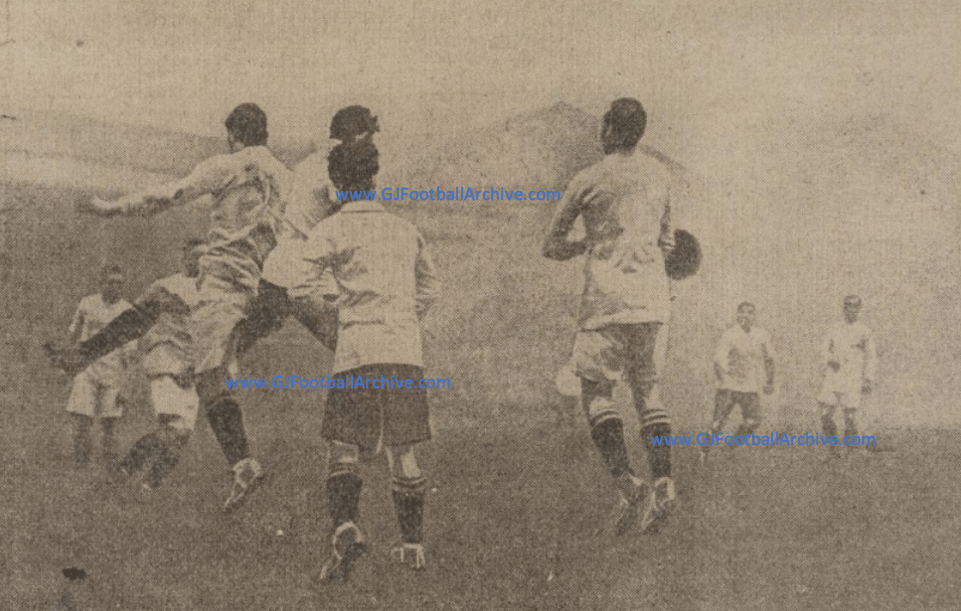
A Rare Hyde Road Action Photo

Here’s an action image I found while researching about ten years ago of Manchester City v Preston North End played at Hyde Rd on 20 December 1913. That day a crowd of about 20,000 watched as the two sides drew 1-1 with Tommy Browell scoring for Manchester’s Blues.