It seems an appropriate time to re-release this… Back on Thursday May 20 2021 I interviewed Noel Gallagher about his support of Manchester City, Pep, Europe and more. It was great for two Mancs of a similar age to get together to chat about City. I really enjoyed it.
Thanks to Noel and the staff at his studios & office for making this happen.
Subscribe to get full access to GJFootballArchive.com
Fancy subscribing to my website? Subscribers get access to all the 1600+ articles, interviews etc. that have been posted so far on my site and all those posted during your subscription period. It costs £20 a year (works out about £1.67 a month) or £3 a month if subscribing a month at a time.
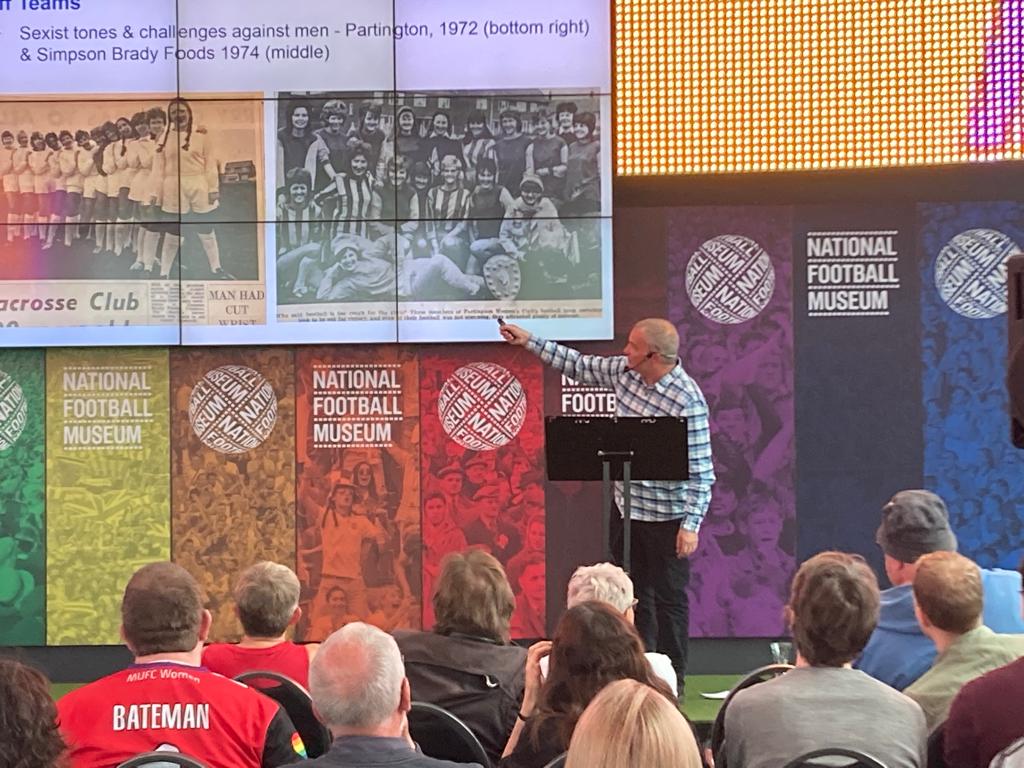
If you’re interested in women’s football or in football in Trafford or Manchester then get your self a brew, settle down and enjoy this video of my talk. It was part of my work on the #WEuro2022 Heritage Lottery funded project and my long standing project into the history of women’s football in Manchester. Here goes:
This talk on the history of women’s football was staged at the National Football Museum a few years back. The talk lasts about 47 mins. Enjoy!
The Trafford Archive website I mention during my talk is available here:
The book will be published later this year and will include material from every year of the club’s existence with dozens of former players interviewed. I’ve managed to interview women who played in EVERY season of the club’s 40+year existence and these interviews, together with some wonderful photographs, will form the basis of the book. It will also include the names of every player identified during the course of the research I’ve undertaken over the last decade – in excess of 300 names! – together with details of games played and more.
The story of the club will be told via the voices of the women who played and this will be supported by the most detailed research into the club ever performed. Newspapers, diaries and other literature have been consulted from archives in both the UK and abroad. Exclusive information on the club’s history will be documented here for the first time.
Thanks to all those who have contributed either by telling their story or by ordering the book pre-publication. This means a lot, so thanks for that support.
Nearer publication I will be emailing subscribers to ensure subscriber names, addresses etc. are correct so that no one misses out. If you’ve subscribed watch out for those emails over the coming months.
Thanks to all those who have supported the project.
One area in which you can help further is by thinking of anyone you know who may have played for the club. I will be including as comprehensive a list as possible of former players within the book and would hate to miss anyone. As some former players may not have been mentioned in newspaper reports, match programmes or elsewhere it would be great if those who were involved could think back and let me know any names who you remember who may have been missed. Every name on the list is being checked against other sources/player memories, so feel free to email me with anything you think may help.
If you’ve not subscribed to the book you can here:
The book on the Manchester Corinthians will be published later this year as planned. Research continues alongside the writing, image selection and so on. This week I’ve been in contact with a third Corinthian who played for the team in 1949 – it’s incredible! When I started this I doubted I’d find one original but now there are three from the opening weeks.
There’s still time for others too. So if you know someone who played for the Manchester Corinthians or any of its sister clubs then get in touch. There will be a list of all known players within the book so I’m keen not to miss anyone.
If you’d like to order the book pre-publication – and get your name printed in a special roll of honour – then do so here:
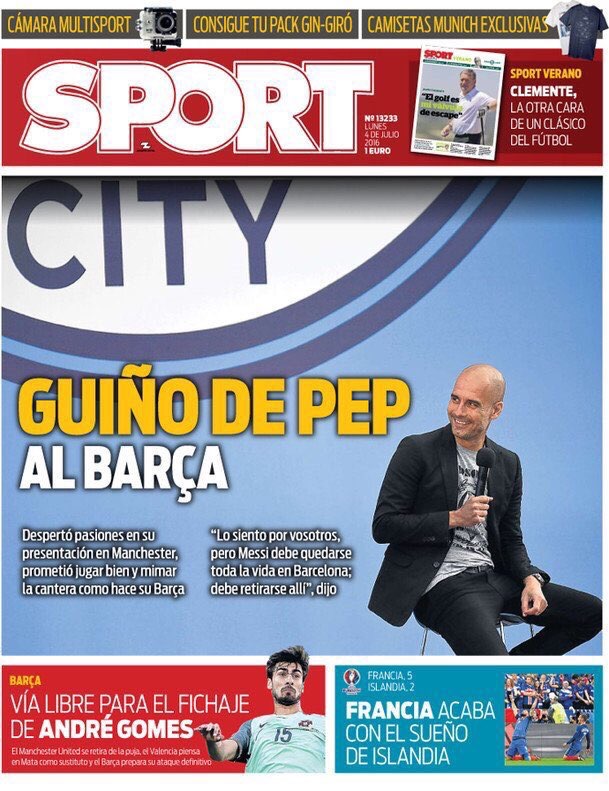
On this day (3 July) in 2016 the new Manchester City badge was officially launched at the Cityzens Weekend. It was also the formal official welcome for new manager Pep Guardiola. There was a surreal moment for me when I was asked to go on stage to be interviewed about the new badge.
I had been consulted by the club on the history of all of City’s badges, emblems and similar for about a year or so, and had performed a series of talks to fans throughout the consultation period.
This was the most detailed badge consultation had ever performed with fans at any club – sadly too many clubs impose a badge without listening to fans. Doing the talks as part of the consultation helped bring out the stories of each emblem and why it was significant – or not! Understanding why, for example, the red rose was introduced in 1972 following the takeover of the club by Joe Smith & Co. or how the 3 emblazoned lines had always been a part of City’s badge (apart from 1972 and the Swales years that followed) helped some determine what elements mattered most to them.
You can find out more about City’s badge history here:
In 2016 I was the warm up act for Pep so it’s a wonder anybody listened. It was a great, positive day for the club and for all of us there. The years since Pep’s arrival have been truly outstanding. We all had hope on this day in 2016 but who’d have thought it would have been as great as it has been?
Enjoy! I was on as a City supporter and Pete Boyle represented the United angle.
Sadly, our time was reduced and so I didn’t have chance to mention Sir Howard Bernstein, who died this weekend. Howard was a key figure behind Manchester’s redevelopment and was hugely influencial in the regeneration of east Manchester, including the stadium and the wider Etihad campus.
His death is a sad loss to Manchester. A politician who did what he said he’d do and helped improve the city.
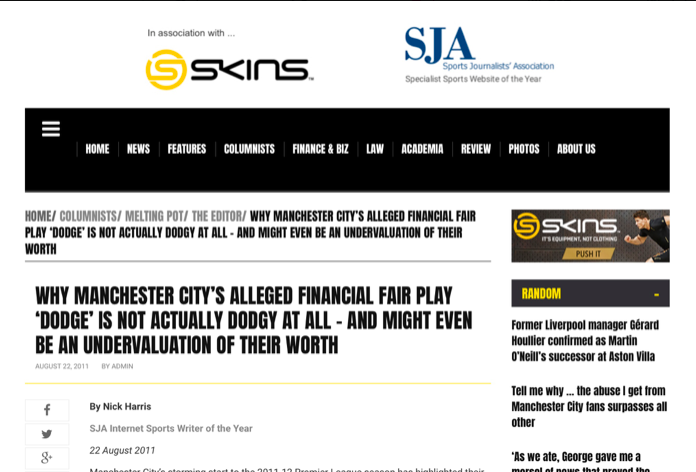
Something that has been getting a bit of attention this weekend concerns MCFC sponsorship deals back in 2011. The journalist Nick Harris was complaining about it yesterday and implied the value was inflated and so on. It’s all fairly typical stuff but it is worth noting that Harris’ view has changed significantly since 2011. Back then he actually claimed City’s sponsorship was fair, and possibly even undervalued!
I won’t go into it all but here’s how his August 2011 piece was headlined:
Sir Howard Bernstein is mentioned in other articles on this site such as:
Over the years I’ve done quite a few talks on the history of football to Manchester and have also focused on the financial significance of the sport to Manchester. Here are a few slides that spell out a few facts. Obviously, I normally include explanation behind a lot of this when I talk but nevertheless I think they may be of interest as stand alone slides.
These slides were from 2019 and so the figures will have changed since then but they do give a general feel for the financials:
A reminder that subscribers to my site can download lots of my writing, including all of Manchester A Football History and a PDF of my entire first book. It was published back in 1989 and sold out within 6 months of publication. Here are more details:
So far I’ve told you about the eleven players selected for my all-time best Manchester City FA Cup final winning team and today it’s the time for the manager.
I was asked to select an all-time City eleven and had two rules – they had to actually play in a winning final (so, unused substitutes were not allowed) and they could not be a member of the current playing squad. I also tried to focus on the fact that this eleven would also be facing an all time Manchester United eleven. Therefore victories over United in key games were always in the back of my mind.
For the manager I could select anyone who had managed the Blues in a FA Cup winning final. It was tough because of the wonderfully talented and inspirational leaders the club has had, starting with Tom Maley in 1904. In the end I went for:
Manager Pep Guardiola (since 2016)
Imagine this talented team being guided by this inspirational coach! A tactical innovator he would love the versatility of this team with attack-minded defenders, a hugely talented midfield and some of the best goalscorers the FA Cup has ever seen. Forward-thinking 1960s coach Malcolm Allison would be enthralled watching him in action.
I have no idea how many of you read the article in the FA Cup final but another writer picked the United all-time FAC eleven. When comparing the two I’m convinced my 11 would easily defeat United’s. Maybe I should post that and see what you all think?
So far I’ve told you about Bert Trautmann, Tony Book, Glyn Pardoe, Vincent Kompany, İlkay Gündoğan, David Silva, Billy Meredith, Colin Bell and Fred Tilson in my all-time best Manchester City FA Cup final winning team and today it’s the time for the final couple of names.
I was asked to select an all-time City eleven and had two rules – they had to actually play in a winning final (so, unused substitutes were not allowed) and they could not be a member of the current playing squad. I also tried to focus on the fact that this eleven would also be facing an all time Manchester United eleven. Therefore victories over United in key games were always in the back of my mind.
The final two players selected are heroes from the 1969 and 2011 finals:
Neil Young (1961-1972)
A Mancunian who scored the only goal of the 1969 final – a trademark left foot shot past Peter Shilton – and followed this with the opening goal in City’s first European trophy success the following season. The leading goalscorer during the 1967-68 title winning season, Young played in a variety of attacking roles, always contributing goals.
1971 ECWC v Chelsea North Stand being built but used for terracing. Neil Young. Photo by Alan Jubb.
There are lots of articles that mention Neil Young on this site. You can read some here:
Bustling, powerful and rampaging, the African Footballer of the Year was goal scorer in the 2011 FA Cup semi against United and that season’s final too. This versatile midfielder can play a holding role or play box-to-box, adding many options to this team. He is adept at turning any game.
Yaya Toure
You can read about the significance of 2011 and Yaya’s significant role in that in this feature here:







 Gary James' Football Archive