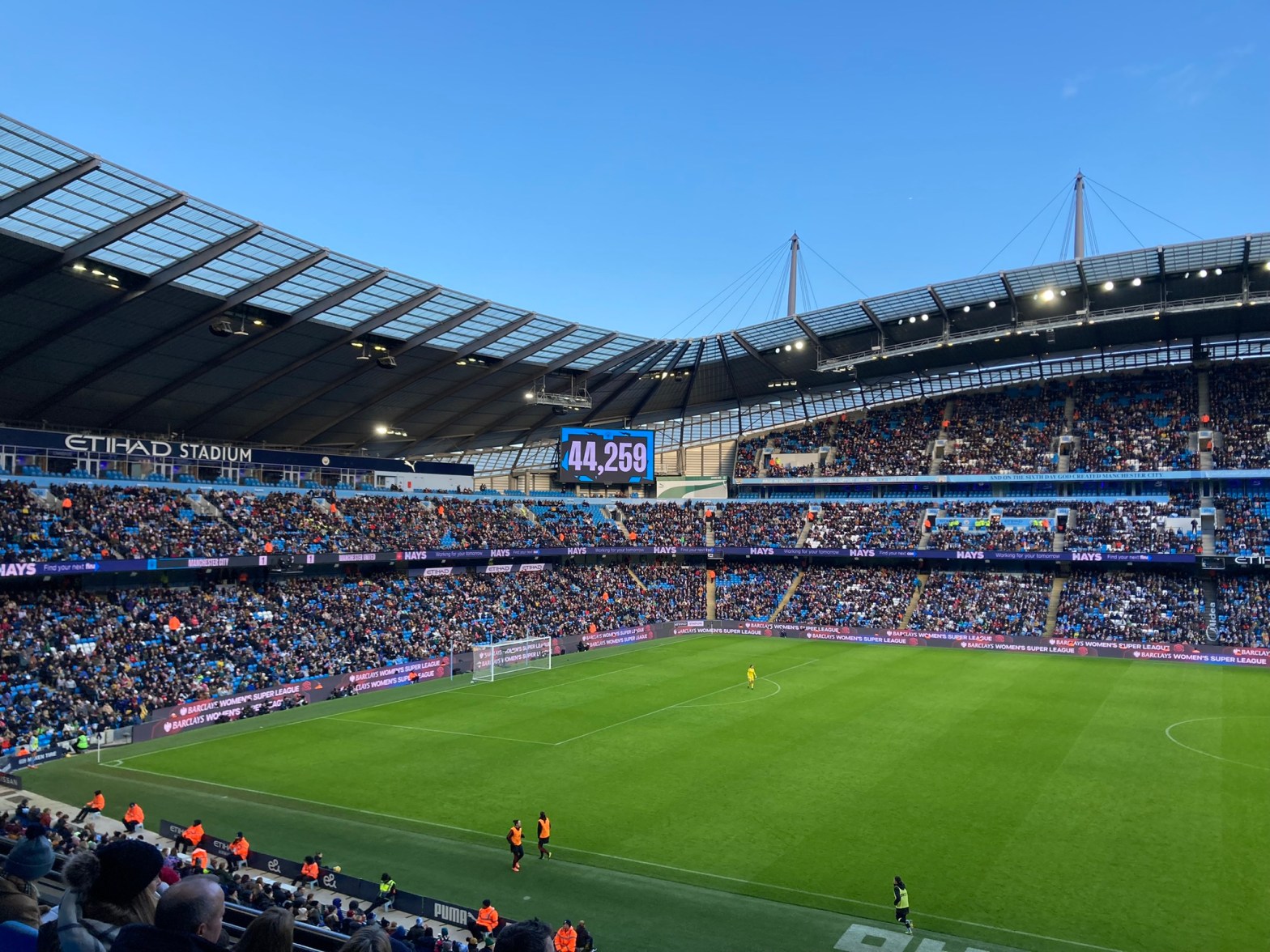
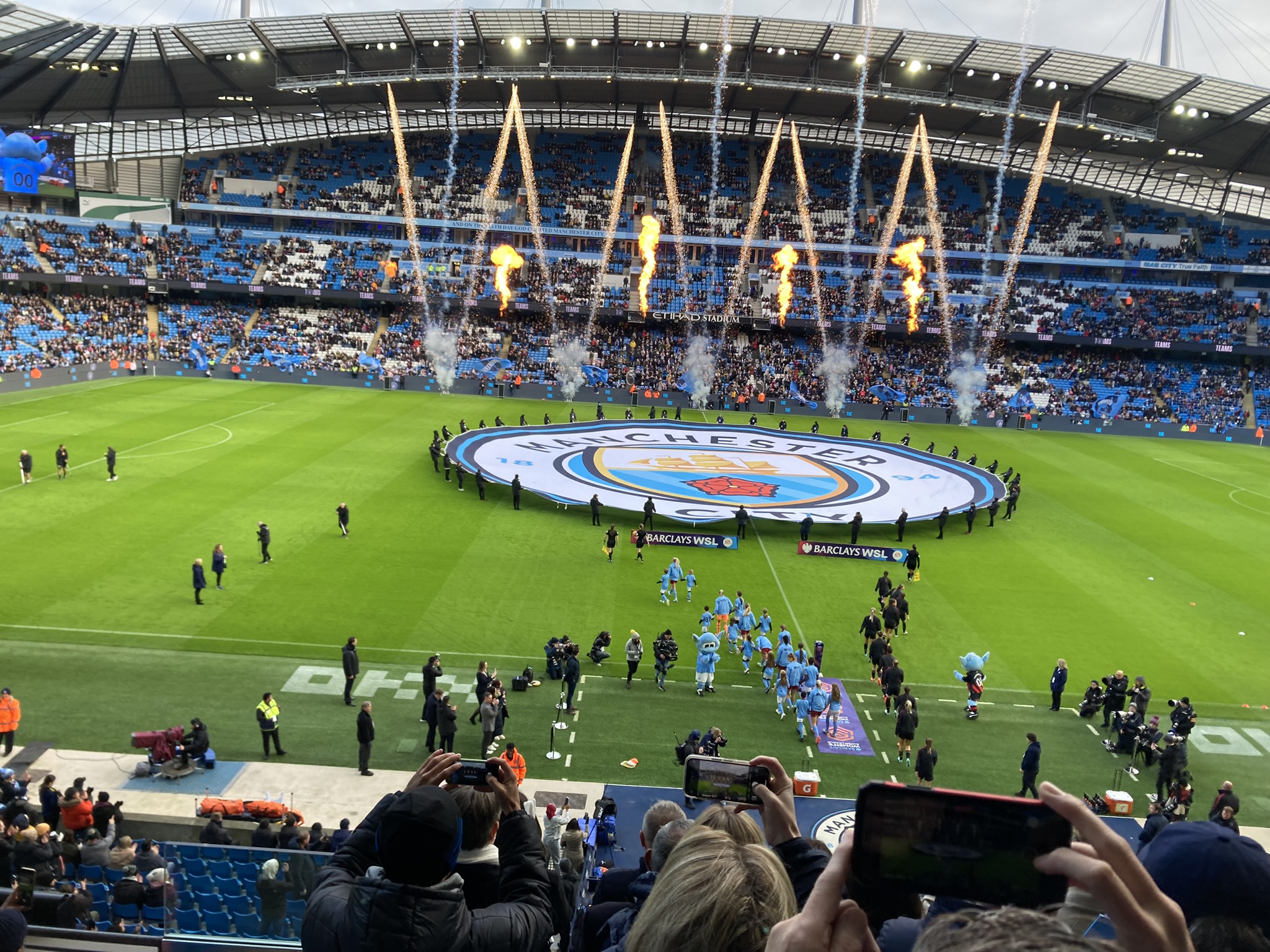
I’m delighted to say that I was at the Etihad Stadium today when a record crowd for a women’s club game in Greater Manchester was set when 44,259 watched City draw 1-1 with United. This includes all home games by Greater Manchester’s clubs; WFA Cup finals played in the area and games played by Dick, Kerr Ladies and other prominent women’s clubs over the last 140 years or so. For those wondering the top four highest club attendances are:
44,259 City v United, Etihad, December 2022
31,213 City V United, Etihad, September 2019
31,000 (occasionally reported as 35,000) Dick, Kerr Ladies v Bath Ladies, Old Trafford, January 1921
30,196 United V Aston Villa, Old Trafford, December 2022
You can read about the first competitive women’s Manchester Derby, which occurred in 1990, here:
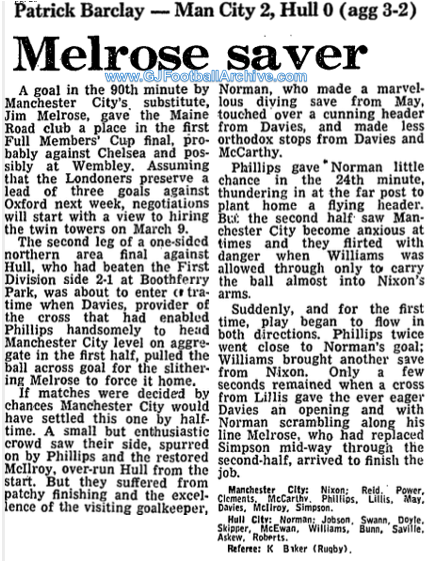
On this day (11 December) in 1985 a 2-0 victory (3-2 on aggregate) by Billy McNeill’s Manchester City over Brian Horton’s Hull sent the Blues to Wembley for the inaugural Full Members’ Cup Final. City’s scorers at Maine Road were David Phillips and Jim Melrose before the largest crowd (by any club) of the entire tournament, excluding the final, of 10,180. Here’s a contemporary report by Patrick Barclay of the game:
You can read more on the Full Members Cup and what it was all about here:
Tomorrow is the latest Manchester derby in the Women’s Super League. There’s a long history of competition between teams representing the women of Manchester City and Manchester United. City’s team has been in existence continually since November 1988 when Donna Haynes and Heidi Ward both scored two goals in their first game (v Oldham Athletic at Boundary Park).
I was at the City Ladies (as they were then known) first game and I was also at their first league derby in September 1990 when City defeated United 4-3. It was a fantastic day, watched by around 150 people.
City’s goals came from Rhoda Taylor (8 min), Rachel O’Shaughnessy (43 mins), Jenny Newton (50 mins) and Lesley Peters. City’s manager Neil Mather told me as part of my research for the Manchester City Women book: ‘United were the top side, you know, and beating them was so good for morale. The men’s team were a good side in the early 90s when City Ladies carried on developing, you know. This was the Howard Kendall era, and City had top five finishes. City were one of the top five or six teams in the country at the time, so it was fabulous for women’s football to have Man City, you know.’
Helen Hempenstall played for City that day and she described her memory of the day for my book: I remember when we played United (30/9/90) and Neil (Helen’s boyfriend, now husband) and all his mates came to watch us. There were a lot of people there that day. United had a decent team then. It was always a difficult game against United. They had a right-winger… We never got on. Every time we played each other we were at each other all the way through the game. Me and Carol Woodall were having a go at her. The referee told Lesley Wright “Tell both your full backs to shut their mouths otherwise they’ll both be off!” We just didn’t get along and before every game I thought I’ll get in their first. ‘I’m having her.’ Neil Mather still talks about it.
‘I think Lesley Wright kept the team together. She kept it all tight at the back. I played at the back with her and I learnt a lot from her. Because I was next to her I knew how important she was. If I missed something she always got it. She always encouraged me and kept shouting ‘different class, different class’. You learn from the people around you and I listened to her. Before every game she came to speak to me. She’d put her arm around me and reassure me. She’d tell me not to worry about anything. Most of the time travelling to away games I’d go with Lesley in the car. We used to have a laugh. I remember one day we were travelling to an away game some distance away and we stopped for petrol and all got out. I lit up a fag and everyone else jumped back in the car screaming! I didn’t even think! When we got to the ground they all told Neil Mather and I think he worried that he could’ve lost half his team. At another game I was sat in the middle and as we got out the person before me slammed the door back. It hit my head and I had a big lump for the game.’
The story of that game and of the first 30 years or so of City Women’s existence can be read in my book on the club. It’s called Manchester City Women: An Oral History and is basically the women telling their stories of playing for the club and how they got into football, plus statistics covering the journey from friendlies in 1988-89 through to competition and the modern day successes.
You can buy the book via this link (every copy is signed by me):
On this day (10 December) in 1983 41,852 witnessed Manchester City’s 2-1 defeat by promotion rivals Sheffield Wednesday at Maine Road. The crowd was the highest Division Two crowd of the season. Here’s a contemporary report of that game and a few highlights from the game:
We’re in the knock out stages of the World Cup and Manchester City players are contributing significantly to England’s progression at the moment. They are household names and are delivering on the biggest stage, but what about the first City player to appear for England? Who was it and when? Well, here’s the answer.
The first Manchester City player to appear for England was Herbert Burgess, who was reportedly born in Openshaw on 25 February 1883. Burgess was a left back but, according to articles at the time, was only 5ft 4.75 inches tall (weighing 11st 7lbs).
He made his first England appearance against Wales, and City teammate Billy Meredith, in February 1904 and did well in a game that ended 2-2 at Wrexham.
Prior to City Burgess had joined Football League side Glossop in March 1900 and, after three good years there, he moved to City on 30 July 1903. The fee City paid was £250. This was a period when Manchester’s Blues seemed to be cherry-picking the best Glossop had to offer and one report even suggested the nearby club was becoming a nursery club for City.
Burgess made three international appearances in 1904 with the Welsh game followed by a 3-1 victory over Ireland at Solitude, Belfast in March and a 1-0 win over Scotland at Parkhead, Glasgow on 9 April 1904. Only two weeks later Burgess helped City to FA Cup success (they became the first Manchester team to win a major trophy) and the Blues were also League runners up. These were great days for Burgess.
He made one further appearance for England – a 2-1 defeat at Hampden Park on 7 April 1906, played in front of 102,741 – and was furious that one of the Scotland goals was allowed to stand.
This period was a tough one for Burgess as the illegal payments scandal at City completely rocked his world. He was one of 17 players suspended by the FA (I can talk about this for days – it was so unfair and northern newspapers believed it was some sort of conspiracy by the southern based FA!).
Burgess was forced to leave City and, along with other star men, including Billy Meredith, he joined the then underdogs Manchester United and helped them achieve their first major success. He then moved to Denmark and played for Kristiania before joining Hungarian club MTK Budapest.
When his playing days came to an end he became Budapest’s manager and then managed Padova (1922-1926). He left Padova to become Milan’s manager in 1926 and after two years there he returned to Padova.
From 1930 to 1932 Burgess managed another Italian club, Roma. This photo is of Burgess (with cap on) as manager of AS Roma.
Burgess immediately etched his own name into the history of Roma, winning the first ever Rome derby in only his second game in charge. Roma won 1-0 win at Lazio’s Stadio della Rondinella. Burgess also guided Roma to success in the second derby, winning 3-1, the following May, this time at their all-wooden ground Campo Testaccio.
Burgess never lost a Rome derby during his time there as they drew their subsequent two derbies under him. His Roma team also pushed eventual champions Juventus all the way in the 1930-31 campaign, finishing just four points behind Juventus as runners-up.
Sadly, it’s been reported that Italy’s development under the dictatorship of Mussolino meant that English coaches were under pressure to leave and Burgess returned to Manchester, taking a job as a labourer on a housing estate on the outskirts of Manchester. He also became trainer to Ashton National.
He died in 1954.
In total at City he made 94 first team appearances and scored two goals. Had the illegal payments scandal not occurred he may well have been an England regular for several years. As it is his career is pretty impressive for a lad born in Openshaw in the 1880s – FA Cup & League winner; England international; manager of prominent clubs in Hungary and Italy.
People tend to think that it’s only in the modern era that Manchester City have achieved anything or that footballers have gone abroad to coach major clubs like Milan, Budapest and Roma, but the truth is that men like Burgess achieved so much over a century ago. We must take steps to remember them. Oh, and while I’m here it’s worth pointing out that City did have international players for years before Burgess but they didn’t play for England.
The earliest played to make an international appearance while on City’s books made an appearance for Wales in 1890 when the club was still Ardwick. Maybe I’ll write about him one day too?
Subscribe to get access
If you have enjoyed this piece and would like to support my writing while also accessing further great content, then why not subscribe? Those who subscribe on an annual basis get access to everything posted on this site since December 2020 (including PDFs of 2 out of print books, and audio interviews with John Bond, Malcolm Allison etc.). Those subscribing on a monthly basis get access to everything posted since 1 October 2022. It’s £20 a year (subscribe here) or £3 per month (subscribe below). Why not try it for a month?
If you have enjoyed this piece and would like to support my writing while also accessing further great content, then why not subscribe? Those who subscribe on an annual basis get access to everything posted on this site since December 2020. Those subscribing on a monthly basis get access to everything posted since 1 October 2022. It’s £20 a year (subscribe above) or £3 per month (subscribe here). Why not try it for a month?
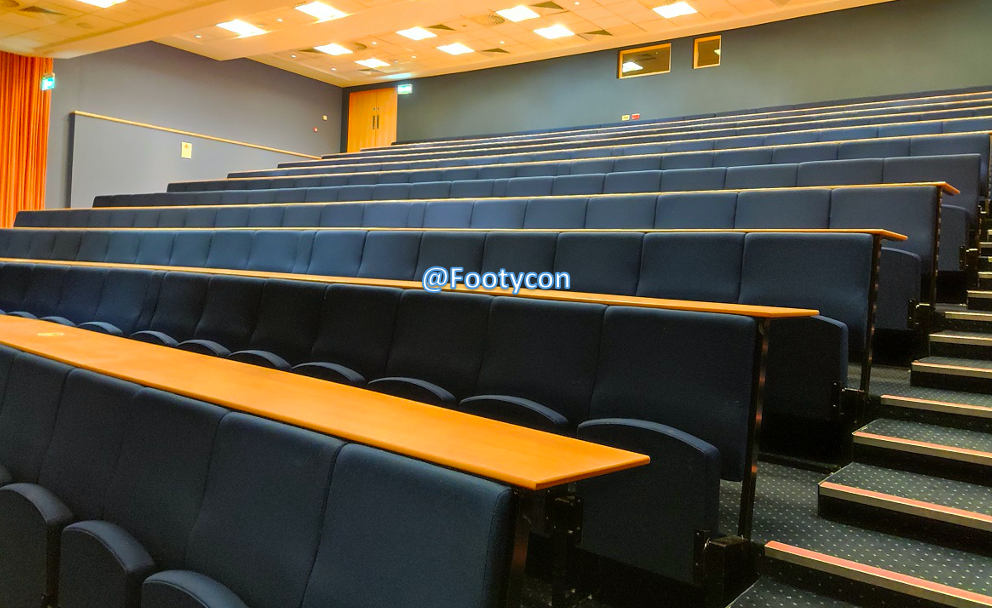
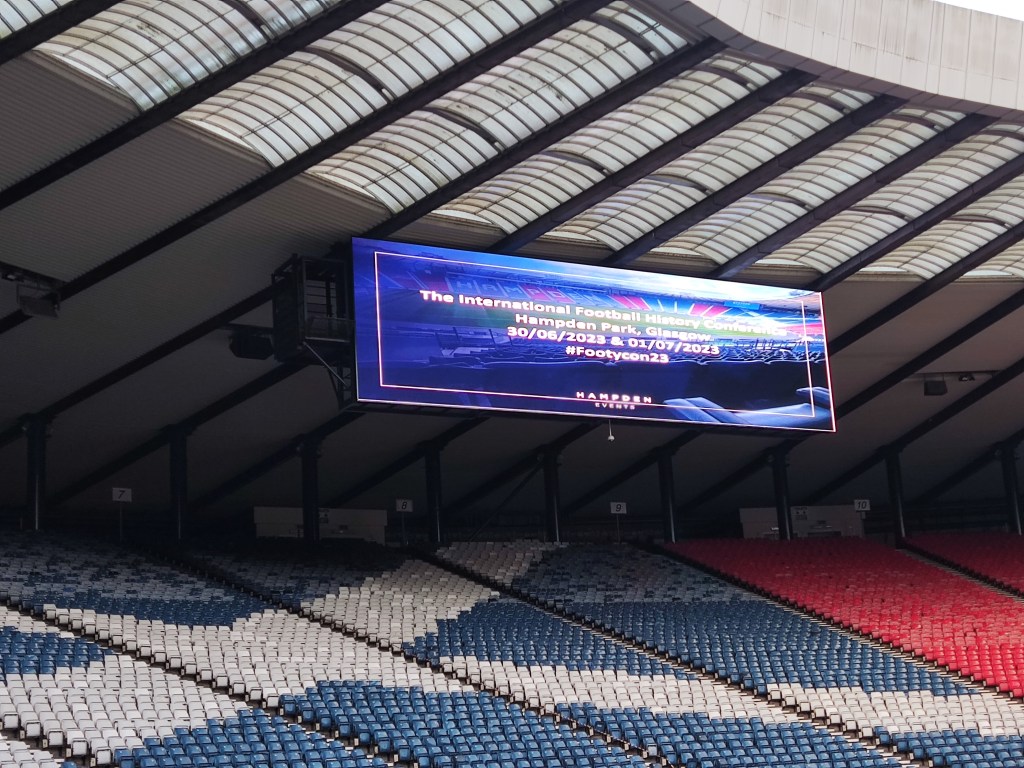
I’m delighted to announce that the 2023 International Football History Conference will be staged at Hampden Park, Glasgow on 30 June and 1 July 2023. The call for papers and details of how to get involved will be announced in January but here are a few details for those interested in getting the date in their diaries….
The aim of this conference is to listen to quality research and to network with others. We hope delegates take the opportunity to meet with colleagues, friends and other delegates to share your research, hear their ideas and help establish a strong network of football (of all types!) researchers and experts.
The most recent conference was held in Manchester in November 2022 and it owes its success this year to all delegates whether presenting or not, and to the following who have provided great support:
City Football Group & Routledge
We would also like to put on record our thanks to British Society of Sports History for their support during Covid when the BSSH funded a zoom licence which allowed us to have a couple of gatherings online.
Rouledge have provided vouchers for a ‘Best Paper Award’ each year and their support has helped enormously.
Following feedback and the support of Richard McBrearty and the Scottish National Football Museum we will be able to take the conference to Glasgow for the first time in 2023. Provisional details are:
Main conference anticipated to be held Friday 30th June through to Saturday 1st July, with main conference proceedings taking place between 8am and 6pm on those days.
As with previous years the conference will be open to those presenting on football of any code.This is a fundamental element of the conference, so if you’re looking for somewhere to present your years of research into gaelic football, Aussie rules or other form of the game then look no further.
The call for papers will be issued in January. We are particularly keen to have panel debates/discussions next year, as well as traditional presentations. If you’ve got an idea for a debate/discussion you’d like to arrange then please email footycon@outlook.com and we’ll see if it can be accommodated.
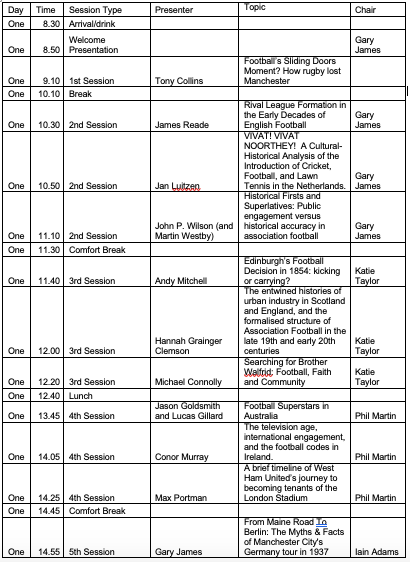
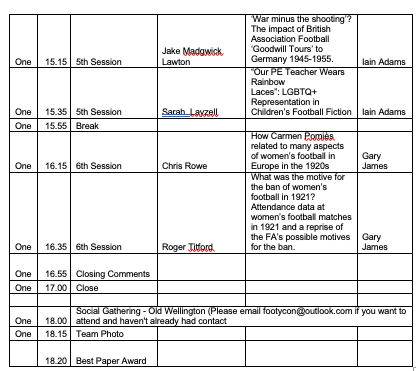
To get a feel for the range of topics covered have a look at the schedule for Manchester 2022 at the end of this article (after images of Hampden).
In addition to any debate suggestions, presentations in the following formats will be welcomed:
Short Form (7 minutes) – 20 slides (plus a title slide) with a maximum of 20 seconds per slide.. Ideal for a summary of research; to present early findings; Image related research etc.
Twenty Minutes – Twenty minutes of slides but no audience questions.
Fifteen plus Five – Fifteen minutes of presentation slides plus five minutes of questions (or any combination up to a maximum of twenty minutes).
Follow @footycon for further information.
If anyone would like to contribute to the conference (in terms of organisational support both in the build-up to 2023 and at the conference itself) then please let us know as soon as possible. The more volunteers, the better the conference. Also, financial support is always useful in helping to keep the costs for delegates down. If you are involved with an organisation who can provide some support then please get in touch. Or if you feel you may be able to add value in some way then we are keen to hear from you.
See you in Glasgow, 30th June & 1st July 2023!
Here’s the schedule for the Manchester 2022 conference (you can search on twitter to see images from the conference with #Footycon22 ):
On this day (8 December) in 1993 Brian Horton’s Manchester City defeated Everton 1-0 with a goal from Carl Griffiths. You can read more on the 1993-94 season here:
On this day (7 December) in 1999 came one of Stockport County’s most celebrated victories of all time when they defeated Manchester City in a (2nd tier) League meeting at Maine Road before 32,686. Here are highlights (or lowlights depending on which team you support):
On this day (6 December) in 2004 Bradley Wright-Phillips marked his first League appearance with an 80th minute goal for Manchester City against Middlesbrough. I won’t bother mentioning the final score but you can watch highlights of the game here if you want:
On this day (3 December) in 1951 John Burridge was born. 43 years and 147 days later he appeared for Manchester City’s first team and became the oldest player to appear in the Premier League. You can read more about the 1994-95 season here:







 Gary James' Football Archive