1977-78 Colin Bell’s Contribution To The Central League Title

When I interviewed Colin Bell a few years ago we talked about his many successes and triumphs as a player. He was as humble as ever. Then he told me something which surprised me a little and that was about Manchester City’s 1977-78 Central League title.

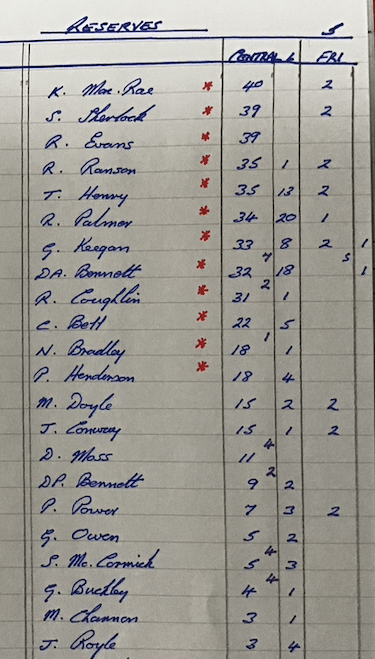
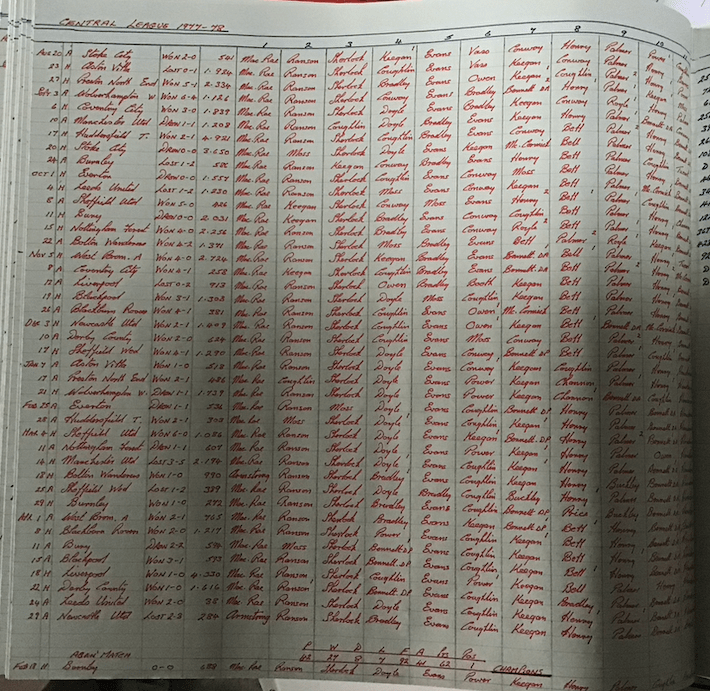
City’s reserve team played in the Central League back then and, due to his devastating injury, Colin played reserve games throughout that season as he pushed for full fitness. He started 22 of these games and scored five goals.

When I interviewed Colin he told me he was as pleased with this Central League success as he was with all his other medals. To him that season saw a return to competitive football and it was irrelevant whether it was a reserve league or the Football League. It mattered enormously.

Most obituaries and posts on Colin won’t talk about the 1977-78 Central League title but, as he was so keen to ensure he mentioned it to me all those years ago, I feel it’s appropriate to give it a little focus today.

His first Central League appearance of the 1977-78 season attracted almost 5,000 as many of us were determined to be there when he returned to action. For the record that game was v Huddersfield on 17th September 1977, attendance 4,921.

Colin was a wonderful player and man. Those of us who saw him play know what a great player he was; those of us who were privileged to meet him met a truly humble & wonderful human being. He was the King of our Kippax but was truly a legend of football at Bury, City and England. His name will always be remembered.

This image of my ledger for 1977-78 shows Colin in City’s Central League match records.

Colin Bell 1946-2021

It is with immense sadness that the news has been released of Colin Bell’s death. He was 74 and, according to reports, he passed away after a short, non-covid related illness. My thoughts are wife his wife Marie, son Jon & daughter Dawn, and his grandchildren.

For decades Colin was regarded as the greatest Manchester City player of all time and, in truth, thousands who saw him play still believe him to be the greatest.

I would like to place on record my thanks to Colin and his family for the support given to me over the years. Colin, quite a shy man in truth, rarely gave interviews and so every time I met him I was absolutely delighted to have the opportunity to chat.

It is a mark of the esteem in which all City fans and the club hold him in that Colin is the only person to have a stand named after him at the Etihad (indeed no other stand at any of City’s grounds has ever been named after another person). It is worth highlighting that he was the first footballer to ever have a stand named after him at either of Manchester’s clubs.  

Colin is a player remembered for many superb performances and also for his remarkable stamina and determination.  For decades he was City’s most capped international player (and he should have had more had injury not limited his opportunities from 1975!).  

The following sections provide an overview of Colin’s footballing life, including where appropriate words from the interviews I have done with Colin over the years:

Early Life

Colin was born in Hesleden, a small mining village in Durham, in 1946 and like many footballers from working class backgrounds his early life was difficult.  His, however, also started with tragedy:  “My mother died when I was born and, because my dad was a miner working shifts, my sister had to look after me.”

In those days there were few nurseries and child minding services were non-existent, so Colin’s sister had to spend most of her time thinking of ways to keep him occupied while she was at school.  In the end she had no option but to take him to school and as a two year old Colin used to keep himself occupied by playing football in the school yard:  “I used to play in the yard while my sister had lessons.  She says that half the pupils would be looking out of the window watching me with the ball!”

Football seemed to be one of the family’s main preoccupation.  Colin’s father was a noted local player who attracted attention from Nottingham Forest, while his mother had played for a pioneering ladies’ side in the north-east, as did his sister.  

As Colin grew his interest in the sport increased and he inevitably moved up the grades.  He played for East Durham Boys and for the Horden Colliery Welfare junior side.  League sides started to show interest, especially the local giants Newcastle United:  “I had a trial at Newcastle when I was about 15 or 16 but they weren’t interested, so I then had a trial with Arsenal.”

Bury Move

The Arsenal opportunity fizzled out but two other sides, Huddersfield and Bury, were very keen to sign the youngster.  Colin’s father suggested time should be spent at both clubs so that they could gauge properly which would be in Colin’s best interests.  They also agreed that the final decision would not be made until the two men were back home in the north-east.  After two reserve games for Bury a couple of Bury directors tried to get Colin to sign immediately, but wisely the player chose to hold off until he had spent a similar time at Huddersfield.  In the end both sides were desperate to sign him and both offered a wage of £12 a week.  

Colin knew he wanted to sign for Bury – they appeared a much more homely and friendly club – but before he agreed terms Newcastle renewed their interest.  At the time Newcastle, Bury and Huddersfield were all Division Two sides, but clearly Newcastle were significantly larger than either of the others.  Nevertheless, the young Colin told them he was not interested in any offer.  They’d had their chance and missed it!

In July 1963 Colin became a Bury man and then in February 1964 he made his League debut against Manchester City.  It was a rather unusual match and came at a time when City were at an extremely low point in their history.  A pitiful Maine Road crowd of 14,698 watched the game, but on the pitch Colin made it a memorable debut by scoring:  “I side-footed the ball in from six yards while City were appealing for offside.  All I could think about were the headlines I would get in the next day’s ‘papers.  The City ‘keeper Harry Dowd got injured – these were the days before substitutes – so Harry went up front with his arm in a sling and he was City’s most dangerous attacker!  The inevitable happened and Harry scored the equaliser, which ruined my debut a bit.”

Despite the headlines going elsewhere, Colin’s Bury career was off to a great start and by the time he left in March 1966 he had scored 25 goals in 82 League matches and had become team captain.  He had also become noticed by a great number of clubs, in particular City and Blackpool.  City were struggling financially and, although new manager Joe Mercer and assistant Malcolm Allison, had already started to turn things around at Maine Road, City could not afford to embark on an auction.  Allison decided on a plan:  “I knew everybody was interested and I remember sitting in the Directors’ Box at Gigg Lane.  They all seemed to know I’d come to watch Colin, but City were so strapped for cash that we couldn’t really make a move until they’d raised enough.  When the match started I kept saying that Colin was out of position… that he couldn’t pass…  he couldn’t kick… couldn’t head the ball… he couldn’t do anything right. They all started to agree with me!  I said I’d wasted my time and they agreed!”

“Behind the scenes the directors were getting the money together and on the eve of the transfer deadline we got him for about £45,000.”

Arriving in Manchester

Blackpool had been very interested, despite Allison’s best efforts, and the transfer almost didn’t make it in time.  According to journalist Len Noad writing in 1966:  “City paid £45,000 last night for Bury’s Colin Bell.  But the next biggest deal since City paid Huddersfield £53,000 for Denis Law, had to wait for a pit shift to finish at Hesleden in Durham before it was completed.  City manager Joe Mercer and Chairman Albert Alexander arrived at Gigg Lane at lunchtime and put their offer to Bell.  The young player, who had already been approached by Blackpool, asked for time to think things over and to talk to his coalminer father when he came off his shift at 5pm.”

Once Colin did sign for City Joe Mercer told reporters:  “It’s the biggest fee I’ve ever paid, but I think he’ll prove to be worth every penny of it.”  The youngster immediately started to prove it was money well spent with a goal on his debut.  The Blues beat Derby 2-1, and Colin’s goal had proved vital, but it was a rather unusual first goal according to the Manchester Evening Chronicle:  “Bell received the ball from the brilliant Summerbee, and drove it towards the goal.  Saxton cleared rather vaguely and the ball bounced back into the net off Bell.  An odd but acceptable way of celebrating a first appearance with a new club.  To show that he was capable of better things Bell developed the best shot of the game just before half time.  Matthews did well to tip it over the bar.”

Approximately six weeks later Colin netted the goal that brought City promotion at Rotherham.  Journalist Alec Johnson wrote at the time:  “City’s fair-haired inside-right, Colin Bell, rose high into the air in the 47th minute to head the ball into the back of the Rotherham net and send City back into the First Division after a three year absence.  It was a golden goal – one that means a big cash bonus for the City players and the chance of really big time soccer at Maine Road next season.  The legion of City supporters roared ceaselessly in the last 15 minutes, ‘We’re back in Division One’, and Bell was cheered off the field.”  Immediately after the game Colin told reporters: “This is the most exciting goal I’ve ever scored.”

That goal ensured Colin would be remembered for a long time at City, but the events of the next few years helped to create a special relationship with City fans that survives to this day.  Once promotion had been achieved the Blues developed and Colin started to become recognised across the country as a major talent, although he is the first to admit he was still learning:  “We beat Liverpool at the start of 1966-67 at Maine Road and Tommy Smith crocked me on the half way line.  As a youngster I didn’t know what it was all about, though in later years you learned not to get too close to certain players if you could help it!”

Champions

In 1967-68 City won the League Championship with Colin contributing 14 goals in 35 appearances, and then success followed in the FA Cup (1969), the League Cup (1970) and the European Cup Winners’ Cup (1970).  He was now regarded as one of England’s greatest talents and played in the 1970 World Cup finals in Mexico.

Colin’s England career commenced with an appearance in the May 1968 friendly with Sweden, and by the time of the 1970 World Cup he had appeared in eleven internationals and scored two goals, although Colin believes those first few years of his international career were tough:  “It was hard getting my international career off the ground.  I seemed to be injured whenever I was called up in the early days.  After playing in the First Division, playing for my country had always been my greatest dream.  No matter how many times I played, I still got a lump in my throat every time the letter with the FA stamp dropped through the letter box.”

The last England appearance made by Colin came on 30th October 1975 in the 2-1 defeat by Czechoslovakia in Bratislava.  Colin was a regular selection at this point and would have gone on to be a fixture in the England side for many years, however a devastating injury was to prevent any future appearance.

Before the injury, however, Colin’s City career continued to bring much praise his way.  Johnny Hart, City’s manager for a spell during 1973 and a member of City’s great 1950s side, felt Colin was one of the best players he had ever worked with or seen.  Talking in the early 70s Hart told Peter Gardner of the Manchester Evening News:  “Bell is an example of the complete professional footballer.  City are indeed lucky to have a fella like this on their staff.  His stamina is fantastic and his ball control is a delight to watch.  He also sees situations like lightning and there are many opponents who have felt the full fury of his scoring potential.  Bell is a midfield dynamo, but he can also be a marksman supreme given half the chance.  He has an explosive shot and he is, too, a brilliant header of the ball making him extremely dangerous anywhere within sight of goal.  He is in fact a modern Peter Doherty.”

In 1974 Colin scored City’s only goal of the League Cup final meeting with Wolves.  Sadly, Wolves won, but many felt City had been the dominant side.  Colin:  “In my career I’ve played in two games of this kind.  One was when England drew with Poland at Wembley and missed qualifying for the ’74 World Cup, and Wolves was the other.  If either of those games had been boxing matches the opposition would have thrown the towel in!  We were 1-0 down to Wolves at half time but I always felt if we pulled one back we would win.  I got the equaliser and we were never out of their half after that.  Then, late on, a ball was played across our area, Rodney Marsh just got a toe to it and helped it in the direction of John Richards who scored the Wolves’ winner.”

The disappointment hung over City for a while and, in truth, that League Cup final saw the end of the great Bell-Lee-Summerbee combination as over the following months first Lee, then Summerbee were to move on.  Of the 1968 Championship side only Colin, Mike Doyle, and Alan Oakes were still regulars by the start of the 1975-6 season, but the mid-seventies side was also a team packed with internationals and top quality players.  The side had finished 8th in 1975 and as the new season opened there was great optimism around the side.  Everything seemed perfect and when the Blues drew recently promoted Manchester United in the fourth round of the League Cup (November 1975) City couldn’t wait for the opportunity to prove which side were the dominant force.  Colin, who felt he had struggled at times during the previous year, was feeling very positive about the future:  “Two or three games before we played United I suddenly felt everything had come right.  I couldn’t do a thing wrong.  I thought, ‘terrific’.”

Injury

The League Cup tie in November 1975 proved to be one of City’s most mesmerising performances, but it also contained the saddest moment of the decade as far as many fans were concerned.  The game opened brightly with Dennis Tueart scoring after only 35 seconds.  United struggled to match the Blues and resorted to a physical approach.  After only five minutes tragedy struck when Colin Bell remained on the ground after a tackle by Martin Buchan.  Colin:  “I remember Dennis Tueart knocking me through on the inside right position, and I had three options.  The first – I was going to have a shot if the ball would sit right, from about 25 to 30 yards out.  Or, I could even quicken up and go for goal first thing.  The third option was to drag the ball inside a defender – and it was Martin Buchan as it happens.  I was weight bearing on my right leg as I dragged the ball to let him go past at speed, and he caught my knee… bent the knee backwards, burst a couple of blood vessels, did the ligaments, did the cartilage, and off I went.  That was the beginning of the end of my career.”

Although Colin does not blame Martin Buchan, the supporters did – and still do.  On the night they chanted ‘Animal’ at Buchan as Colin was stretchered from the field.  City went on to win the match 4-0 as they swept United aside, and eventually the Blues were victorious at Wembley in the 1976 League Cup final, but the meeting with United damaged not only Colin’s career but also City’s chance of major success in the League.  Dennis Tueart believes the side was disrupted too much by the injury:  “It left a major hole in our side – a major hole!  He would have been a major loss to any side, but ours in particular because we had such a balanced side.  Such a settled team.  Although we went on to win the League Cup that was the biggest setback, and I don’t think we were ever really as good after Colin’s injury.”

Over the following seasons Colin tried hard to resurrect his career.  He did return briefly at the end of the 1975-6 season but it was clear he was far from fully fit and, potentially, the early return caused more damage.  Eventually, he returned to action on Boxing Day 1977 and went on to make a further 27 League appearances before finally calling it a day in 1979.  During his recovery period he had been a key member of the City reserve side which won the Central League in 1978 – a triumph he felt immensely proud of.

The previous season a Colin-less City side had missed the League Championship by a point and many believe a fit Colin would have made the difference.  

Retirement

In retirement Colin concentrated on his restaurant business opened midway through his City career, and then in 1990 he returned to Maine Road to assist with reserve and youth team coaching.  Seven years later that City career ended, but in the years that followed Colin was a member of City’s matchday corporate hospitality team.  In 2004 he received the honour of having the West Stand – basically City’s main stand – named after him at the Etihad Stadium.  It was a major honour and recognised the achievements of an incredible talent and a tremendously popular City player.

Manchester City, Bury and England have lost one of their greatest ever players. A true legend of the game in his lifetime and one whose name will forever be remembered.

My thoughts are with Colin’s family, friends and former colleagues.

I’ve posted the In Search Of The Blues interview I did with Colin in 2005 for the Manchester City match programme here:

https://gjfootballarchive.com/2020/12/28/in-search-of-the-blues-colin-bell-mbe-interviewed-in-january-2005/

Also, here’s the story of the Boxing Day 1977 game v Newcastle which saw an emotional return to first team action by Colin:

https://gjfootballarchive.com/2020/12/29/manchester-city-hall-of-fame-colin-bells-significant-game/

Phil Foden

Once again Manchester City fan and player Phil Foden has put in a really good performance in City’s first team and, once again, this has led to some commentating on football to claim that Pep Guardiola does not give the player chances. The general comment being that Pep does not give Phil enough starts or opportunities. So I’ve decided to have a look at Phil’s opportunities so far with City.

Firstly, exactly how many games has Phil appeared in?  Well since making his debut at the age of 17 years and five months in 2017 against Feyenoord Phil has played in 93 first team games for City. That’s not far off an average of 30 a season during his developing years. Not bad going for a player who doesn’t get a chance!

This season we’re 24 games in and already Phil has appeared in 19 first team games. Only Raheem Sterling (22) and Rodri (23) have appeared in more games for City this season so far. That doesn’t look like someone who isn’t being given a chance to me. In addition, no player has appeared in more Champions League games for City this season than Phil – one of three players (with Sterling and Silva) to have made six CL appearances.

‘Ah, but what about in the Premier League then? It’s okay appearing in the cups, but what about getting his chance in the League?’ is something else that those criticising Pep will focus on. Well, in terms of the Premier League, Phil has appeared in 11 games. Only Rodri (15), Sterling (14), Ederson (14), De Bruyne (14), Dias (13) and Walker (12) have appeared in more Premier League games this season.

‘Okay, but what about his starts?’ is another popular line taken. These days it’s extremely rare for a manager not to use multiple substitutes in a game and the days of the same eleven that start a game ending a game are extremely rare. Nevertheless, the argument has to be considered. 

Ever since his first appearance Phil has made 93 appearances in all first team competitions. Of those 93 appearances he has started 45 games, slightly less than half, but that’s considering his entire career. What about this season? Well, so far this in 2020-21 he has started 68% of all the games he has played – and don’t forget only two players have appeared in more games!

Over the last couple of years I’ve been researching and writing the biography of Peter Barnes (due out later in 2021) and the parallels between the two players are important. Like Phil, Peter was given his debut as a 17 year old (Peter was almost 17 years and 4 months old while Phil was a little older, almost 17 years and 6 months) and was heralded as a great, young, local talent who supported City. Both players were twenty when they made their England debuts, with Peter being described as the ‘saviour of English football’ shortly afterwards by those reporting on international football.

The status of both players was similar at the age of twenty yet the main difference is that Phil has actually made more appearances for his club than Peter had by the time he was the same age as Phil is today. Peter had played 88 first team games while Phil has played 93. Okay, some will say that City play more European games today than they did during Peter’s time. Well that is true, although City were competitors in knock-out European competition during Peter’s career. However, there were more League games in Peter’s day than today, so the overall balance is similar.

What I have found most interesting when comparing Phil and Peter’s early careers is that, like Phil, Peter often started a game, put in a great performance and then found himself dropped for the next match. It happened frequently and it did make fans question the management at times, however the media took a different view to fans. They believed and wrote that Tony Book, the City boss at the time, was ‘protecting’ his young star. That no matter how talented Peter was his boss knew how to help his career develop. In essence, the less he played then the better it was for Peter’s development and, ultimately, for his long term England career. With Phil Foden the media perception seems somewhat different – and this at a time when squad rotation is the norm. 

Understandably, as fans we want to see every one of our favourite players appear in every game but for managers they have to think about their club’s chance of success, the development of their players and keeping everyone in the squad happy. That’s not really any different today than it was forty years or so ago when Peter Barnes was making his name.

It’s important to note that Peter Barnes’ City career changed considerably when Malcolm Allison returned as coach and moved on the club’s greatest stars so that he could concentrate on building a new team. Peter left, but Allison’s determination to utilise youthful players failed. Perhaps he needed to exhibit some of the care and protection for his young players that Tony Book did with Peter and Pep Guardiola has been doing with Phil.

So, the point of this article was really to say that despite the criticism that still gets aired by some, Phil Foden is being used effectively by Pep. We may want to see more of him but this season so far Pep has played him more than the majority of the squad. His management through Phil’s development appears to have worked and he should be praised, like Tony Book was in the 70s, for his support of young players.

If you would like to read more pieces like this then please subscribe below. It works out about £1.67 a month if you take out an annual subscription (£20 per year) or £3 a month if you’d like to sign up for a month at a time. Each subscriber gets full access to the 100+ articles posted so far and the hundreds scheduled to be posted in the coming weeks.

Subscribe to get access

Read more of gjfootballarchive.com when you subscribe today.

The Emergence of an Association Football Culture in Manchester 1840–1884

Over the coming weeks I’ll be posting my academic articles here for subscribers to my blog. In the meantime, here’s a link to one, first published in 2014, that is currently free to access on the publisher’s website:

https://www.tandfonline.com/doi/full/10.1080/17460263.2013.873075?src=recsys

The 100th Post – Why, What and When?

Thanks for reading this my 100th article/post on gjfootballarchive.com. I wanted to take the opportunity of this 100th post in 3 days to thank everyone interested in my work and to explain why I’m doing this; what the archive consists of and how often it will be added to.

First – why? For some time people have been asking me when I’d be doing my own blog and over the years I’ve always been pleased with the responses to my guest appearances on podcasts, vlogs and blogs. The feedback has been excellent but I’ve always had so much more to say. I care passionately about ensuring football’s history is properly researched & recorded and feel there’s always a place for detailed, quality research.

The idea of creating this blog and archive came because I wanted to create new content, based on the research I’ve performed over the decades, while also setting up an archive of my past work. Much of my writing is now out of print and it matters enormously to me that books like Manchester A Football History should be available (subscribers will be able to access the full 2010 edition of that book soon).

I am a self employed historian and spend all my working week writing, researching and publishing my work. I am not an employee of any organisation (I know some think I’m employed by a football club but I’m not an employee nor am I an official club historian of any club). I am independent of any organisation and care passionately about the quality and accuracy of my work. As so much of this is out of print I am keen to create this archive for my work and add to it as time goes by.

Next – what? So what is my football archive? It is a place where already after less than three days 99 posts/articles/features have been posted. These include new material, interviews, profiles, past articles, book sections and more. Some of this material was written some time ago or is based on interviews performed many years ago (including interviews with players who have since died). Most of the material posted so far is connected with Manchester City but there are articles of interest to Manchester United and other teams, including England. Further articles on Manchester’s clubs will follow.

Some articles are free to download but most of the material is available to subscribers only. As mentioned earlier, my research and writing is something I strive hard to ensure is of quality. No one employs me to research or write (I lost my only regular income when physical match programmes stopped being produced last season) but my commitment to those who read my work is that I will always seek to maintain the highest standards. I am eternally grateful to those who purchase my books or subscribe to my work.

To see what articles have already been published go to the search page (using the links under the banner at the top of this page) and either search on a key word or have a look at the categories listed there.

Next – when? There are already 99 posts/articles live and this will increase significantly over the coming weeks. By the middle of February every chapter (that’s over 30) of the 2010 edition of Manchester A Football History (PDFs of the actual pages including illustrations) will be available to subscribers. Over time my biography of Joe Mercer and other books, such as Farewell To Maine Road, will also be available in this archive. I’m keen to hear from subscribers which books, articles, interviews they’d like access to here. I want this to develop into a community of readers whose views absolutely matter.

A limited amount of content will always be free for anyone to read but those subscribing will have access to everything on this site for as long as they subscribe. For subscribers I will post a minimum of 4 new articles alongside adding material from my archives each month. To subscribe costs £3 a month or £20 a year (the 2010 edition of Manchester A Football History which will be posted a section/chapter a day for subscribers from Saturday 9th January 2021 cost £24.95 when published and is now out of print).

If you’re uncertain whether to subscribe or not then why not subscribe for a month at £3 and see if you’re getting value for money. The £20 annual subscription works out about £1.67 a month for a guaranteed 4 new articles per month and access to everything else posted in the archive.

Thanks for reading this. If you’d like to subscribe then please do so below. I really appreciate the support and I promise I’ll continue to add content that informs, entertains and has been researched to the highest standards.

Happy new year (surely it can’t be as bad as the last?). Best wishes, Gary

£3 per month or £20 per year for full access to all posts and the archive.

Subscribe to get access

Manchester United Ticket Prices

The admission price to sit in K Stand for the FA Cup tie with Queen’s Park Rangers on 29 January 1977 was £1.20 for an adult ticket.

The Reds won the tie with Lou Macari scoring the only goal.  Attendance 57,422

****

Two shillings and sixpence (12½p in today’s money) would be enough to buy a ticket for the European Cup quarter-final with Red Star Belgrade at Old Trafford in January 1958.  The true value of the ticket today, considering average earnings and inflation, would be approximately £6.

****

A ticket to stand at the 1983 League Cup final against Liverpool could be bought for £4. 

****

£2.60 would buy a terracing ticket for the Old Trafford derby of March 1986.  The game ended in a 2-2 draw before 51,274.  In February 1990 £3.50 bought a similar ticket for the 1-1 drawn Manchester derby watched by 40,274.

****

It would cost £8 to watch United’s Premier League meeting with Chelsea on 17 April 1993 in the uncovered West Stand lower tier.  A similar fixture in October 1963 between the sides at Stamford Bridge would cost six shillings to sit under cover.  The 1963 game ended in a 1-1 draw before 45,351, while the 1993 match saw the Reds win 3-0 four games from the end of their 1992-93 Premier League winning season.

****

A junior Stretford End ticket for United’s 1-1 draw with Liverpool in Division One on 19 October 1985 cost £1.20, while an adult ticket for the same game (in the United Road Paddock) cost £2.60.  Eight years earlier an adult ticket for a similar position at the Scoreboard End cost a bargain 80p.  

***

A seat ticket to watch Chelsea V United at Stamford Bridge on Wednesday 30 September 1964 cost seven shillings and sixpence.  It would have been well worth it as United won 2-0 with goals from Best and Law.  The attendance was 60,769.

***

When United faced Everton in the fourth round of the League Cup in 1993 Reds fans had to pay £11 to sit in Goodison’s Park End.  A crowd of 34,052 saw Giggs and Hughes score as United progressed to the fifth round.  That season United reached the final.

***

It would have cost £1.50 to stand in the East Enclosure when Gordon Hill netted twice against Derby County in the FA Cup semi-final at Hillsborough in 1976.

***

A League Cup quarter final ticket for United V Everton in December 1976 cost 80p to stand in the Paddock at Old Trafford.  Attendance 57,738.  To stand in the Paddock in 1959 would have cost 3s 6d (17½p).  

***

An FA Cup final seat ticket for the 14th row at either end of Wembley Stadium in 1979 cost £8.  United faced Arsenal in a memorable final.  21 years earlier three shillings and sixpence brought a terracing ticket for the West Stand as United faced Bolton in the final.

MANCHESTER CITY – HALL OF FAME: Joe Corrigan

“In comparison with some players, I’ve not won that many awards at Manchester City.  Not as many as some of the great players, but I do think that this is one of the best.  I’m absolutely delighted.  Thank you” Joe Corrigan collecting the Hall of Fame award in January 

Joe Corrigan’s City career is an inspirational story for any young goalkeeper.  He achieved great success with the Blues and became a regular member of the England squad.  However, there were also significant setbacks along the way which he overcame through determination and desire to prove himself.  A very popular figure, Joe was idolised by the Maine Road faithful.

Early Life

Manchester-born Joe went to Sale Grammar School and enjoyed participating in sporting activities, however the school curriculum put more emphasis on Rugby than football and Joe’s opportunities to develop as a footballer were limited.  However he did excel as a second row forward for the school rugby team.  This must have helped improve his general co-ordination and ball handling skills, even if the ball was a different shape.

After school he became an apprentice at AEI and played for their football team, sometimes as a centre-half.  A colleague was particularly impressed with his general aptitude for the game and suggested he should have a trial at Maine Road.  One thing led to another and a trial was organised for him.  Joe:  “City signed me that night, after my first trial.  It was the sort of situation you would never have today.”

It was manager Joe Mercer who signed Joe as an amateur in September 1966.  Joe remembers fondly this period of his goalkeeping career and of the roles played by Joe Mercer and Malcolm Allison in setting the right environment:  “There was such a great atmosphere and the best thing about Malcolm Allison was that he treated every player the same.  It didn’t matter if you were in the first team, or the B team.  I was only a kid but I could tell Malcolm was a great coach.  He was more like another player than management.  Joe used to be the front man – the ambassador.  He was the manager and we all knew it.  Together the pair worked perfectly.”

First Team Debut

On 25th January 1967 Joe turned professional.  A little over eight months later, an injury to regular ‘keeper Harry Dowd, coupled with new signing Ken Mulhearn being cup tied, allowed Joe to make his first team debut in the 3rd Round League Cup tie against Blackpool on 11th October 1967.  Clearly, his elevation to the first team a month before his 19th birthday was a major test and, for City, a major gamble but the Blues had no real choice.  The game itself ended in a 1-1 draw with some reports suggesting a more experienced ‘keeper would have saved the Blackpool goal, however Joe retained his place for the replay a week later and City defeated the Seasiders 2-0.  

At this stage of his career it was inevitable that Joe’s spell as number one was a temporary one and for the fourth round League Cup tie a fit Harry Dowd returned to action, while Ken Mulhearn had established himself as the first choice for League games (he had signed for the Blues in September 1967). 

Mercer & Allison had found it difficult determining which ‘keeper – Mulhearn or Dowd – was their number one.  Injuries, inconsistencies and nerves all seemed to play their part in limiting each player’s spell.  Mulhearn made most appearances during the 1967-8 League Championship winning season, while Dowd seemed to be the preferred choice during 1968-9.  Joe was really the third choice and this made it difficult for the young ‘keeper to be given first team experience.  Joe was determined to learn and had a spell away from Manchester.  Joe:  “I had three months on loan at Shrewsbury under Harry Gregg, the ex-United ‘keeper.  Even though I only played reserve games, I learned so much.  Harry was tremendous, a man who knows what keeping is all about and who was one of the all-time greats himself.  Up until then, my career had been at a stalemate.  Within a couple of months of coming back, I made my full League debut.”  

Rapid Progress

Joe’s full League debut in a 2-1 defeat at City’s bogey team Ipswich Town on 11th March 1969.  He made three further appearances that season – 1-0 defeats at mid table Nottingham Forest and eventual Champions Leeds United, and then a 1-0 victory over Liverpool on the last day of the season – although City’s fortunes varied, it’s fair to say the ‘keeper played well.  This was Joe’s first clean sheet in the League:  “Those games gave me the chance to really show what I can do.  Luckily, I did okay and the next season, with a lot of pushing from Malcolm, I was City’s first choice.”

Joe’s progress was relatively rapid, especially when full consideration is given to the fact that Ken Mulhearn had been bought by Mercer & Allison to be the first choice.  Joe was still only 20 when the 1969-70 season began and the Blues were proving to be the most successful side in the Country.  It is very unusual for any side at the height of its power to make such a young ‘keeper their number one choice, especially when that side already possessed two established medal-winning ‘keepers.

The opening game of the 1969-70 season saw the Blues beat Sheffield Wednesday 4-1 and Malcolm Allison started to tell the media and anyone else who cared to listen that Joe would be “as great as Swift”.  Most thought this was typical Allison hyperbole but over the years Joe would find himself rated in the same bracket as Swift and Trautmann.  He would also go on to become one of the Club’s longest servants.

On 15th November 1969 Joe played in his first Manchester Derby match.  It was a thrilling 4-0 victory for the Blues and was summed up by the Manchester United reporter David Meek as the most one-sided Derby of all time.  That wasn’t exactly true, but for Joe it was a significant match, watched by over 63,000 at Maine Road, and the first of his 26 derbies – no other City player has matched that total.  

Roy of the Rovers

1969-70 was a rather mixed season in the League with the Blues finishing a disappointing tenth.  However, in knock-out competitions City ruled, reaching two finals – the League Cup and the European Cup Winners’ Cup.  Joe’s progression was moving at a pace no one could have predicted and he played a significant part as City won both trophies:  “Both finals were tremendous thrills.  Real ‘Roy of the Rovers’ stuff.  The League Cup win over West Bromwich Albion especially.  Here I was, three years after playing Sunday football and school rugby, at Wembley.”

Those successes were followed by a call-up to the England u-23 squad to play the USSR and Joe appeared to be on the verge of a truly great career.  Then Joe played exceptionally well during the first leg of the 1971 ECWC semi-final with Chelsea.  It seemed nothing could go wrong, then disaster struck when he was injured and replaced for the second leg of the ECWC tie.  The Blues lost – Joe’s replacement, Ron Healey, was credited with an own goal – and City’s chance of success was over.  

Joe continued to be the preferred number one for the next couple of seasons, however criticism was starting to be directed at him.  Mistakes made him an easy target for supporters who were expected more and, at one point, it was reported that Joe dreaded the thought of playing at Maine Road.  There were even suggestions he was thinking about giving up on the game.  He certainly did not get an easy ride and nobody seemed to think about his great contribution during City’s great 1969-70 season.  Joe:  “It’s a part of football that will never go away.  I have no bitterness about it.  In fact, I think I was lucky because the press were a little kinder back then.  They would lay off a bit.  I would hate to go through the same thing now.  My view was that I was paid to do a job to the best of my ability.  At times that wasn’t good enough to get into the first team and I accepted that.  It’s alright moaning in the press or whatever, but you can’t hide – especially in goal!”

Scottish under-23 international ‘keeper Keith MacRae was signed in October 1973 for £100,000 and Joe’s time as first-choice seemed over, especially as MacRae was two years younger than Joe and deemed a much better prospect.  Joe:  “I went on the transfer list in response to that signing.  After all it equalled the record for a goalkeeper at the time.”

However, Joe’s chance was to come again just as it looked likely he would have to leave Maine Road to resurrect his career.  Joe:  “One thing that was a big help happened in 1973-74 when I broke my jaw and had it wired up for three weeks.  I lost about a stone in that time and felt really fit when I came back.  That played a big part in keeping me down to 14-14.5 stone – my ideal playing weight.” 

Back on Form

A spell over Christmas 1974 didn’t really show Joe at his best, but the following March MacRae was injured and had to leave the field in a match with Leicester.  With no goalkeeping substitutes in those days, Mike Doyle went in nets, but for the following match Joe’s opportunity to shine came again.  The player was determined that if this was his City swansong he would give it his best shot:  “You have these situations in football and have to battle away.  If you give up, you not only lose the club you are at, you carry a reputation as a quitter.  I was determined to at least go down fighting.”

Joe played the final ten games of the 1974-75 season and, although results were mixed, both fans and the media were impressed with his form.  The following season opened with him as City’s first choice and in February 1976 he played in City’s great League Cup final success over Newcastle:  “I thought this was the start of another great team at City.  Dave Watson proved what a commanding centre-half he was that season.  As a keeper it made such a difference playing behind two great centre-halves like Dave and Mike Doyle at Wembley.  I remember the feeling of disbelief after I saw Dennis Tueart’s incredible winner.  Twelve months earlier I had been told I was useless.  Here I was – a Wembley winner!  It just shows what you can do if you’re prepared to work at it.”

The amazing turnaround in Joe’s career was the talk of football for a while and City fans fully appreciated the efforts their ‘keeper had made to re-establish himself.  Supporters voted him their player of the year in 1976 – an amazing accolade considering the achievements of the other truly great players in the squad that season – and at long last the likeable ‘keeper had established himself as one of City’s best stars.  Further supporter player of the year awards followed in 1978 and 1980 but the biggest honour of the seventies had to be Joe’s selection for England only a few months after the 1976 League Cup final.

England were playing in the US as part of a Bicentennial tournament and Joe’s opportunity came on 28th May in New York when he came on as substitute at half time for Jimmy Rimmer:  “At half-time of the Italy game Les Cocker, the trainer, told me to get stripped and come on as sub.  We were 2-0 down at the time and, while I’m not saying I had anything to do with it, we won 3-2!”

Joe went on to make a total of nine appearances for England but neutrals recognise that in any other era his tally would have been much higher and he would have been given more opportunity.  England at this time possessed several fine ‘keepers – Ray Clemence, Peter Shilton, and Phil Parkes – and manager Ron Greenwood tended to share the number one position between Clemence and Shilton, with Joe the third choice.  Clemence was the more experienced of the three and was also playing regularly in Europe with Liverpool, as was Joe with City, while Shilton had been more used to relegation dog fights with Stoke at the time of Joe’s debut.  His last appearance for England came on 9th June 1982 when he was 33 years old.

Wembley ‘81

In 1981 Joe made another appearance in a Wembley Cup Final.  City lost the 100th FA Cup final in a replay to Tottenham, but Joe had received tremendous praise for his performance in both matches.  The Blues had also been very unlucky to lose the League Cup semi-final with Liverpool that same season.

Less than two years after Wembley, Joe left City.  He had become City’s elder statesman and a much respected figure but the Blues had started to struggle financially.  Expensive and largely unsuccessful transfers – City were the first side to buy three £1m plus players – during the late seventies and early eighties impacted City’s ability to develop, and when the struggles came senior players had to be sacrificed.  Defeats against Southampton in the League Cup during November 1982 and Brighton in the FA Cup the following January meant the Blues were out of contention for any trophy.  Manager John Bond left and his deputy John Benson was left in charge.  Joe:  “I knew I was on my way.  With the Club’s financial position City couldn’t afford to keep the higher paid players.  It was very sad to leave.”

Joe was transferred for a surprisingly low £30,000 to Seattle Sounders in the North American Soccer League in March 1983 after making an overall total of 592 League, cup and European appearances – second only to record holder Alan Oakes.  He later returned to England with Brighton, and went on loan to Norwich and Stoke.  

During the 1990s he became a highly sought after goalkeeping coach.  In 2004, after spending several years at Anfield working for a variety of managers, Ian Rush asked Joe to become goalkeeping coach at Chester City.

Joe will be remembered for a very long time as true Blue hero.  He is typical of the type of determined, hard-working players the fans love to watch, and his consistency during the late 70s and early 80s helped the Blues enormously as they strove to find success both at home and in Europe.  As with Trautmann and Swift before him, many games were won – or salvaged – simply because of the ‘keeper’s committed performances.  

Henry Boyd

The first player to pass the twenty goals a season mark for the Heathens in the League, Scotsman Henry Boyd arrived at Bank Street in January 1897.  Previously he had developed a decent reputation at West Bromwich Albion and Royal Arsenal.

He made his Newton Heath debut on 6th February 1897 against Loughborough Town a memorable one as he scored one of the Heathens goals in a 6-0 victory.  He ended his first season with five goals from ten appearances but it was the following season when he really made his mark.

Boyd’s hat-tricks in the opening two games of the 1897-98 season set the standard, and he ended the campaign with 22 goals from 30 games (he was an ever-present) overshadowing hero Joe Cassidy who had netted 14.

Despite the positives behind the scenes there were a few issues with the Club’s new goalscoring star.  He missed training at the start of 1898-99 and was suspended for a week as a result.  The story goes that he was so appalled at the suspension that he went missing with the Club only learning of his whereabouts when he sent officials a telegram from Glasgow.  Further suspensions followed and he was placed on the transfer list.

In August 1899 he became a Falkirk player.  His last season at Bank Street had seen him make 12 appearances and score five goals.  His last goal came in the 2-0 defeat of Small Heath on 25th February 1899.

Leading Newton Heath League Scorer in: 1897-1898 – 22 goals, 30 appearances 

William Sharpe

William Sharpe’s first Alliance League goal came in Newton Heath’s 3-1 defeat of Grimsby Town on 18th October 1890 but this was not a particularly great season for strikers.  Sharpe netted six goals that season and ended up leading goalscorer.

The following season he only managed 3 Alliance fixtures and wasn’t really seen much in a footballing context again until he appeared for Oldham County in 1896.  He had a spell at Oldham Athletic in 1901. 

Leading Newton Heath League Scorer in: 1890-1891 – 6 goals, 20 appearances (Alliance League)

IN SEARCH OF THE BLUES – Joe Corrigan (interviewed in November 2004)

England international goalkeeper Joe Corrigan made 592 League, Cup and European appearances with the Blues between 1967 and 1983.  Today he is a respected goalkeeping coach.  Farewell To Maine Road author Gary James caught up with him at Stockport’s training ground in November 2004

Let’s start with your school days.  I believe you went to a rugby playing school?

I went to Sale Grammar School and there was no football at all.  I played rugby union for the school and for Cheshire, and I guess that helped my ball control, catching ability etc.  Despite this, I always wanted to be a ‘keeper and I played football at any opportunity really.  When I started as an apprentice at AEI in Trafford Park the chance came to play for the works side and I played at centre-half.  I had no choice about that – I wanted to play ‘keeper.  I guess my size made me a defender.  

Then one day I had to go in nets at half time and I suppose I must have looked all right because I was encouraged to go for a trial.  Both City and United were contacted, and a reply came from Maine Road within a fortnight.  After the trial Harry Godwin, City’s Chief Scout, asked me to sign and I joined a youth set up that included Tommy Booth and Ray Hatton – Boxer Ricky Hatton’s dad.

United offered me a trial as well, but once City showed the interest they did I turned them down.  I wanted to be loyal and City had faith in me.  That mattered a great deal.

You mentioned you’d always wanted to be a ‘keeper, who were your early heroes?

There were two – Harry Gregg and Bert Trautmann.  I was fortunate enough to go on loan to Shrewsbury when Gregg was there and he taught me so much.  He really helped.  Trautmann of course was a phenomenal ‘keeper and a wonderful man.  Being a City legend he was the type of ‘keeper I aspired to.  He offered me good advice as well.

I remember one day after West Ham had beaten us 5-1 – it was Jimmy Greaves’ debut (21/3/70) – I felt awful.  It was my first proper season and I felt I’d ruined my chance.  This was the game when my clearance went straight to Ronnie Boyce and he sent it straight back over my head.  When something like that happens, being a goalkeeper is the loneliest job in the world.

Anyway, I was told that Bert was at the game.  He took me to one side and told me not to worry about that result or that goal.  He pointed out that these things can happen to any ‘keeper and that he’d had some awful individual moments.  I felt much better after that and, I guess, because he had said it, it meant more than if the manager or anyone else had said it.  Bert had been one of football’s greatest ‘keepers and so he knew more than most about how I was feeling.  Mind you, it didn’t stop the BBC showing the goal whenever they had the opportunity!

One of my strongest early City memories is of you watching Bert play in Johnny Hart’s testimonial in 1974.  How did that feel?

Bert was such a great player that I thought it’d be good to crouch on the touchline and just watch.  Even at that age – he must have been 51 – he was fit and agile and someone you could learn from.  The only problem was that I had to tell him he was coming off!  I went over to him and a bloke in the stand shouted, “leave him in nets, he’s still better than you!”  

Thinking about your early City days, you made a couple of League Cup appearances in 1967/8 and then 1969/70 saw you make your League debut.  You made 34 League appearances and also played in the ECWC Cup run.  Did winning the ECWC make you feel as if you’d ‘made it’ as a player?

Never!  I never felt that.  Even when I was playing for England I didn’t take anything for granted.  Playing in the ECWC final was awesome.  It was a terribly wet night and the crowd was low, but that didn’t detract from the importance at all.  To play in such a great side and at that level is a tremendous feeling but you have to keep your feet on the ground.  I’m glad I did, because it wasn’t long before it looked as if my City career was over.

You remained first choice for most of the period up to the signing of Keith MacRae in October 1973, did his arrival feel like the end for you?

Definitely!  They paid an incredible amount – I think it was a world record fee for a ‘keeper – so you know that he has to be first choice. You don’t pay that and leave him in the reserves.  Plus he was a great ‘keeper.  No question.

I was on my way out and this was a very difficult time.  The Club was also going through a few managerial changes, so it wasn’t easy. Then in 1975 Keith was injured shortly before the transfer deadline.  I thought I’d get back in, but I bought the Evening News and saw photos and names of a whole host of ‘keepers that the Club were supposed to be interested in.  It seemed to me at the time that anybody but Corrigan would do.  This was a tormenting time.  I couldn’t bear it.  Every night it was the same.

Fortunately for me transfer day came and went and no one was bought.  I don’t know if time ran out or what, but I know I was relieved.  

You got back into the side and retained your place when MacRae was fit.  What was the turning point?

I’d been working hard when I was in the Reserves.  I’d tried to develop and I was determined not to lose whatever opportunity came my way.  Having said that, we had mixed results and I was worried.  Then we played at Wolves and they were all over us.  I remember Dougan and Richards both came up for a cross and I was whacked.  The ball ended up in the net and I felt awful.  Then the ref blew for a foul on me and from that moment on the luck was on my side.  I truly believe that a lot of football is about luck and opportunity and that day everything switched to my favour.  We beat Chelsea and Burnley in the weeks that followed and I only missed 1 League game in the following 5 seasons. 

You became a major hero over those seasons, how do you think the fans treated you throughout your City career?

There were two definite spells.  The early years when received a lot of criticism – I accept that because if you pay your money you are entitled to say what you think, but it was difficult to take at times.  Then there were the later years when I had matured and developed, and the fans gave me incredible support.  I loved going to events like the Junior Blues and meeting real fans.  I think we had it drummed into us when we first arrived at the Club by Joe Mercer that supporters are the most important people – they pay your wages and you must never forget that!  Once the Junior Blues were created it was stressed that these children would in the future pay your wages.  They are not simply here for a party, they are here because you are an important part of their lives.  Every player should always make the effort.

I had it drummed into me by Mercer that you should visit hospitals and kids homes and the like.  It’s all great PR for the Club and the player.  Actually, when I was playing in the States at Seattle a local policeman was shot.  I was appalled and told the team I was going to see him in hospital.  They all thought I was out of my mind.  “Why do it?  What is he to you?”  I went to see him, invited him to a game, and he loved it, but I was stunned to find that I made the news.  The headlines read “Do Gooder Joe Corrigan” – they made out I was a saint, but all I was doing was the PR that was the norm at City.

Thinking of fans, Helen Turner (the lady with the bell) must hold special memories for you?

She always sat behind me in the North Stand and before every game she would give me a sprig of heather for good luck.  At away games she wasn’t always near me, so sometimes it was difficult for her to get the heather to me.  If I hadn’t received it by kick off time I’d be worried.  Partly I’d wonder if she was all right, but I also used to worry about my luck.  If ever we lost and I’d not seen Helen I’d believe that was the reason.  She’s a marvellous, devoted fan, and I know she’s done a tremendous amount of work for good causes.

Your career spanned several managerial reigns, is there one manager who stands out as the best for you?

Because the goalkeeper’s role is so specialised, I gained most from other goalies such as Trautmann and Gregg, but Joe Mercer was the greatest City manager of all time.  He was such a warm, nice man.  He knew how to tell you off as well, of course, but his enthusiasm and love of football was clear.  Malcolm Allison, as coach, was tremendous.  He was doing stuff in 1969 that coaches are only just introducing now and often they claim it’s a new idea!  He tried to make sure the ‘keepers received their own coaching and specialist time, and when Tony Book became manager he tried to ensure this developed further.  Coaches Bill Taylor and Ian McFarlane worked hard with me and I used to come in on the morning of a game to do additional training.  The view was that I would get used to the actual conditions of the day and this definitely worked.

If we were playing away I’d train in the hotel grounds, or in a park.  On the morning of the 1981 FA Cup final I was training in a public park.

Thinking of the 1981 final, one of my key memories is of you immediately going over to Tommy Hutchison when he scored the own goal.  You lifted him up, patted him on the back and whispered something to him.  What encouragement did you give?

My view was that we still had a few minutes left.  We’d still been on top for most of the game.  We could still win.  I also knew that what had happened to him could have happened to any one of us.  So I just told him to “get up, get on with it.  It’s only 1-1 and we are still going to win!”  He was devastated to be fair, but we did almost win it in the dying minutes.  Personally, I believe the game should have been played to a conclusion on that night.  The FA Cup is all about the Saturday and I know we would have won had it gone to a conclusion.  I never liked facing penalties – I think I only saved two – but that night we’d have won.  No question.  The Saturday was our day, after that it all switched.  

Tottenham had no travelling to do; their fans could buy tickets from either Spurs or directly from Wembley’s allocation; and our fans were simply outnumbered in the replay even though we were by far a better supported team.

Despite our eventual defeat, you were made ‘man of the final’ for your performance.  That must have felt like a great achievement.

Obviously, it does mean a lot to me, but I’d rather have won the final.  After the second match I was presented with it by the Spurs manager Keith Burkenshaw.  I remember thanking him and then saying something like “Good luck in Europe next season” and at that very moment it hit home to me what had happened.  I suddenly realised that we’d lost and that we wouldn’t be playing in Europe.  I was devastated.  It was an awful feeling.  I missed out in another way because the game went to a replay.  England were playing Brazil at Wembley on the Wednesday after the final and, although there was nothing official, I understand I was due to play, but the replay (played the following night) meant I couldn’t play.

You played during many great seasons, what were your own highlights?

There were two great sides – the one I joined in the 60s that had already achieved so much and the mid to late 70s.  Both sides were tremendous and the players really knew how to entertain.  Colin Bell was a truly great player and I’m certain he would have gone on to captain England had it not been for that horrific injury.  Losing him was the biggest blow this club has had to face.  He bridged the two great sides and had he been fully fit he would have helped that late 70s side achieve the League title.  People often forget how good that late 70s side was – Dave Watson, Dennis Tueart, Joe Royle, Willie Donachie and the rest.  

The John Bond transformation was great as well.  Steve Mackenzie’s goal in the 81 replay has to be one of the greatest Cup Final goals of all time.  The problem with that replay was that Hutchison and Gow had given so much in the first game that they must have been drained for the second match.  They still did well, but they didn’t have enough time to recover in between games. Kevin Reeves was injured early on and that was a major blow – he is one of City’s most underrated players.  Reeves was a very, very good player.

Let’s talk about England.  You were unfortunate to play when there were so many great English ‘keepers.  Do you ever wish you’d played at another time?

No.  I enjoyed playing when I did.  It was good that there were so many great ‘keepers around because that pushed you more.  Sadly, for me it meant I’d have to try and reach a level above Shilton, Clemence, Parkes, and Rimmer.  If I’d been an outfield player, it may have been easier because with a goalie there is only one place to fill.  When I did play for England it meant more than anything else – in football playing for the national side is the highest honour you can have.  One of my favourite performances was when I played against Brazil – the best team in the world at the time by a long way – and we managed a 1-1 draw.  I was under pressure the whole time and remember a couple of saves I am particularly proud of.

Did you enjoy being under pressure more than trouble free games?

Sometimes ‘trouble-free’ games are the worst because you have to be more alert.  It would be easy to sit back and focus on other things, but then if you’re tested you could fail.  I remember one game I had no saves to make at all, but I acme off the pitch totally drained.  Everyone said ‘what’s up with you, you’ve done nothing?’  I would much have preferred to be under pressure for 90 minutes. 

Eventually you left City.  First for Seattle Sounders and later for Brighton, why did you move on?

I think I should have left a little earlier.  I love City but it got to the stage where I knew I wasn’t really wanted here.  The fans were marvellous; the players were great; but maybe it wasn’t really my time any more.  I was approached by Spurs, shortly after the Cup Final, and then Liverpool after we’d beat them 3-1 (Boxing Day 1981) but both moves were blocked, so that made it clear someone still wanted me, but then when Seattle made their approach in 1983 I was told I could go.  Something had changed.

At Seattle I had a great time and the pressures were completely different.  It was a wonderful time.  Sadly, City were relegated while I was away and I felt awful.  It really hit me.  I know I wouldn’t have changed things – Alex Williams did an excellent job – but I felt the same pain I would have felt had I been here.  I worried about the fans.  Funnily enough when I was in the States I played a game at New York and I wasn’t happy with our performance and tactics and I shouted a bit of abuse at the bench.  My own supporters started booing me and telling me I shouldn’t swear at a football match – in my early days at City I was given abuse for being too quiet!  It was all so different.

You eventually moved into coaching – something you still do today.  Presumably, you enjoy putting something back in to the game. 

That day when Bert Trautmann came to offer advice and reassure me in 1969 meant so much to me that I guess I’ve always felt I should do the same.  Bert and the other ‘keepers taught me more than other coaches could because they had been there.  They had experience what I was experiencing, and I feel that I need to do the same.  I’ve coached all over the UK and, at one point, I was flying to Scotland, driving to Yorkshire and the north-east the next day… every day I was on the road.  Then I had ten very enjoyable years at Liverpool, and now there’s Stockport and Chester as well.  It’s great to put something back.

Finally, you were one of the inaugural entrants in to City’s Hall Of Fame.  You received the 3rd highest number of votes after Trautmann and then Bell.  How does it feel to still be remembered by fans in this way?

The Hall of Fame is such a wonderful honour.  On the night I had no idea.  I was interviewed by TV and thought I was making up the numbers but then I was the first one up.  I was choked, truly choked, and couldn’t get the right words in to my head.  Can I take this opportunity to pass on my thoughts to Norah Mercer – Joe Mercer was a fantastic man and he made such a big impression on me when I was first starting out.  Also, I’d like to thank all the players who have worked with me, and of course the supporters.  I was deeply touched by the award.  

Subscribe to get access

Read more of this content when you subscribe today.