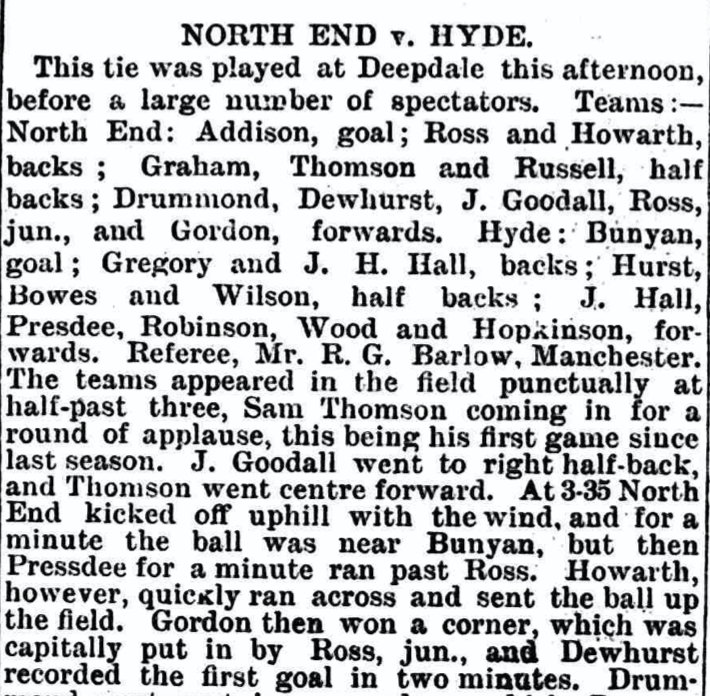
On this day (9 January) in 1957 Manchester City and Newcastle United met in a game that was described as the game of the season and also Newcastle’s ‘most thrilling encounter.’ What was the game and why did they say this? Well here for subscribers is the story of that day and film of it too. Enjoy:
Subscribe to get access – Annual
Read this and all other content on this site when you subscribe today. It costs £20 a year (about £1.67 a month) or there’s a monthly option below.
I wasn’t born then so couldn’t be at the game but were you at this match? If you were why not leave your memory as a comment or email it to me for possible future use on this website?
It’s the return of the FA Cup tonight with Manchester United facing Everton. It’s always worth reminding ourselves of the significance of the FA Cup to Manchester and the story of Manchester’s first major trophy success. The captain and goalscorer of the first triumph by Manchester in 1904 was the great Billy Meredith. In 2021 following the purchase of the oldest surviving FA Cup by Sheikh Mansour (to loan to the National Football Museum) I helped Manchester City with the story of the cup and its significance to Manchester. They’ve produced a video telling the story and it can be viewed here:
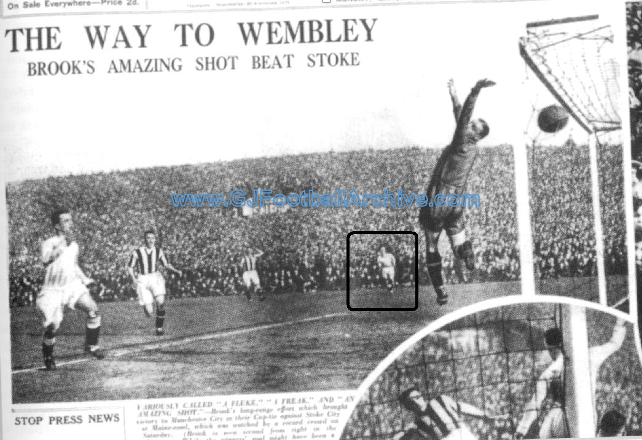
It has virtually slipped out of living memory but this goal is possibly the greatest ever scored at Maine Road. It is also the goal that was viewed by the largest paying audience of all time at the old stadium.
The goalscorer Eric Brook remains one of City’s biggest stars and he was idolised by thousands of Mancunians throughout his career. This goal was obviously popular with Maine Road regulars at the time but it has to be stressed that it was also highly significant in the Blues’ quest to re-establish themselves as a major force.
The idea of this ‘GOLDEN GOALS’ feature is to remember a significant or spectacular Manchester City goal from yesteryear. My hope is that supporters who were not around back then will learn more about these goals while those who were here will hopefully be reminded of them. If you would like to nominate a goal for possible use in a future feature then please comment at the end of this piece or email me with details of game, goal scorer and date.
This article, covering Brook’s goal is available for subscribers to the website below. It costs £20 a year (it works out £1.67 per month) and you get full access to all articles posted, including PDFs of the out of print Manchester A Football History and my first ever book about Manchester City. There are also audio interviews & more. Do a few searches on past content to see what’s available.
Subscribe to get access
Read more of this content when you subscribe today.
A few years back I caught up with the goalscorers – Tommy Booth (1969) and Paul Power (1981) – of the last couple of FA Cup semi finals involving Manchester City prior to their 2011 FA Cup triumph v Stoke. Here, for subscribers, is a piece I wrote based on that interview with Booth and Power.
Subscribe to get access
Read more of this content when you subscribe today. It costs £20 a year or £3 per month if paying a month at a time. Whichever method you choose you get full access to everything on this site.
In January this year the Newcastle Chronicle published a story that intrigued me. It talked of the history of fans wearing football scarves and suggested that a Newcastle fan in 1932 was the first to be photographed wearing a football scarf. The article explained that previously it had been claimed that an Arsenal supporter at a 1934 FA Cup tie had been the first filmed/photographed wearing a traditional bar scarf. This set me off looking into the history of football scarves and of fans showing their colours.
So, here for subscribers to my site is a 1400 word article on showing your colours, focusing on the stories associated with Manchester City…
Subscribe to get access
Read more of this content when you subscribe today. It only costs £20 a year and throughout your membership you get full access to everything published on the site, including the entire Manchester A Football History book and my first book From Maine Men To Banana Citizens to download. You can also sign up a month at a time for £3 per month. My commitment is to publish at least 4 new lengthy articles per month but in practice I’ve posted a lot more than that. Why not sign up for a month and give it a try?
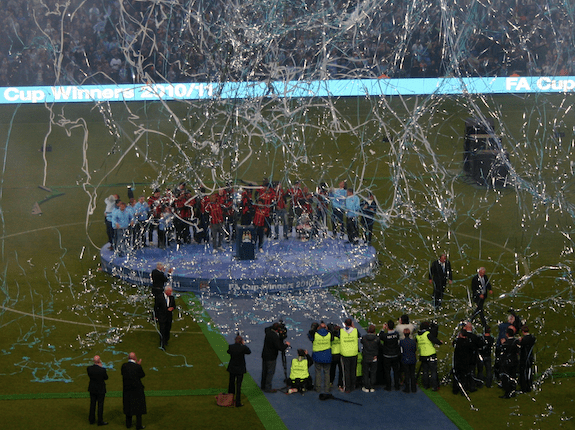
Had we all been allowed to attend matches last season I would have marked the tenth anniversary of Manchester City’s 2011 FA Cup success with a programme feature. Sadly, Covid prevented that and now, a year on, I want to commemorate the eleventh anniversary of that FA Cup success. How time flies!
There are so many angles to that first major success of the modern era for Manchester City and it is impossible to cover them all here. Elsewhere on this website I talk about the 2011 FA Cup run, especially that semi-final win over Manchester United. If you’ve not heard it have a listen to this:
This is a subscriber article. It costs £3 a month to subscribe OR take out an annual subscription at £20 (works out about £1.67 a month). All subscribers get full access to everything throughout their subscription.
Subscribe to get access
Read more of this content when you subscribe today.
Manchester City Women’s (then as Manchester City Ladies) first FA Cup tie was a 7-2 defeat at Robin Park, Wigan on 17 September 1989. This was only the second competitive game ever played by the club and came less than a year after formation. Since then, apart from a couple of seasons in the 1990s when the Blues decided not to enter, City have been regular competitors in the competition. In September 1999 City achieved their record score in the competition: 26-0 v Norton, WFA Cup Extra Preliminary Round and on this day (May 13) in 2017 they reached the FA Cup final for the first time.
Here for subscribers is the story of that final as told by those involved and those who were there… as documented in Manchester City Women: An Oral History – get your copy here if you don’t want to subscribe to this site:
In November 2020 I was delighted to be one of the speakers at a blue plaque unveiling for former Manchester City boss Joe Mercer in his home town of Ellesmere Port. It set me off thinking about permanent tributes to footballers and so for this article I’m taking a look at the tributes already made and questioning what else could be developed.
This is a subscriber article. It costs £3 a month to subscribe OR take out an annual subscription at £20 (works out about £1.67 a month). All subscribers get full access to everything throughout their subscription.
Subscribe to get access
Read more of this content when you subscribe today.
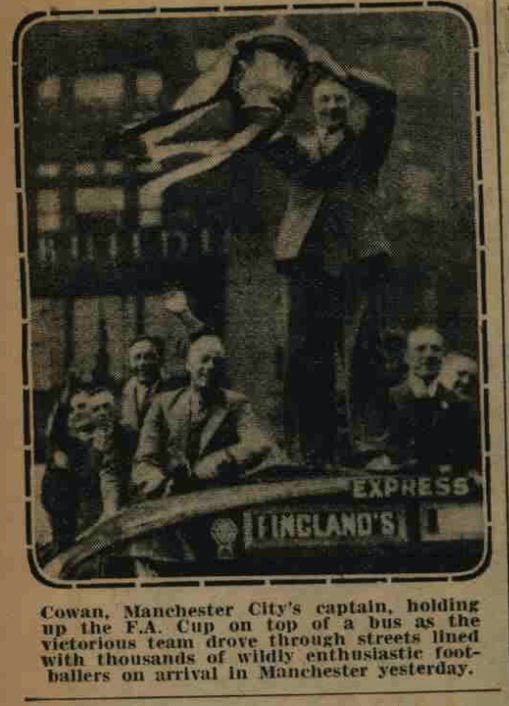
On this day (May 1st) in 1934 Manchester City, who had won the FA Cup for the second time in their history, took part in an incredible home coming parade.
Deservedly Manchester took time out to celebrate and what seemed like the whole of Manchester lined the city’s streets. The authoritative Pathe News claimed there were over a million on the streets. The film company was not known for exaggeration and if that figure is accurate – and their footage suggests it is – then this remains the largest homecoming in Mancunian football history (It was claimed in 1999 that 700,000 people had welcomed Manchester United’s treble winning team through the streets).
Various speeches were made into a microphone set up on the Town Hall steps (the BBC were broadcasting this live on radio), and the players and officials were given a civic reception. Mancunians enjoyed the success and wanted more.
In Albert Square Mancunians sang their celebratory songs including “Who Said City Couldn’t Play” – the earliest known recording of a City specific song:
Who Said City Couldn’t Play,
City Couldn’t Play, City Couldn’t Play,
Who Said City Couldn’t Play,
City Couldn’t Play football?
You can hear a recording of the song and read more about it here:
The 1933-4 League programme still had two games left for the Blues. On 2nd May – the day after the parade – City suffered a 3-2 defeat at Liverpool, and then on 5th May City demolished Wolves 4-0 at Maine Road. Before the game City staff, assisted by a couple of police officers, carried the trophy around the ground on some kind of wooden board. The fans were delighted.
During a week of FA Cup celebrations an illuminated bus journeyed around the city covered in City’s colours. On the front above the bus number, ‘City 2 1’, was the Manchester coat of arms. On the side the message ‘Welcome to the victors’ proudly illuminated next to a picture of the FA Cup and a drawing of Sam Cowan.
You can see film of this illuminated ‘Victory Bus’, preserved by the North West Film Archive at Manchester Metropolitan University, here (the bus can be seen after 5 mins 38 seconds but other scenes connected with the homecoming can be viewed after about 3 minutes):
You can view Pathe’s coverage of the homecoming here (the commentary is a bit cringeworthy but listen out for comment about a million people on the streets; the scenes certainly suggest there was too):
This has been a taster of the material on this site. Subscribers have access to over 500 articles and posts, with many more scheduled over the coming weeks. Posted already for subscribers are exclusive audio interviews I have performed with Malcolm Allison, John Bond and George Graham (more to follow); the entire Manchester A Football History book (now out of print) and various other long read articles. It costs £20 a year (that’s about £1.67 a month) or £3 per month if you want to sign up a month at a time. Whichever subscription is taken out subscribers get full access to everything posted for as long as they are subscribers. You can subscriber here:





 Gary James' Football Archive