On this day in 1913: Frank Swift was born. Here for subscribers is a detailed article I wrote on Swift a few years back: Swift, Frank Victor (1913-1958), footballer and journalist was born in Blackpool, Lancashire on 26 December 1913, the second son of five children. From his earliest memories, he was always obsessed with the game of football, playing at every opportunity with his brothers, one of whom, Fred, became first team goalkeeper for a variety of clubs, most notably Blackpool, Oldham Athletic and Bolton Wanderers.
Subscribe to get access
Read more of this content when you subscribe today. It’s £20 for an annual subscription or £3 per month (cancel anytime, see below).
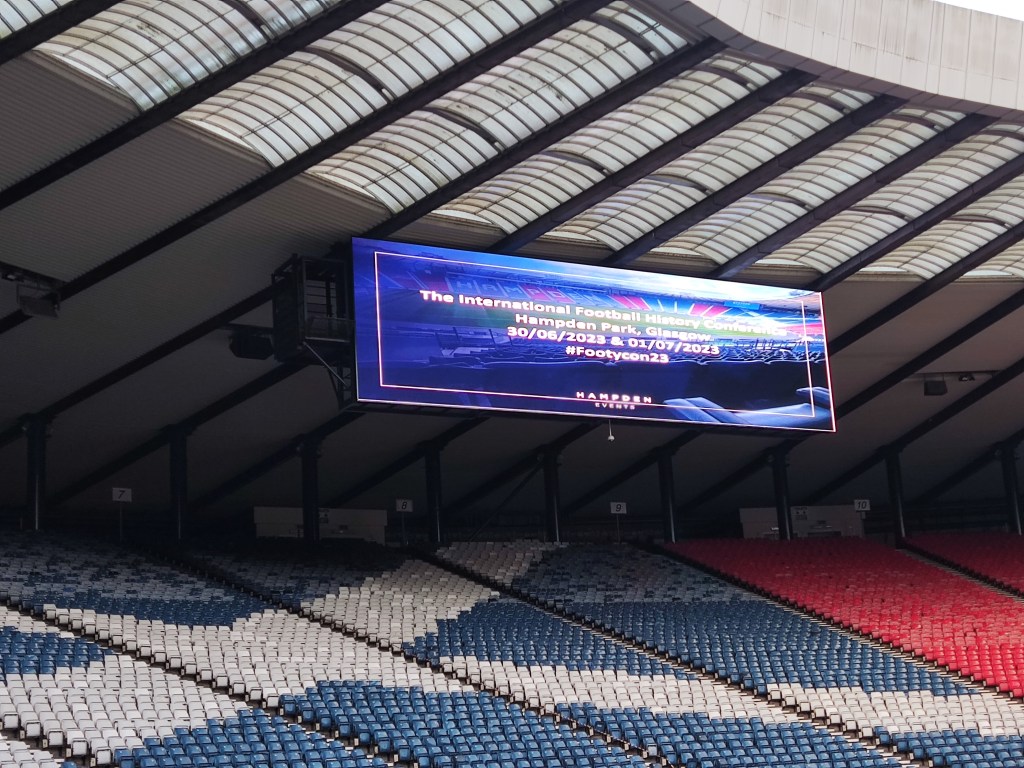
I’m delighted to announce that the 2023 International Football History Conference will be staged at Hampden Park, Glasgow on 30 June and 1 July 2023. The call for papers and details of how to get involved will be announced in January but here are a few details for those interested in getting the date in their diaries….
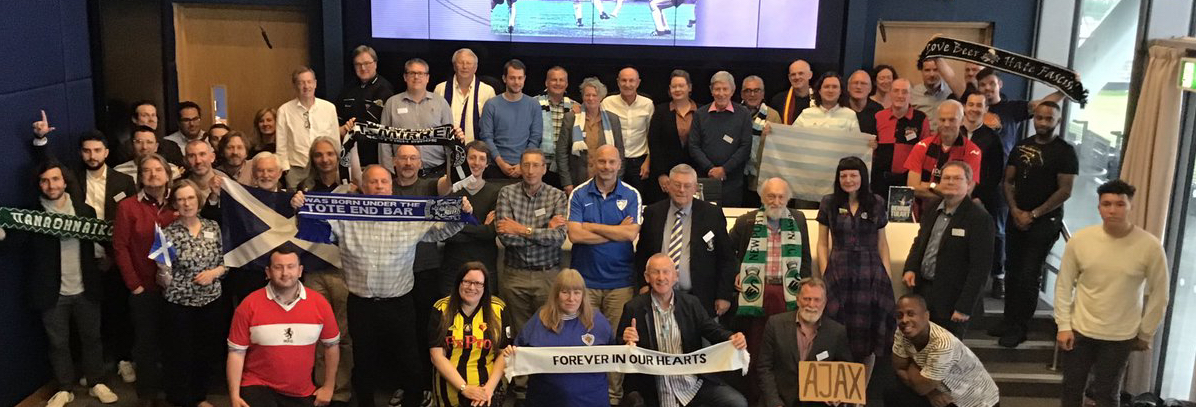
The aim of this conference is to listen to quality research and to network with others. We hope delegates take the opportunity to meet with colleagues, friends and other delegates to share your research, hear their ideas and help establish a strong network of football (of all types!) researchers and experts.
The most recent conference was held in Manchester in November 2022 and it owes its success this year to all delegates whether presenting or not, and to the following who have provided great support:
City Football Group & Routledge
We would also like to put on record our thanks to British Society of Sports History for their support during Covid when the BSSH funded a zoom licence which allowed us to have a couple of gatherings online.
Rouledge have provided vouchers for a ‘Best Paper Award’ each year and their support has helped enormously.
Following feedback and the support of Richard McBrearty and the Scottish National Football Museum we will be able to take the conference to Glasgow for the first time in 2023. Provisional details are:
Main conference anticipated to be held Friday 30th June through to Saturday 1st July, with main conference proceedings taking place between 8am and 6pm on those days.
As with previous years the conference will be open to those presenting on football of any code.This is a fundamental element of the conference, so if you’re looking for somewhere to present your years of research into gaelic football, Aussie rules or other form of the game then look no further.
The call for papers will be issued in January. We are particularly keen to have panel debates/discussions next year, as well as traditional presentations. If you’ve got an idea for a debate/discussion you’d like to arrange then please email footycon@outlook.com and we’ll see if it can be accommodated.
To get a feel for the range of topics covered have a look at the schedule for Manchester 2022 at the end of this article (after images of Hampden).
In addition to any debate suggestions, presentations in the following formats will be welcomed:
Short Form (7 minutes) – 20 slides (plus a title slide) with a maximum of 20 seconds per slide.. Ideal for a summary of research; to present early findings; Image related research etc.
Twenty Minutes – Twenty minutes of slides but no audience questions.
Fifteen plus Five – Fifteen minutes of presentation slides plus five minutes of questions (or any combination up to a maximum of twenty minutes).
Follow @footycon for further information.
If anyone would like to contribute to the conference (in terms of organisational support both in the build-up to 2023 and at the conference itself) then please let us know as soon as possible. The more volunteers, the better the conference. Also, financial support is always useful in helping to keep the costs for delegates down. If you are involved with an organisation who can provide some support then please get in touch. Or if you feel you may be able to add value in some way then we are keen to hear from you.
See you in Glasgow, 30th June & 1st July 2023!
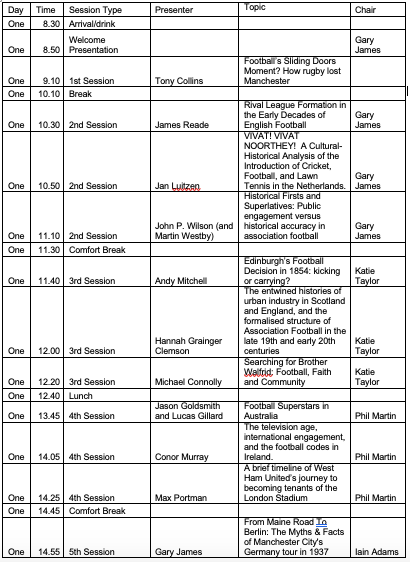
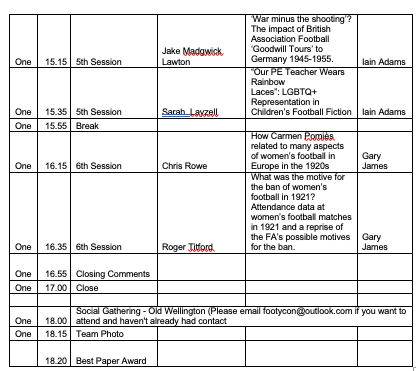
Here’s the schedule for the Manchester 2022 conference (you can search on twitter to see images from the conference with #Footycon22 ):
In 2017 the first International Football History Conference was staged with delegates from across the globe presenting and listening to talks by a variety of academics, writers, researchers and students. This has become an annual event, only paused bu Covid, and it returns on Friday this week. The conference is open to presentations on football of all codes.
There are presentations on a variety of topics. Here’s this year’s schedule:
Recently an academic article of mine offering advice and examples to those researching sports history or working within the industry was published. Normally, it is behind an academic paywall but you can download it for free during October here (it’s free, you may as well have a look):
The British Society of Sports History (BSSH) is a tremendous body of academics and historians who research, promote and progress the role of history within sport. I have been a member for many years and recently, to celebrate their 40th anniversary, I was asked to write an article offering advice, ideas & more to those researching sport history. The article has recently been published and can be downloaded here for free (follow the link below):
In the article I talk of the great work being done by several historians, including Tosh Warwick and Tony Collins, and sports clubs. I talk about research into women’s football at Manchester City and the club’s badge redesign project.
It will only be free to download for the month of October, so get it while you can. Thanks to the BSSH for giving me this opportunity.
You can find out more about the BSSH and what they do here:
***CFP Deadline extended to Friday 9th September***
After a two year absence due to Covid, the 2022 annual International Football History Conference will take place at the City Football Academy, Manchester City Football Club, Manchester M11 3FF, England and will be held over two days (18 and 19 November 2022).
This is a call for papers to be presented at the conference. There will be an opportunity to present on any topic relating to the history of football of all codes.
– Main conference proceedings will take place between 8.30am and 5pm on Friday and Saturday.
– As with previous years the conference will be open to those presenting on football of any code.
– Abstracts are welcomed on any football related topic (football of ALL codes)
–Abstracts are welcomed from researchers from any discipline.
–Presentations must not have appeared at another conference. As our conference does not have parallel sessions, we are insistent that presentations must not be a repeat of something presented elsewhere.
Abstracts for the following presentation styles are welcomed:
– Short Form (7 minutes) – 20 slides (plus a title slide) with a maximum of 20 seconds per slide. Ideal for a summary of research; to present early findings; Image related research etc.
– Twenty Minutes – Twenty minutes of slides but no audience questions.
– Fifteen plus Five – Fifteen minutes of presentation slides plus five minutes of questions.
– Panel – One hour twenty minutes: three presenters and a moderator on a related theme with specific time for individual presentations within the session agreed by the moderator including allowance for questions at the end to the group.
100 to 150 word proposals should be sent to footycon@outlook.com by 9th September 2022. Selection of presentations will take place by the committee by 15th September. As the timescales between announcement of the conference and the date of the conference we will ensure confirmation is as soon as possible.
***Please note: As the Rugby League World Cup Finals (women’s & men’s) will be staged at Old Trafford on Saturday 19th we will, for the first time, try to satisfy specific requests to present on a particular day. When submitting your abstract can you say whether you have a preference for Friday, Saturday or no preference please? Thanks.
COST OF ATTENDANCE
For full-time delegates: £119
For students/unwagedl/retired delegates: £99
Special Day Rate: £65 (employed) & £55 (unwaged)
Due to the current economic climate we have been keen to ensure the cost to delegates is kept at previous levels. We have managed to keep rates at the same level as in 2018 & 2019. Tickets will be on sale via Eventbrite soon.
Delegates will need to make their own arrangements regarding travel & accommodation for the conference. It is suggested delegates stay in city centre hotels, close to the tram network and travel to the venue each day via tram. If you would like some advice on where to stay please contact the organising committee via footycon@outlook.com
If you would like to read the full article and other pieces like this then please subscribe below. It works out about £1.67 a month if you take out an annual subscription (£20 per year).. Each subscriber gets full access to the 600+ articles posted so far and the hundreds scheduled to be posted in the coming months.
Subscribe to get access
Read this article and all other GJFootballArchive.com articles when you subscribe today.
It is important to question the relevance of sport history and to recognize our failings and our successes if we are to ensure the genre develops and contributes to society. While sport historians recognize the value, outside of this sphere, it is apparent that the subject is not always recognized for its significance. In this paper, it is argued that sport historians have a responsibility to engage more with the media and the public, while seeking opportunities to collaborate with sports organizations to ensure the subject is relevant and can develop. It is also argued that minority groups are under-represented in the sport history community, arguing that it is incumbent upon sport historians to ensure greater engagement and promotion of these groups. The paper concludes by urging those engaged in sport history to promote the discipline and develop opportunities for others.
If you would like to read the full article and other pieces like this then please subscribe below. It works out about £1.67 a month if you take out an annual subscription (£20 per year). Each subscriber gets full access to the 600+ articles posted so far and the hundreds scheduled to be posted in the coming months.
Subscribe to get access
Read more of this article and the rest of the content on GJFootballArchive.com when you subscribe today.
On this day in 1904 (23 April) Manchester found its first major trophy success. The captain and goalscorer was the great Billy Meredith. Last year, following the purchase of the oldest surviving FA Cup by Sheikh Mansour (to loan to the National Football Museum) I helped Manchester City with the story of the cup and its significance to Manchester. They’ve produced a video telling the story and it can be viewed here:
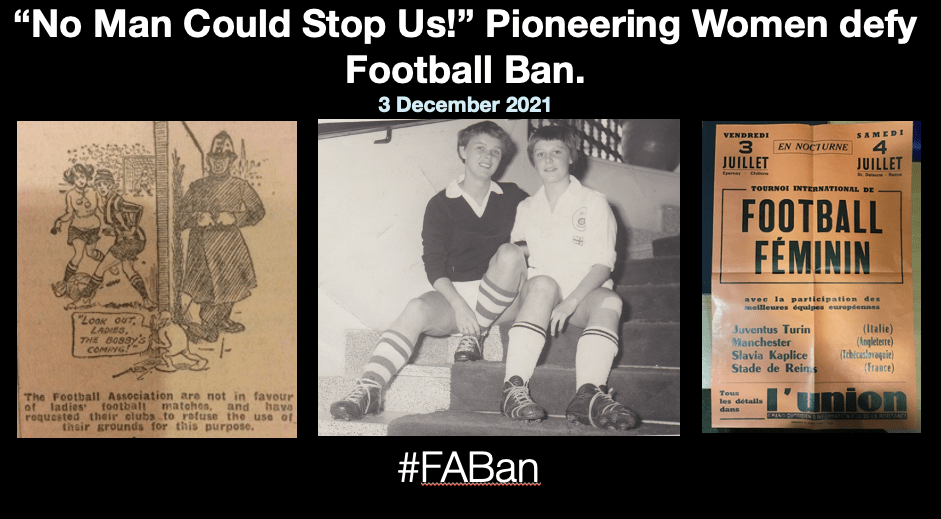
Recently, I was one of the co-authors of an academic article looking at how the FA’s ban on women’s football occurred and how it affected the development of the sport. It also compared that ban with what occurred in Wales, Scotland, Ireland and Northern Ireland. Some assume a ‘one size fits all’ approach but that was definitely not the case and it is important that national and regional histories of women’s football are performed to fully understand what was happening. As with men’s football, each region is different and this article was an attempt to help develop a wider understanding. You can read the article here (It’s free to download so you may as well have a look):
In that article there’s talk of a male coach who was punished by the FA for being involved in women’s football – this wasn’t in the 1920s. It was post WW2 and demonstrates that the FA Ban wasn’t simply about stopping women from playing on FA approved ground. It was more involved than that. To my knowledge, apart from an earlier biographical article I wrote, that had never been identified in academic writing or work on women’s football.
Too often people assume that what was true in, say, Birmingham was also true in Leicester. Or that research into something occurring in Burnley would explain what happened in Manchester, but it doesn’t. I’ve outlined in research into the origins of men’s football that the wider Manchester conurbation followed a different path than towns in Lancashire that were only a few miles further north than Manchester. Even within Greater Manchester what happens in Bolton or Wigan for either men’s or women’s football could be considerably different than what happened in Hyde, Altrincham or Gorton.
Here’s hoping women’s football gets the breadth of regional studies that it needs to ensure we have a good understanding of what happened town by town, region by region. My December talk at Hebden Bridge added evidence connected with that part of West Yorkshire (nowhere near enough of course!) and my project on female participation and involvement in Manchester is aiming to document how women’s football developed there, together with wider involvement and interest in football by women.
Quite a few articles appear on my website here about women’s football. Most are free to download. Use the tags, tabs, search and categories to find more. Thanks.








 Gary James' Football Archive