Historic Name That Ground – Week 12 Answer

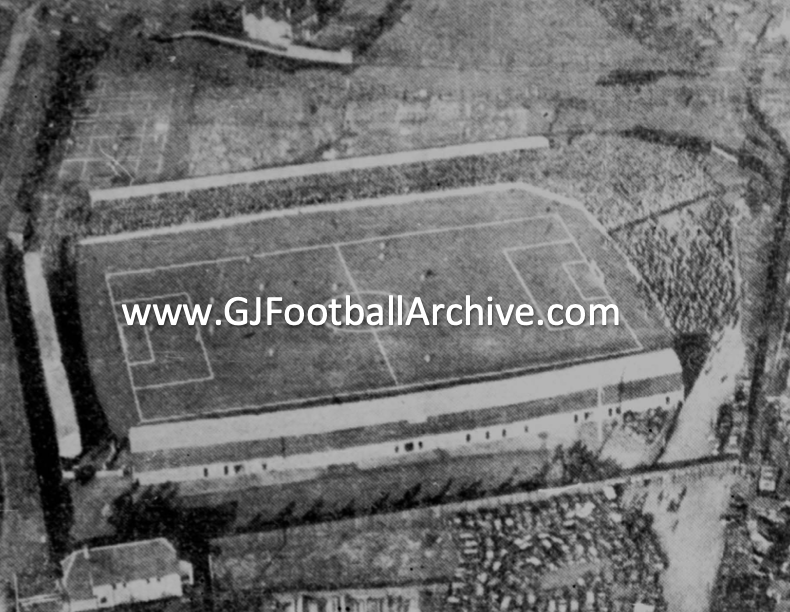
On Monday I asked: ‘Can you name the ground featured in the image above? This is tough because it doesn’t give much away, although the curve in the terracing may help.’ I also gave the following clues:

This image was taken in 1922 as the ground was being prepared for a major event; the venue is still used by a leading English club.

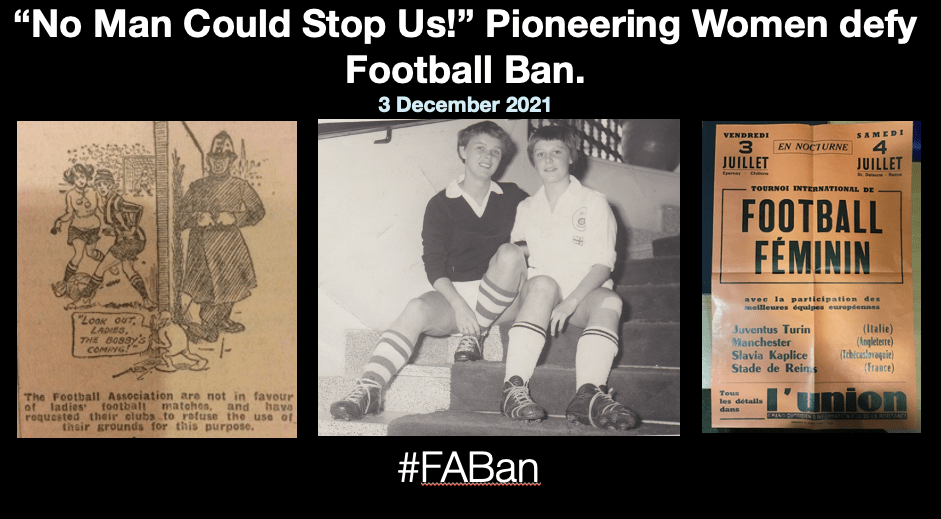
The answer is Chelsea’s Stamford Bridge. The image was taken as they were getting the ground ready to stage the 1922 FA Cup final.

While you’re here why not subscribe to my site and you can then access every article, interview, audio recording etc. already posted and those that will be posted during your subscription. It costs £20 per year (about £1.67 a month) or you can sign up on a monthly basis at £3 per month (you can cancel at any time, so you could sign sign up for a month, access everything you want and then cancel). You can subscribe below:

Subscribe to get access

Read more of this content when you subscribe today.
I had planned to run ‘Historic Name That Ground’ only during the close season as in previous years, but it’s proving of interest so I’ll keep it going for a little while yet. If you have an old image of a ground that you think it’d be worth including in this weekly quiz then please get in touch. They don’t have to be from the 1900s to 1960s – even ground images from the 70s and 80s may prove a challenge to identify these days. You can email me at gary@GJFootballArchive.com Thanks.

Soccer Aid for UNICEF 2021

I was present at the Etihad on Saturday night for the latest Soccer Aid fundraiser. It was my first experience of attending Soccer Aid, although I have watched it each year on television of course. It was also the first time it was staged at the Etihad after previously being held at Old Trafford, Wembley and Stamford Bridge.

It was a great event and it was wonderful to see some highly successful former Premier League players like Pablo Zabaleta and Wayne Rooney on the same pitch as entertainers, musicians and reality stars. 

Inevitably the crowd was also mixed with many regular football attendees present together with others who came to perhaps their first match as they were fans of one of the celebrities, or maybe they simply wanted to support the charity appeal. It actually created a good atmosphere with certain stars getting great support. The Manchester rapper Aitch was certainly popular, as was singer YUNGBLUD, YouTuber Chunkz and singer Olly Murs.

YUNGBLUD

Due to chance I ended up in a great place to see the Rest of the World players as they arrived at the stadium and you could see the delight on the faces of many of the players as they arrived at the Etihad. Line of Duty’s Martin Compston seemed to be taking in every moment – as he did during the game.

Ore Oduba & Martin Compton

Obviously, the quality of football varied but it was great entertainment. I thought singer James Bay played well. Chelcee Grimes seemed to set up Lee Mack for significant attempts on three occasions – a couple of which Mack fluffed – and she did some of the work before Mack finally scored. The other goals were both scored by Love Island’s Kem Cetinay and the Rest of the World won 3-0.

There are videos and match reports out there so I won’t go through any of that but I do want to say that it was a somewhat surreal experience at times. Most will know that ITV did a Masked Singer like reveal for the Soccer Aid mascot. Before the second half started his head was removed to chants from the crowd of ‘Take it off’ and it turned out it was entertainer Stephen Mulhern. He then played a few minutes in costume (without costme head) and it did seem odd seeing footballers like Paul Scholes in the same team as a costumed sidekick to Ant & Dec. However the majority of children – and many adults – in the stadium loved the pantomime of it all and his name was chanted at times.

For me the whole night was about raising funds and providing some entertainment. It wasn’t meant to be a major clash between two of the world’s strongest footballing teams and, for those reasons, I think anything that adds to the entertainment value of those in the stadium is fine. 

When we watch these things we want to see if the former footballers have still got it; whether that reality star or the people who talk about the game really can play; whether the comedian is doing it for laughs and so on. 

At the end of the game the players did a lap of honour and by the end of it YUNGBLUD and Olly Murs had given away their shorts to fans. Earlier, during the match, there was a great moment when Aitch was substituted for Max Whitlock. Aitch took off his shirt and handed it to a boy in the stands. He then signed it for the lad and the boy was delighted. He put on the shirt and Aitch took his place on the bench. Within only a few minutes Mo Farrar had to come off through injury and they decided to send Aitch back on. He shouted across to the lad to give him back his shirt but fortunately another shirt appeared and Aitch could get on the pitch. It was one of those typical testimonial style moments.

Soccer Aid is of course a worthy charity and can be supported via donations here:

https://donate.socceraid.org.uk/?_ga=2.269079862.631569536.1630922634-761543484.1630922634

Congratulations and thanks to everyone involved. This was a nice, positive and well supported event. Important work too!

On a personal level I thought the Etihad stadium looked fantastic on the night and it certainly added to the occasion. Hopefully, Soccer Aid will return there next year. As well as the entertainers on the pitch there were also several ‘faces’ in the stands including, a few rows behind me, Shaun Ryder. It was great to see the event supported in this way.

Historic Name That Ground – Week 12

If you’ve not seen this feature before then each week for the next few weeks I’ll post an image of a football ground taken in the past and you can see if you can recognise the ground. Some will be easy, others not so. You’ll be able to post your view in comments at the bottom of each page.

The following Friday I’ll post the answer. So here goes….

Can you name the ground featured in the image above? This is tough because it doesn’t give much away, although the curve in the terracing may help. If you want a couple of clues I’ve posted them near the bottom of this page in italics.

While you’re here why not subscribe to my site and you can then access every article, interview, audio recording etc. already posted and those that will be posted during your subscription. It costs £20 per year (about £1.67 a month) or you can sign up on a monthly basis at £3 per month (you can cancel at any time, so you could sign sign up for a month, access everything you want and then cancel). You can subscribe below:

Subscribe to get access

Read more of this content when you subscribe today.

I had planned to run ‘Historic Name That Ground’ only during the close season as in previous years, but it’s proving of interest so I’ll keep it going for a little while yet. If you have an old image of a ground that you think it’d be worth including in this weekly quiz then please get in touch. They don’t have to be from the 1900s to 1960s – even ground images from the 70s and 80s may prove a challenge to identify these days. You can email me at gary@GJFootballArchive.com Thanks.

Today’s clues: This image was taken in 1922 as the ground was being prepared for a major event; the venue is still used by a leading English club.

Historic Name That Ground – Week 11 Answer

As usual Monday brought the latest name that ground image. I asked: ‘Can you name the ground featured in the image above? It’s an old image and I don’t have an exact date, but I’m guessing it’s in the 1930s. That stand behind the goal was recognisable for decades.’ The answer is…

Tranmere Rovers’ Prenton Park.

While you’re here why not subscribe to my site and you can then access every article, interview, audio recording etc. already posted and those that will be posted during your subscription. It costs £20 per year (about £1.67 a month) or you can sign up on a monthly basis at £3 per month (you can cancel at any time, so you could sign sign up for a month, access everything you want and then cancel). You can subscribe below:

Subscribe to get access

Read more of this content when you subscribe today.

I had planned to run ‘Historic Name That Ground’ only during the close season as in previous years, but it’s proving of interest so I’ll keep it going for a little while yet. If you have an old image of a ground that you think it’d be worth including in this weekly quiz then please get in touch. They don’t have to be from the 1900s to 1960s – even ground images from the 70s and 80s may prove a challenge to identify these days. You can email me at gary@GJFootballArchive.com Thanks.

Johnny Williamson

Last week I heard the news that the former Manchester City player Johnny Williamson had died at the age of 92 (this photo shows Johnny, far right, with his two great friends Ken Barnes and Don Revie). Since then I’ve not really seen many tributes to Johnny, who has been a dedicated Blue attending Maine Road as a regular since the 1940s as well as being a striker. So, I’ve decided to put that right a little with this. Instead of writing the usual sort of tribute I’ve posted below an interview I did with Johnny about 18 years ago. His words tell his story much better than I can. Here goes…

Today I’m considering the life and career of a player from the 1950s: Johnny Williamson was a Manchester born City player during the period 1949 to 1956.  This was a golden age for football and, as was usually the case, when I met up with Johnny we had a very enjoyable chat. We met up at the original Manchester City museum, the Manchester City Experience.

Before we consider your playing career can you tell me a bit about your involvement with the Club today?  I know you’re still a regular attender.

Well I’m a member of the City Former Players’ Association which, to be honest, is probably the best ex-players association in the Country.  Everyone involved with the organisation puts in a lot of hard work and the Club really support us, so that’s good.  

I come to the game because I still love football and it’s a great way to meet up with your old team mates as well.

So who are the key men behind the Association?

Everyone plays a part, and I think it’d be unfair to single out too many.  The Association started a few years ago when Roy Clarke, Roy Little, Paddy Fagan, Peter Robinson – probably a few more – got it going, and then it grew and nowadays the main men are John Riley, Roy Cheetham, Franny Lee, Fred Eyre, and Ian Mellor, but as I say everyone plays a part so I don’t  want to single anyone out.  What I do want to say though is that it’s a great organisation.

Between the end of your playing career and your retirement, what other jobs did you have?

I worked for the Co-op for a while and then managed an off-licence in Ashton.  It was long hours of course and not always the best place to be, but it was a living and it kept me close to Manchester and to City.

Going right back to the start of your career then, can you tell me how you progressed?

I was born just up the road, and as a kid I’d been playing in Oldham.  Then I had to do my National Service in the Army – I know it’s difficult for people to follow these days but when you were that age your life went on hold for two years.  You had no choice.  It was something everyone had to do, and you went along with it.  

As I was about to come out of the Army I had a trial at Maine Road, then played at Droylsden for City’s A team, and then on the Monday I played for the Reserves.  It was a quick elevation.  I’d gone from nothing to playing at Old Trafford within a few days.  In those days the reserves played at United because their first team were using Maine Road, so we couldn’t play at our ground.  

In April 1950 you made your League debut against Arsenal, how did that feel?

Well first of all it was April Fool’s Day.  I get reminded about this every so often!  There was a fella only the other week reminding me.  It was no wonder we got beat.  But I will say that the first team had some really great players – and I mean great – so making your debut alongside some of these men was a honour.  Trautmann was playing of course, but the side also had Eric Westwood – a brilliant player at the time.   The Arsenal team was special as well.  I remember Denis Compton and his brother Leslie were playing.  Joe Mercer was missing for Arsenal that day, but what an exceptional player he was as well.

Do you think it was the golden age of football? 

I know it was a period when every side – and I mean every side – had great players.  You could go through the First Division sides and list the brilliant players each one possessed.  Tom Finney at Preston, Nat Lofthouse at Bolton, Joe Mercer at Arsenal, Stanley Matthews… I won’t go on, but I could.  There were so many and as a player, or as a fan, you’d pick up the fixture list of the newspaper and look to see when the teams would be coming.  You had to see these men in the flesh.  There was no television coverage of course, so your only chance of seeing the great players would be to go to the games, and when you did, you were never let down.

Don’t forget though that our side was a major draw at the time.  We had some brilliant players and whenever City went away the local fans would come out to see George Smith, Andy Black, and later Don Revie, Roy Paul, Ken Barnes and so on.  

As the side contained such quality it must have been hard for you to break into that team?

We all knew our place.  I knew the side had great forwards so I knew my chances would be limited.  The reserves also attracted great crowds in those days – which also demonstrates the strength and quality in the side – and I always hoped I’d get in to the first team, but just being around some of those men was tremendous.

What coaching influence did you have in the reserves?

Frank Swift was looking after the reserves and, again, being in the same room as someone like that was enough in some ways.  I think it was actually Swifty who changed me from being an inside-forward to being a centre-forward.  That helped my career, but Swifty was a great influence in that dressing room.  He had great humour and there are many stories of pranks played by him – and once in a while on him!

Coaching though didn’t really exist.  You were encouraged to play football naturally.  It’s one of those things that you’ve either got or you haven’t.  The two most important things to know are when to give and when to go.  That can’t be coached.  You need a footballer’s brain.

One of your key moments came with the development of the deep-lying centre-forward approach known as the Revie Plan.  Whose idea was that?

Well, it evolved really.  It was developed in the reserves but it wasn’t one of those ideas that can be pinpointed to one particularly day.  In the reserves it was working with me and Ken Barnes, but then it was tried in the first team with Don Revie and we got beat 5-0 at Preston.  Then they played Ken in the first team with Don and it clicked.  You see it needed the two players, and Ken was the difference.  Then there was no stopping it.

It’s hard to imagine now any new tactical plan revolutionising the game, but this one did.  How did the other teams adjust?

They couldn’t at first.  They had no idea how to counteract the plan.  It surprised everyone and some of the other teams just could not work it out.  Don’t forget though that the quality of the players had a lot to do with it.  Don and Ken were two exceptional players.  Everyone knew that.

What was Don Revie like as a man?

A great guy.  Me and my wife and Don and Elsie were very close.  We always went on holiday together and he was a good friend.  He’s had a bad press at times, but as a player he was brilliant…  as a manager he revitalised Leeds… and as a man he was great.  People used to go on about the ‘Revie Plan’ but he used to tell them it wasn’t ‘his’ it was the team’s.  In particularly he used to tell them how vital Ken was.  It wouldn’t have worked without Ken, and Don made sure they all knew that.

When I was in the reserves and Don was in the first team I was very happy.  I knew he was a great player and being reserve to Don was better than most men could ever dream of.  I still had the hunger to play, and still wanted to be in the first team, but I knew my chance would be limited while Don was there.

So what was the biggest moment of your career?

It’s difficult thinking about biggest moments, it’s so long ago, but coming into the side for Don when we played at Sheffield Wednesday in November 1954 was great.  Not only did I replace Don, but I also scored two goals and we won 4-2.  A very good memory that one.

What were the facilities for players like in those days?

It was a different world!  There was always a race on to get into the drying room first because the kit was so old and worn that it really was a case of first up best dressed.  The socks were enormous with the heel flapping around near your foot.  They’d been washed so many times  they’d lost their shape.  

We wore thick woolly jumpers – with holes in – for training and I’m certain some of this kit had been worn by the likes of Swifty and Doherty ten years earlier.  I’m not saying City were bad because every club was like this.  This was normal.

What was your worst moment at City?

It’s got to be leaving.  Nobody ever wanted to leave City.  I loved it here, but I had to move on, so I went to Blackburn.  I didn’t stay there long, and then came back to Manchester and played at Hyde United.  I was a Mancunian and a City fan.

Had you been a City fan since boyhood?

Definitely!  I used to get to Maine Road for three-quarter time – when they used to open the gates to let people out but every week hundreds more ran in – and loved watching the players I eventually shared a dressing room with as a reserve.  My Dad had actually been a player with United and I’ve got his Central League medal from 1921.  He always came to watch me play.

NOTE: John Williamson senior was with United between September 1919 and May 1921, making two League appearances both, coincidentally against Blackburn Rovers (the team his son was later to play for).

Finally, you have clearly loved your involvement with City what is the key memory from your time as a player?

Being at the Club when so many truly great players were there.  People often ask things like ‘who was better Swift or Trautmann?’ and I always say whichever you pick I’ll have the other because both men were better than the rest.  If either ‘keeper was playing today supporters would never go out on a Saturday night, they’d stay in to watch the highlights.  That’s how good these men were.  People watched football because they knew they would be entertained by natural players.  It was a great time to play, and it was a fantastic time to be a supporter.  I wouldn’t swap that period of football for any other.

The Keeper: Bert Trautmann

On Sunday (September 5, 2021) evening at 10pm BBC 2 will be showing ‘The Keeper’. I was a consultant to this film. If you’ve not seen it then you certainly should. Trautmann was an incredible man. It’s a dramatisation of a life not always factually exactly what happened but I hope it inspires everyone to find out more about a perceived enemy who became a hero. To mark this event here’s a chapter I wrote for my MCFC Hall of Fame book a few years back…

“Unfortunately, Bert is ill at the moment and cannot be here, however when he can make it we will ensure he receives this award.  On his behalf, I’d like to thank you for this wonderful award and recognition for a truly great City player.” Chairman John Wardle collecting the Hall of Fame award in January 2004)

Subscribe to get access

Read more of this long read article/chapter when you subscribe today. It costs £20 a year and you can access all other material on this site including the entire Manchester A Football History & From Maine Men To Banana Citizens books.

You can read about a significant moment from Trautmann’s City career here:

https://gjfootballarchive.com/2020/12/29/manchester-city-hall-of-fame-bert-trautmanns-significant-game/

City’s record appearances

Now that Sergio Aguero has left Manchester City it seems an appropriate time to review where he fits in the all-time appearance list for the club.  City’s appearance holder is Alan Oakes and it may be some time before another player comes close to his total of 676 (plus 4 as substitute) appearances.

Here for subscribers is a feature on the top 25 appearance holders for Manchester City with some commentary on how the record has changed over the decades.

If you would like to subscribe and read this and all my other content posted to this site (over 370 articles/sound recordings/interviews including the entire Manchester A Football History) then please use the button below. It costs £20 a year (that’s about £1.67 a month) and you have access to everything for as long as you are a subscriber (you can even subscribe for a month at a time at £3, access everything and then cancel your subscription if you like!).

Subscribe to get access

Read more of this content when you subscribe today.

Historic Name That Ground – Week 11

If you’ve not seen this feature before then each week for the next few weeks I’ll post an image of a football ground taken in the past and you can see if you can recognise the ground. Some will be easy, others not so. You’ll be able to post your view in comments at the bottom of each page.

The following Friday I’ll post the answer. So here goes….

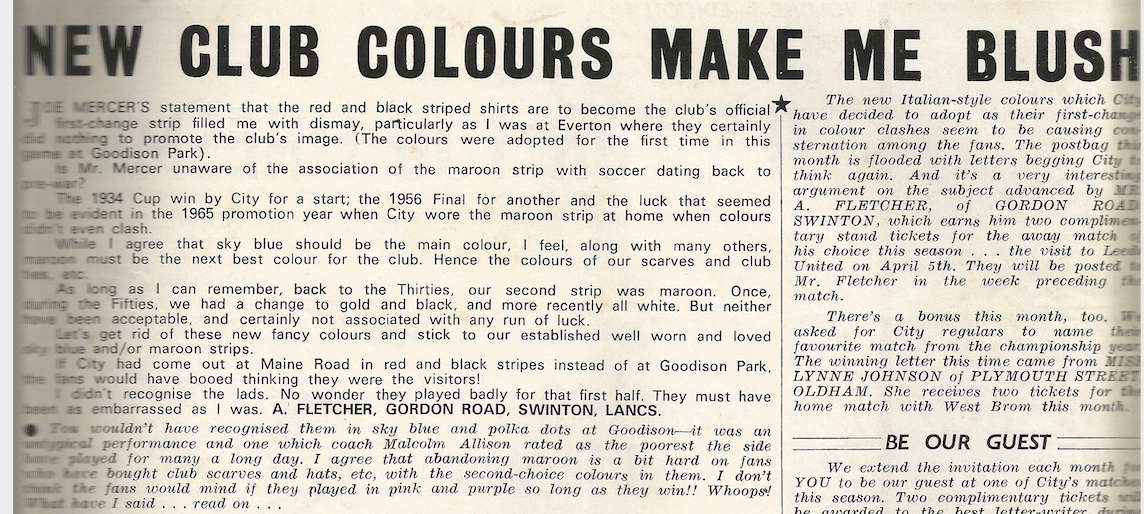
Can you name the ground featured in the image above? It’s an old image and I don’t have an exact date, but I’m guessing it’s in the 1930s. That stand behind the goal was recognisable for decades.

While you’re here why not subscribe to my site and you can then access every article, interview, audio recording etc. already posted and those that will be posted during your subscription. It costs £20 per year (about £1.67 a month) or you can sign up on a monthly basis at £3 per month (you can cancel at any time, so you could sign sign up for a month, access everything you want and then cancel). You can subscribe below:

Subscribe to get access

Read more of this content when you subscribe today.
I had planned to run ‘Historic Name That Ground’ only during the close season as in previous years, but it’s proving of interest so I’ll keep it going for a little while yet. If you have an old image of a ground that you think it’d be worth including in this weekly quiz then please get in touch. They don’t have to be from the 1900s to 1960s – even ground images from the 70s and 80s may prove a challenge to identify these days. You can email me at gary@GJFootballArchive.com Thanks.

Historic Name That Ground – Week 10 Answer

On Monday I asked: ‘Can you name the ground featured in the image above? The only clue I’ll give is that this is a 1960s image and this was a wet day. If you recognise the ground you’ll know why it was wet too.’ The answer is…

It is of course Shrewsbury Town’s old Gay Meadow ground. If you look carefully you can see the pitch was flooded. This image was taken in January 1968 when the pitch was under 2 feet of water. Shrewsbury were due to play Tow Law Town in the FA Cup that day.

Next ground on Monday. If you have an old image of a ground that you think it’d be worth including in this weekly quiz then please get in touch. They don’t have to be from the 1900s to 1960s – even ground images from the 70s and 80s may prove a challenge to identify these days.

While you’re here why not subscribe to my site and you can then access every article, interview, audio recording etc. already posted and those that will be posted during your subscription. It costs £20 per year (about £1.67 a month) or you can sign up on a monthly basis at £3 per month (you can cancel at any time, so you could sign sign up for a month, access everything you want and then cancel). You can subscribe below:

Subscribe to get access

Read more of this content when you subscribe today.

Maine Road

On this day (August 25) in 1923 Maine Road staged its first game. Two decades later it staged the first World Cup match in England and the decade after that the first European Cup game in England. It still holds the record provincial crowd and the record for a League game, and for eighty years it was the home of Manchester City. Here’s a look at the life of Maine Road.

Here for subscribers is a 2,000 word piece on City’s former home. It corrects a few myths (the ‘Wembley of the North – pah! It was better than that when it opened!).

If you would like to subscribe and read this and all my other content posted to this site (over 370 articles/sound recordings/interviews including the entire Manchester A Football History) then please use the button below. It costs £20 a year (that’s about £1.67 a month) and you have access to everything for as long as you are a subscriber (you can even subscribe for a month at a time at £3, access everything and then cancel your subscription if you like!).

Here’s the article:

Subscribe to get access

Read more of this content when you subscribe today.