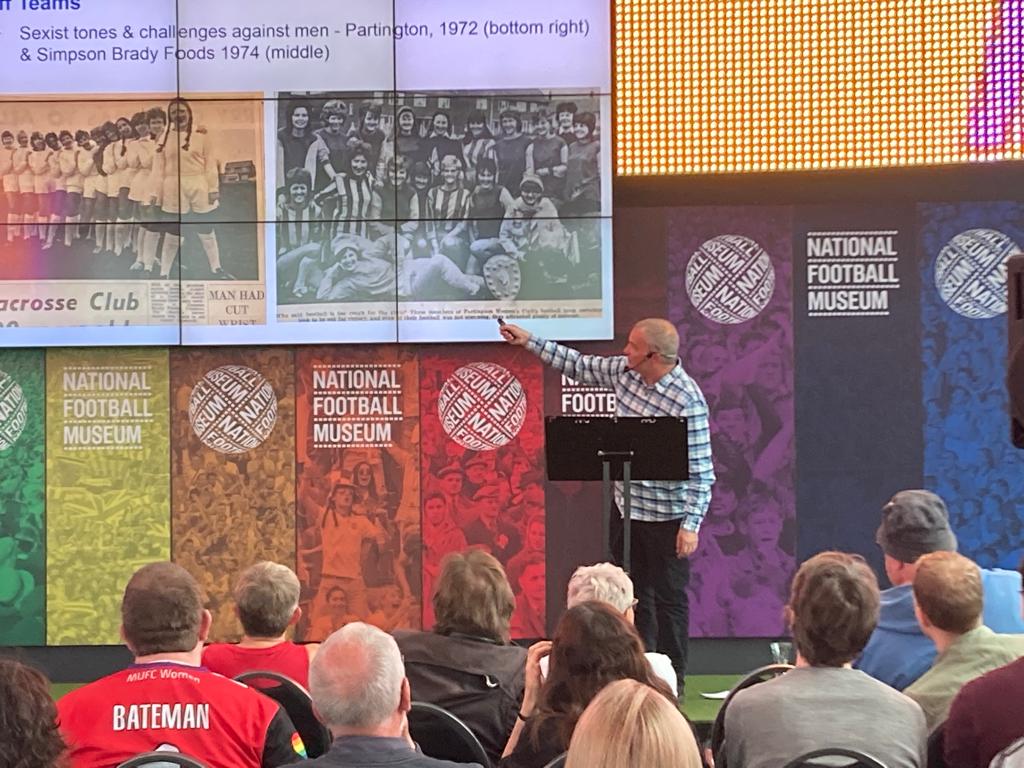
If you’re interested in women’s football or in football in Trafford or Manchester then get your self a brew, settle down and enjoy this video of my talk. It was part of my work on the #WEuro2022 Heritage Lottery funded project and my long standing project into the history of women’s football in Manchester. Here goes:
This talk on the history of women’s football was staged at the National Football Museum a few years back. The talk lasts about 47 mins. Enjoy!
The history of women’s football in Trafford is documented in the new book on women’s football I’ve co-edited. You can find out more about that here:
If you’re interested in women’s football or in football in Trafford or Manchester then get your self a brew, settle down and enjoy this video of my talk. It was part of my work on the #WEuro2022 Heritage Lottery funded project and my long standing project into the history of women’s football in Manchester. Here goes:
This talk on the history of women’s football was staged at the National Football Museum a few years back. The talk lasts about 47 mins. Enjoy!
The Trafford Archive website I mention during my talk is available here:
There are some excellent books on women’s football out there but we still need more. There are many long forgotten clubs who deserve to be remembered and it’s up to those of us who research football history to ensure they are remembered, with their efforts properly recorded. There are people like Gail Newsham and her decades’ (many decades) worth of research into Dick, Kerr Ladies, that have helped us understand some of the achievements of women’s clubs over the years. Gail has been researching because it matters to her personally – it’s something I totally understand. Those of us who focus on our clubs or on teams from our towns or on people we’ve known over the decades, tend to research because it’s our passion. It matters to us personally – and it’s often clear when people jump on a bandwagon and mistakenly think there’s money to be made or it’ll give them some form of reflected glory.
For myself, I’ve been researching and writing about football in Manchester throughout my adult life. In my first book, published when I was 21 (but started when I was 19), I managed to include something on the newly formed Manchester City Ladies FC. I was at their first game (in fact I was a regular for the first 4 years of the club’s existence) and my girlfriend (now wife) played for them, scoring twice in the club’s first match. She’d previously played for another Manchester team and during this period we got to know several former Manchester Corinthians players.
The relaunch of Manchester City’s women’s team, 2014
Since that time in the 1980s I have been fortunate to meet so many fascinating former footballers – men and women – and have always been fascinated by their stories. I’ve also written lots of books and articles over the last 35 years or so, covering a variety of topics but predominantly focusing on the history of football in Manchester. Publishers have often tried to push me down particular pathways (or said there isn’t enough space for something I felt needed covering) and I understand that. Nevertheless, my motivation has always been to uncover the history of the region’s football clubs and to ensure it is recorded as accurately as possible – no matter how much space it takes. Facts not fiction, dispelling myths (and believe me there are a lot of myths out there!).
If you want to research a topic then do it. Don’t let anybody put you off.
In terms of women’s football in particular I’ve written dozens of articles for Sport in History, Soccer & Society, Manchester FA, Manchester Evening News, She Kicks, Trafford Council, When Saturday Comes, the FA, UEFA, Manchester City, Manchester United and many others, including various fanzines.
Research by Dr Gary James led to the history of Manchester United Ladies FC being documented as part of the UEFA Women’s EURO 2022 Arts and Heritage programme
There has also been Manchester City Women: An Oral History – the first detailed history of a WSL club. Many of these articles have been about the Manchester Corinthians and I have heard stories recently which talk about one of my articles on the Corinthians providing inspiration. That’s wonderful.
2024 will see the publication of two books I’ve been working on for several years. There’s a book for the publisher Peter Lang, co-edited with Fiona Skillen and Helena Byrne, on the history of women’s football in Britain and Ireland which includes contributions from several leading historians of women’s football. That will be an excellent historical analysis of women’s football.
Then there’s my labour of love – Manchester Corinthians: The Authorised History which I’ve self-funded. This will be of the same quality and size as my book on Manchester City Women and in many ways is a sort of prequel.
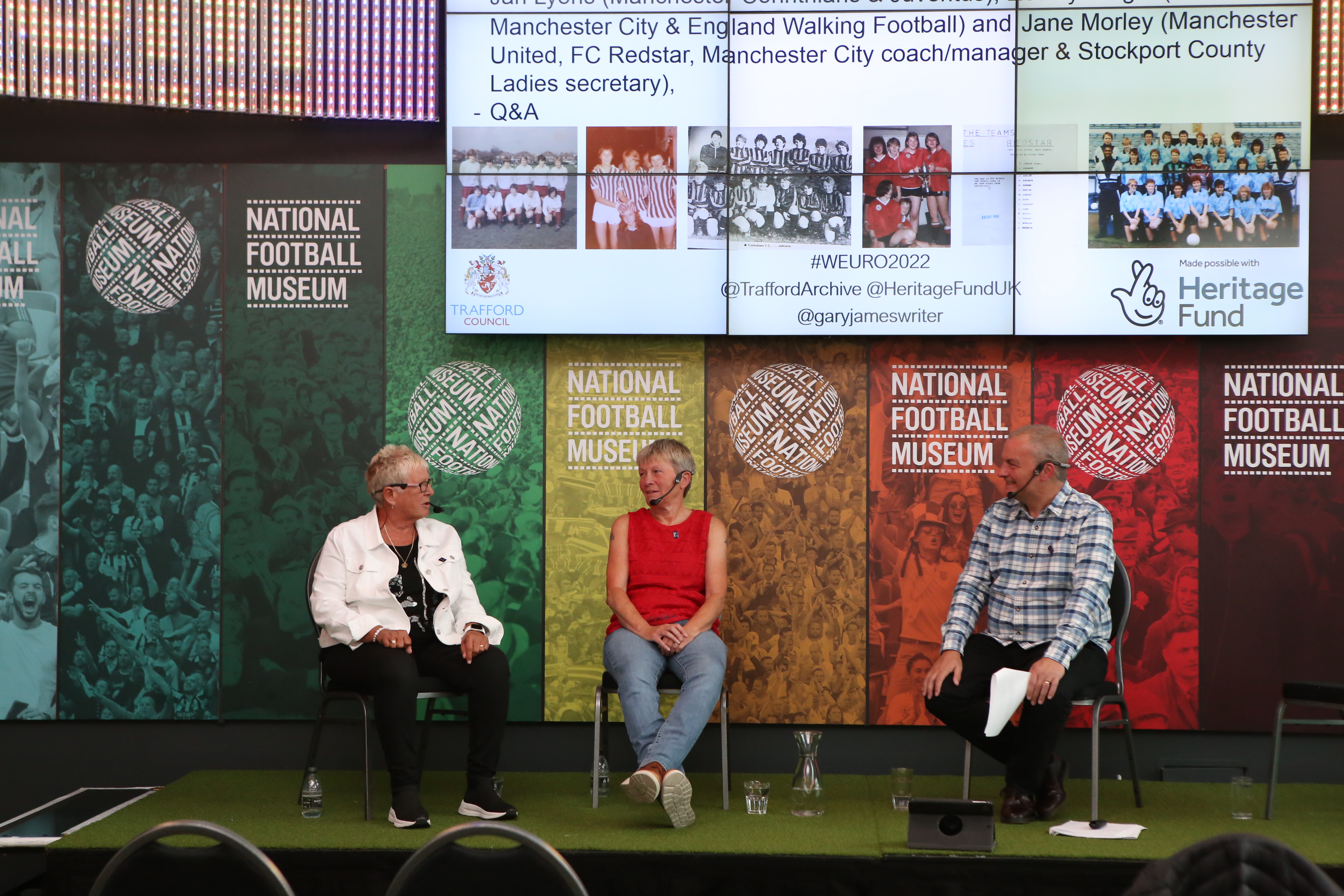
One of Gary James’ history of women’s football in Manchester talks at the National Football Museum, including interviews with Jan Lyons and Lesley Wright.
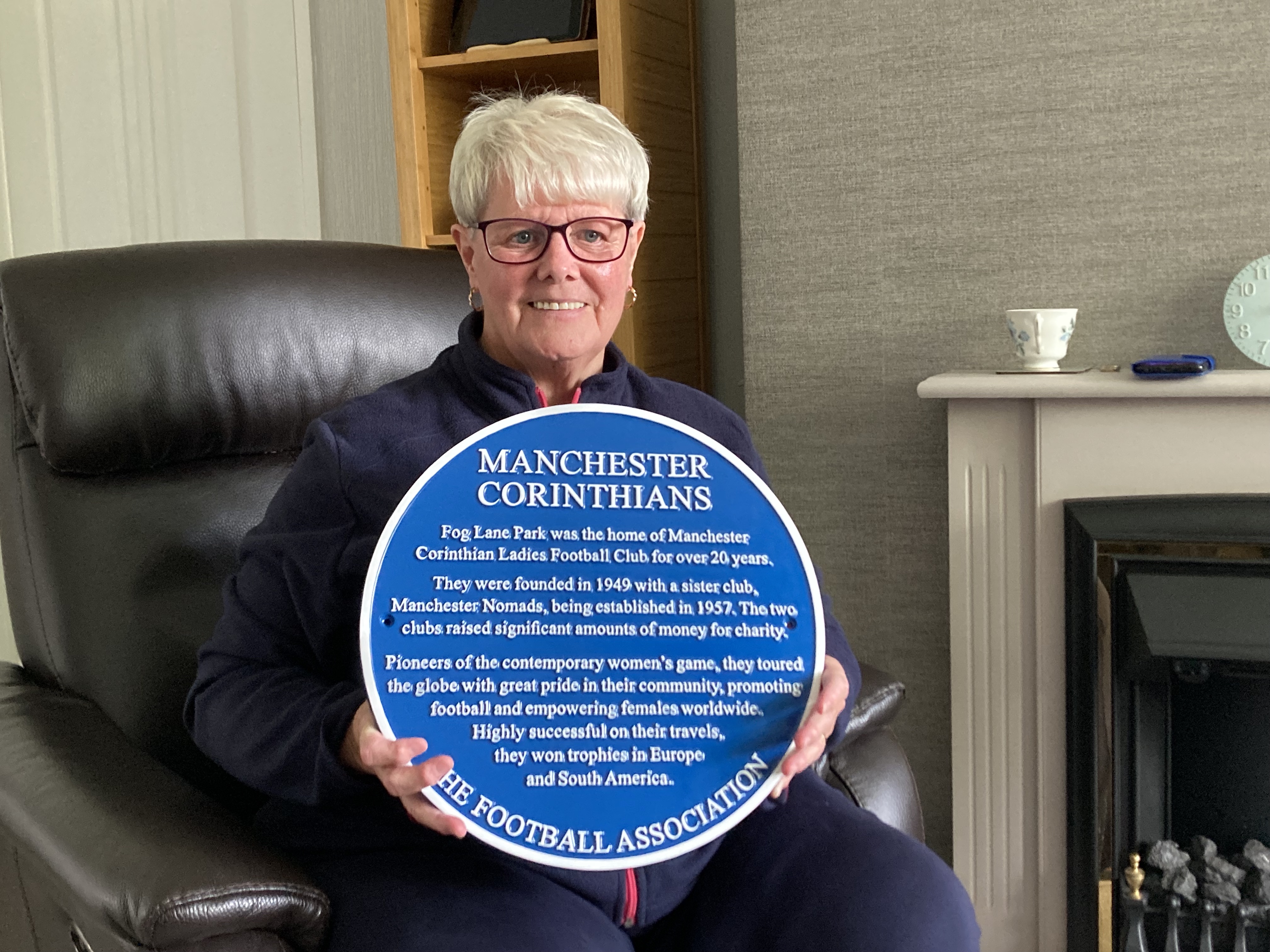
Why the Corinthians? Well, you’ll see from reading the book that I regard the club as the most significant women’s club in the region (possibly nationally) prior to the WSL era (and therefore of huge significance to football, Manchester and nationally!). There have been several prominent trophy winning women’s clubs in Greater Manchester and there have been many that have toured outside the UK, but the Corinthians did all of that and more. There are many myths out there about the club (and some have been promoted a lot recently) but the history of this club is truly significant – and I really do mean ‘truly significant’ as you’ll see in the book. We do not need myths because the facts are remarkable.
Rather than focus on one angle or era, the book covers every season from its formation in 1949 to its demise four decades later. This year marks the 75th anniversary of the Manchester Corinthians’ formation and over the last decade I have interviewed dozens of women involved with the club. I’ve captured stories and voices from women who played in games during EVERY season of the club’s long history. It’s been a shattering but utterly worthwhile experience.
Anyone who has bought my previous books, whether they be on the wider history of men’s football in Manchester, biographies on Mercer or Barnes, Maine Road, or Manchester City Women, will know the lengths I go to make sure the story is interesting, entertaining and factually correct, quoting those that experienced it at the time and supporting players’ memories with detailed archival research. My research into the Manchester Corinthians has been a labour of love. The women who played, and those who were involved but are sadly no longer with us, deserve to be remembered and celebrated.
My hope for the book is that long after we’ve all gone there will be people visiting the library or picking up the book who can learn more about this remarkable club and the people involved with it. Thanks.
You can find out more on the Manchester Corinthians book here:
Before the Corinthians there were the Manchester Ladies (and other clubs in the region – some will be mentioned in the Corinthians book of course!). Steve Bolton wrote a guest blog on Manchester Ladies which can still be read here:
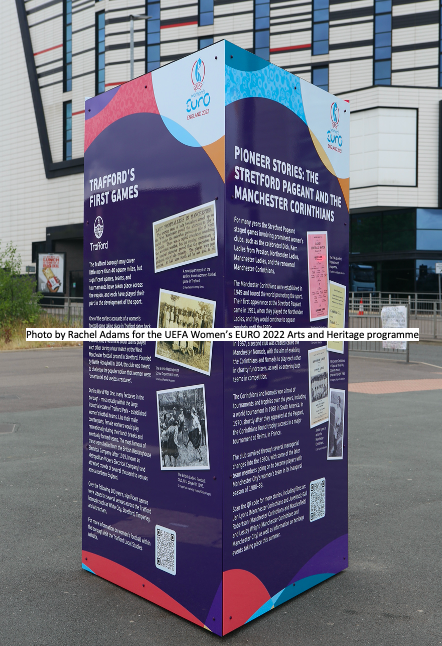
Margaret Whitworth, Karen Bardsley, Margaret Shepherd & Gary James. Several Corinthians were guests of Manchester City for a WSL game.Research by Dr Gary James led to the history of women’s football in Trafford being documented as part of the UEFA Women’s EURO 2022 Arts and Heritage programme
Yesterday (23 March 2024) saw another Manchester City victory over United in the WSL Manchester derby. It’s always impressive seeing the Blues win and this City team has been in existence since 1988. The history of women’s football in Manchester does not always get the attention it deserves and many of us have been determined to change that for years (this year I’ll be publishing the Authorised History of the Manchester Corinthians after years of research – see below). So hopefully the following will be of interest. It includes a few quotes from those involved in previous decades and I’ve included it as part of my series on the 1990s as the first City-Utd women’s league derby took place in 1990.
While the perception will always exist that Manchester United’s women’s team has always been City’s rivals and vice versa, for both clubs the real rivals have varied over the years. Derby matches have been played against Manchester Belle Vue and other prominent local clubs. There were even derbies in the 1940s when Manchester Ladies and Manchester Corinthians played each other.
However, any game between City and United takes on extra significance. United fans established a Manchester United Ladies team in the 1970s with close ties to the men’s club. This eventually was closed down by the men’s club before re-emerging in 2018 as a WSL 2 club. In September 2019 the first WSL Manchester derby between City and United occurred at the Etihad following United’s move into the top flight. This was a truly special day for both clubs and for those of us present.
The first competitive derby between City and United was actually in September 1990 in the North West Women’s Regional Football League Second Division when Neil Mather was City’s manager: “I was nervous for weeks on end, and it was coming and coming and coming. I thought ‘we’ve got to beat United in the first competitive Derby.’ Being a big blue it was like ‘whatever we do we’ve got to beat them.’ We were 4-1 up with about five minutes to go and then had a five minute collapse where I thought we’re going to blow this. At one point it had looked like we were going to get five or six and annihilate them and then we nearly lost it! Thank God we hung on for a 4-3 win, but I’ll never forget that game. We had a girl called Jenny Newton who was a manic City fan and scored and I don’t think I’ve ever seen anything like it. When she scored her eyes were bulging and it meant the world and a lot of our girls were City fans. It meant the world to beat them.”
Lesley Wright: “The first time we played United in a competitive game there was about 150 there. They were a really strong team. Better than us at the time and they’d been established a lot longer.”
Rita Howard: “Despite being a United fan I loved playing as City Ladies against United. I absolutely loved it. Even though I’m a United fan I never contemplated joining them because the support from City, even when it waned a little, was far superior to anything United got. At best they’d get a kit and then it was ‘on your way.’ I know our closeness to City came from that beginning with Neil. His enthusiasm got us the kit, the tracksuits, the minibus…. All sorts of things. I know that wasn’t happening at United and at that time I don’t think any club connected in any way to a Football League side were as close as we were then. I think we got a lot more recognition from the beginning and that has carried on to today. Look at what City have done.”
Jane Morley: “I’m a season ticket holder at Manchester United but I was a manager at City Ladies. One day I’d been with City at a tournament and then went straight to Old Trafford for a men’s game. I was sat there when the bloke next to me – who I didn’t know – said ‘what you doing with that on!’ I realised I still had my City jacket on. I had to explain to him that I managed City Ladies.”
Bev Harrop was a Manchester United fan playing for City: “I had a United shirt underneath my City shirt! (laughs) Most of the time. Not later on, I grew out of it eventually, but at first, I did.”
Jane Morley: “It angers me when people say that Manchester United now have their first women’s team. As with City when the relaunch happened that implies the stuff we did for the club years before doesn’t count. I played for United in the 70s and 80s before a few of us broke away to set up FC Redstar. We left United because we wanted to test ourselves. We had some great players and wanted to progress but those who ran United wanted to stay in a Manchester League and not join the North West League. So we broke away in 1985 and formed FC Redstar.
“Many of the teams we know today as WSL clubs are actually men’s clubs that have taken over established women’s clubs. Teams like Leasowe Pacific became Everton. I have to bite my lip sometimes when some clubs claim they created a women’s team… no, you took and rebranded a team. There were quite a few big teams around the time City Ladies started such as Broadoak with Tracey Wheeldon.”
These snippets are from my book on Manchester City’s women’s team. Copies (signed by me) can be ordered here: https://gjfootballarchive.com/shop/
For more on the book on the Manchester Corinthians (who started in 1949) see:
If you would like to read all the in-depth articles on this site (including the entire Manchester A Football History book) then please subscribe. It works out about £1.67 a month if you take out an annual subscription (£20 per year) or £3 a month if you’d like to sign up for a month at a time. Each subscriber gets full access to the 500+ articles posted so far and the hundreds scheduled to be posted in the coming weeks.
If you’re interested in women’s football or in football in Trafford or Manchester then get your self a brew, settle down and enjoy this video of my talk before the big England-Northern Ireland match tonight. It’s part of my work on the #WEuro2022 Heritage Lottery funded project. Here goes:
This talk on the history of women’s football was staged at the National Football Museum on 1st July as part of my work on a consultancy basis with Trafford local archives. The talk lasts about 47 mins. Enjoy!
There will be a video of the panel discussion mentioned in this talk that will appear as a part 2 later. Maybe next week?
The Trafford Archive website I mention during my talk is available here:
Did you play football for a women’s team in the Trafford area or are you a female footballer from Trafford? If so, I’m keen to interview you for a new Heritage Lottery Funded project seeking to capture the stories of women footballers who came from the Trafford borough. Already I’ve heard from players connected with Manchester United’s original women’s team; FC Redstar; Trafford Ladies, Manchester Corinthians and more BUT I’m keen to capture as many stories as possible over the coming weeks. The project is part of a wider project connected with the Women’s Euros to be staged this summer (See below for details).
There are some excellent people in Trafford involved with the project and in the wider national project too. I’m delighted to be working with them. The interviews from this last week or so the first interviews with former footballers connected with Trafford occurred and the stories they have told will help the project enormously. We need more though and, not only that, but fans can contribute too.
Maybe you can help the project? We’re keen to capture your stories and memories. The details are:
In preparation for the Women’s Euros which will open at Old Trafford at the start of July Trafford Local Studies are keen to interview women who have played football. We are particularly keen on hearing the stories of women footballers from the borough or from women who played for teams within Trafford.
For those uncertain the Trafford borough covers a number of towns and areas including Altrincham, Bowden, Flixton, Irlam, Old Trafford, Sale, Stretford, Timperley, Trafford Park and Urmston. If you are a woman from the area and played football then please get in touch. Also, if you played either for or against a team from the Trafford area then we also want to hear your memories of that game.
The Trafford area has incredibly strong links to the history of women’s football. In 1921 a game between Dick, Kerr Ladies and Bath Ladies at Old Trafford was watched by over 30,000 and over the following century significant games were staged at White City, Stretford, Timperley and other venues in our borough.
Over the last fifty years or so many prominent local teams have developed and played in the area such as Sale Hotel, Trafford, Redstar, Urmston and many others, while women from Trafford have played for prominent teams outside of the borough.
We are keen to hear the memories of women who have contributed to this rich history of women’s football in the area. If you are from Trafford or played for a team based in our borough then please get in touch. Your memories will help to develop our archive and ensure future generations are aware of the experiences of women footballers.
In addition, we are keen to locate objects, match programmes and memorabilia associated with women’s football, so if you have an item that you feel may help please get in touch. If you’ve got objects/images/programmes but don’t want to be interviewed please get in touch anyway – your collection will help us develop a wider understanding of women’s football in the area and the aim is to record as much about our teams as possible over the next few weeks.
If you would like to help then please email me via gary@GJFootballArchive.com
This project is part of a National Lottery Heritage funded progamme which seeks to bring this history into the light through a number of physical and virtual exhibitions, and to create a documentary record of the game at this moment, through oral history interviews with local players and fans and a contemporary collecting programme.
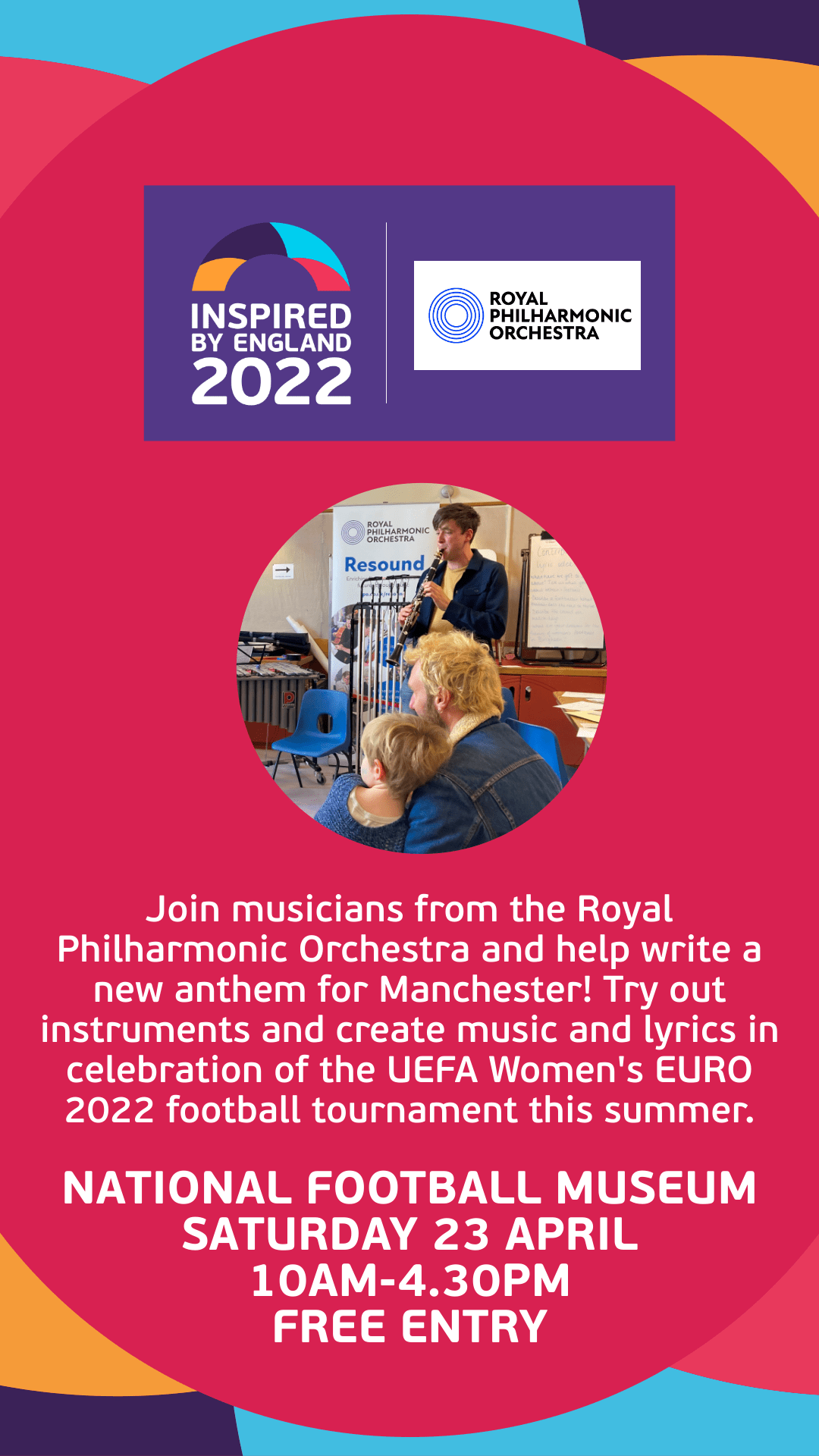
A week or so ago I announced that I’m working on a new Heritage Lottery Funded project seeking to capture the stories of women footballers who came from the Trafford borough or who women who played football at sites within Trafford. There are some excellent people in Trafford involved with the project and I’m delighted to be working with them. The project is part of a wider project connected with the Women’s Euros to be staged this summer (See below for details). This week the first interviews with former footballers connected with Trafford occurred and the stories they have told will help the project enormously. We need more though and, not only that, but fans can contribute too.
The above image provides details of an event at the National Football Museum which seeks to create a Women’s Euros footballing anthem for the Manchester region and the Royal Philarmonic Orchestra are keen to have input from fans, players and anyone with a strong interest in women’s football within the region. I know part of the event clashes with a MCFC men’s game but I’ve been assured that attendees can pop in for a time and won’t need to be there for the entire session. I’m not involved with the organisation or the main aspects of the day but I do intend popping in during the late morning if I can.
Alongside this, the call out to woman who have played football still stands and I’m keen to hear from Trafford women or women who played games in Trafford. Maybe you can help the project? We’re keen to capture your stories and memories. The details are:
In preparation for the Women’s Euros which will open at Old Trafford at the start of July Trafford Local Studies are keen to interview women who have played football. We are particularly keen on hearing the stories of women footballers from the borough or from women who played for teams within Trafford.
For those uncertain the Trafford borough covers a number of towns and areas including Altrincham, Bowden, Flixton, Irlam, Old Trafford, Sale, Stretford, Timperley, Trafford Park and Urmston. If you are a woman from the area and played football then please get in touch. Also, if you played either for or against a team from the Trafford area then we also want to hear your memories of that game.
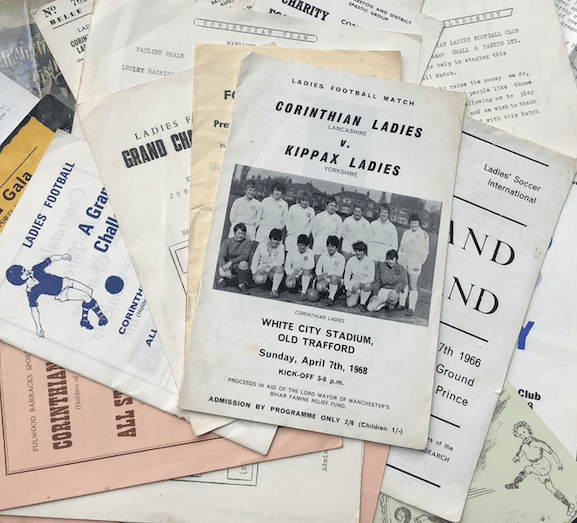
The Trafford area has incredibly strong links to the history of women’s football. In 1921 a game between Dick, Kerr Ladies and Bath Ladies at Old Trafford was watched by over 30,000 and over the following century significant games were staged at White City, Stretford, Timperley and other venues in our borough. In fact on this day (7 April) in 1968 the renowned Manchester Corinthians played Kippax Ladies (from Yorkshire not Maine Road!) at the White City Stadium (see image above).
Over the last fifty years or so many prominent local teams have developed and played in the area such as Sale Hotel, Trafford, Redstar, Urmston and many others, while women from Trafford have played for prominent teams outside of the borough.
We are keen to hear the memories of women who have contributed to this rich history of women’s football in the area. If you are from Trafford or played for a team based in our borough then please get in touch. Your memories will help to develop our archive and ensure future generations are aware of the experiences of women footballers.
In addition, we are keen to locate objects, match programmes and memorabilia associated with women’s football, so if you have an item that you feel may help please get in touch.
If you would like to help then please email me via gary@GJFootballArchive.com
This project is part of a National Lottery Heritage funded progamme which seeks to bring this history into the light through a number of physical and virtual exhibitions, and to create a documentary record of the game at this moment, through oral history interviews with local players and fans and a contemporary collecting programme.
I’m delighted to say that I’m working on a new project capturing the stories of women who played football. The project is part of a wider project connected with the Women’s Euros to be staged this summer (See below for details). If you are a woman who has played football then maybe you can help the project. We’re keen to capture your stories and memories. The details are:
In preparation for the Women’s Euros which will open at Old Trafford at the start of July Trafford Local Studies are keen to interview women who have played football. We are particularly keen on hearing the stories of women footballers from the borough or from women who played for teams within Trafford.
For those uncertain the Trafford borough covers a number of towns and areas including Altrincham, Bowden, Flixton, Irlam, Old Trafford, Sale, Stretford, Timperley, Trafford Park and Urmston. If you are a woman from the area and played football then please get in touch. Also, if you played either for or against a team from the Trafford area then we also want to hear your memories of that game.
The Trafford area has incredibly strong links to the history of women’s football. In 1921 a game between Dick, Kerr Ladies and Bath Ladies at Old Trafford was watched by over 30,000 and over the following century significant games were staged at White City, Stretford, Timperley and other venues in our borough. In fact on this day (7 April) in 1968 the renowned Manchester Corinthians played Kippax Ladies (from Yorkshire not Maine Road!) at the White City Stadium (see image above).
Over the last fifty years or so many prominent local teams have developed and played in the area such as Sale Hotel, Trafford, Redstar, Urmston and many others, while women from Trafford have played for prominent teams outside of the borough.
We are keen to hear the memories of women who have contributed to this rich history of women’s football in the area. If you are from Trafford or played for a team based in our borough then please get in touch. Your memories will help to develop our archive and ensure future generations are aware of the experiences of women footballers.
In addition, we are keen to locate objects, match programmes and memorabilia associated with women’s football, so if you have an item that you feel may help please get in touch.
If you would like to help then please email me via gary@GJFootballArchive.com
This project is part of a National Lottery heritage programme which seeks to bring this history into the light through a number of physical and virtual exhibitions, and to create a documentary record of the game at this moment, through oral history interviews with local players and fans and a contemporary collecting programme.
Today’s guest blog follows on from last week’s guest blog in which Steve Bolton talked of the Manchester Ladies (who also went under the name Wythenshawe Ladies, City of Manchester Ladies, Manchester City Ladies the 1940s & 1950s) and their early years. Today is part two of Steve’s research into this pioneering women’s club (part one can be viewed here: https://gjfootballarchive.com/?p=1863 ).
Over the last few years much has been written about pioneering women’s football teams and Steve’s research is certainly adding to that. I’m sure anyone reading this already knows about my book on Manchester City Women (available here: https://gjfootballarchive.com/shop/ ) and about the other articles on this blog discussing other leading women’s clubs, including the Manchester Corinthians (see: https://gjfootballarchive.com/category/womens-football-2/ ).
If you played for a women’s team in the Manchester region during the 1940s to 1960s then please get in touch. I’m writing a detailed history of the Manchester Corinthians to be published in 2024 and your information may help both mine and Steve Bolton’s research. For more on the Corinthians book see:
If you played an active part in developing women’s football prior to the FA ban then please get in touch by emailing gary@GJFootballArchive.com or follow me on twitter: @garyjameswriter or facebook.com/garyjames4
Over the last few years much has been written about pioneering women’s football teams and I’m delighted to say that Manchester has had several of these over the years. I’m sure anyone reading this knows about my book on Manchester City Women (available here: https://gjfootballarchive.com/shop/ ) and about the other articles on this blog discussing other clubs, including the Manchester Corinthians (see: https://gjfootballarchive.com/category/womens-football-2/ ).
Thanks to the Manchester Corinthians the story of pioneering Mancunian female footballers has received some decent coverage in recent years but it would be wrong to think that the women who played for Corinthians were the first women who played football in our region. There are games staged in Manchester going back to the 1880s of course. However, following the 1921 ban (which saw the FA ban women’s football games from FA affiliated pitches) opportunities were restricted significantly.
In Preston the famous Dick Kerr Ladies have been heralded for their efforts and in the 1950s & 1960s Manchester Corinthians found global fame for their exploits, but football tends to overlook many other clubs and in 1940s Manchester, before the Corinthians became established there was another female football club that promoted the sport, charity work and female prowess.
For today’s guest blog researcher Steve Bolton provides the first part of his research into the stories, facts and evidence of this Manchester team:
If you played for a women’s team in the Manchester region during the 1940s to 1960s then please get in touch. I’m writing a detailed history of the Manchester Corinthians to be published in 2024 and your information may help both mine and Steve Bolton’s research. For more on the Corinthians book see:
If you played an active part in developing women’s football prior to the FA ban then please get in touch by emailing gary@GJFootballArchive.com or follow me on twitter: @garyjameswriter or facebook.com/garyjames4










 Gary James' Football Archive