Over the years I’ve done quite a few talks on the history of football to Manchester and have also focused on the financial significance of the sport to Manchester. Here are a few slides that spell out a few facts. Obviously, I normally include explanation behind a lot of this when I talk but nevertheless I think they may be of interest as stand alone slides.
These slides were from 2019 and so the figures will have changed since then but they do give a general feel for the financials:
A reminder that subscribers to my site can download lots of my writing, including all of Manchester A Football History and a PDF of my entire first book. It was published back in 1989 and sold out within 6 months of publication. Here are more details:
So far I’ve told you about the eleven players selected for my all-time best Manchester City FA Cup final winning team and today it’s the time for the manager.
I was asked to select an all-time City eleven and had two rules – they had to actually play in a winning final (so, unused substitutes were not allowed) and they could not be a member of the current playing squad. I also tried to focus on the fact that this eleven would also be facing an all time Manchester United eleven. Therefore victories over United in key games were always in the back of my mind.
For the manager I could select anyone who had managed the Blues in a FA Cup winning final. It was tough because of the wonderfully talented and inspirational leaders the club has had, starting with Tom Maley in 1904. In the end I went for:
Manager Pep Guardiola (since 2016)
Imagine this talented team being guided by this inspirational coach! A tactical innovator he would love the versatility of this team with attack-minded defenders, a hugely talented midfield and some of the best goalscorers the FA Cup has ever seen. Forward-thinking 1960s coach Malcolm Allison would be enthralled watching him in action.
I have no idea how many of you read the article in the FA Cup final but another writer picked the United all-time FAC eleven. When comparing the two I’m convinced my 11 would easily defeat United’s. Maybe I should post that and see what you all think?
So far I’ve told you about Bert Trautmann, Tony Book, Glyn Pardoe, Vincent Kompany, İlkay Gündoğan, David Silva, Billy Meredith, Colin Bell and Fred Tilson in my all-time best Manchester City FA Cup final winning team and today it’s the time for the final couple of names.
I was asked to select an all-time City eleven and had two rules – they had to actually play in a winning final (so, unused substitutes were not allowed) and they could not be a member of the current playing squad. I also tried to focus on the fact that this eleven would also be facing an all time Manchester United eleven. Therefore victories over United in key games were always in the back of my mind.
The final two players selected are heroes from the 1969 and 2011 finals:
Neil Young (1961-1972)
A Mancunian who scored the only goal of the 1969 final – a trademark left foot shot past Peter Shilton – and followed this with the opening goal in City’s first European trophy success the following season. The leading goalscorer during the 1967-68 title winning season, Young played in a variety of attacking roles, always contributing goals.
1971 ECWC v Chelsea North Stand being built but used for terracing. Neil Young. Photo by Alan Jubb.
There are lots of articles that mention Neil Young on this site. You can read some here:
Bustling, powerful and rampaging, the African Footballer of the Year was goal scorer in the 2011 FA Cup semi against United and that season’s final too. This versatile midfielder can play a holding role or play box-to-box, adding many options to this team. He is adept at turning any game.
Yaya Toure
You can read about the significance of 2011 and Yaya’s significant role in that in this feature here:
So far I’ve told you about Bert Trautmann, Tony Book, Glyn Pardoe, Vincent Kompany, İlkay Gündoğan, David Silva and Billy Meredith in my all-time best Manchester City FA Cup final winning team and today it’s the time for another couple of names.
I was asked to select an all-time City eleven and had two rules – they had to actually play in a winning final (so, unused substitutes were not allowed) and they could not be a member of the current playing squad. I also tried to focus on the fact that this eleven would also be facing an all time Manchester United eleven. Therefore victories over United in key games were always in the back of my mind.
The next two players selected are (and the first one will be no surprise but the second may be!):
Colin Bell (1966-1979)
The King and first name on this team sheet. 1969 FA Cup winner whose courage, stamina, speed, skill, enthusiasm and strength all combined to make him one of the game’s biggest legends. Bobby Charlton called him: ‘One of my great heroes… He was an outstanding player.’ Who would argue with that?
There are lots of articles on Colin Bell on this site. You can read some here:
This England international’s best performances often came in the Cup, scoring more goals (22) in the competition than any other City player. In 1934 he netted 9 goals in 8 games, including two at Wembley, meaning he edges Francis Lee for selection. This centre-forward was a key contributor when City won the 1937 League Championship too.
More on the all-time Manchester City FA Cup winning eleven tomorrow. It was a tough selection and over the next few days I’ll post the rest of the starting eleven.
You can read about the significance of 2011 in this feature here:
So far I’ve told you about Bert Trautmann, Tony Book, Glyn Pardoe, Vincent Kompany and İlkay Gündoğan in my all-time best Manchester City FA Cup final winning team and today it’s the time for another couple of names.
I was asked to select an all-time City eleven and had two rules – they had to actually play in a winning final (so, unused substitutes were not allowed) and they could not be a member of the current playing squad. I also tried to focus on the fact that this eleven would also be facing an all time Manchester United eleven. Therefore victories over United in key games were always in the back of my mind.
The next two players selected are:
David Silva (2010-2020)
This World Cup winner joined City in 2010 and immediately impressed. ‘El Mago’ (the magician) was a member of both the 2011 and 2019 FA Cup successes, but was also the star man time and time again as the Blues won eleven major trophies in his decade.
Billy Meredith (1894-1906 & 1921-1924)
A Welsh international and Manchester’s first superstar who was idolised by both Blues and Reds. Captain and goalscorer in City’s first FA Cup success in 1904. This talented right-winger narrowly pipped 60s & 70s legend Mike Summerbee to this spot. Imagine either man playing in a side managed by Pep!
Meredith is the earliest name in my list and you can read more about 1904 here:
More on the all-time Manchester City FA Cup winning eleven tomorrow. It was a tough selection and over the next few days I’ll post the rest of the starting eleven.
You can read about the significance of 2011 in this feature here:
So far I’ve told you about Bert Trautmann, Tony Book and Glyn Pardoe in my all-time best Manchester City FA Cup final winning team and today it’s the time for another couple of names.
I was asked to select an all-time City eleven and had two rules – they had to actually play in a winning final (so, unused substitutes were not allowed) and they could not be a member of the current playing squad. I also tried to focus on the fact that this eleven would also be facing an all time Manchester United eleven. Therefore victories over United in key games were always in the back of my mind.
The next two players selected are:
Vincent Kompany (2008-2019)
Captained City to a record 6-0 victory in the 2019 final and played in the 2011 success over Stoke. This determined Belgian led by example through many glorious trophy-winning seasons and had a knack of scoring crucial goals at important moments. Solid, reliable and a great motivator. My captain.
İlkay Gündoğan (2017-2023)
The hero of the 2023 final. Selected here to get City off to a great start and, if the game is in the balance, to pop up with a second goal! This German international is another true leader, captaining City to a remarkable treble. He was also a member of the 2019 FA Cup winning team.
More on the all-time Manchester City FA Cup winning eleven tomorrow. It was a tough selection and over the next few days I’ll post the rest of the starting eleven.
You can read about the significance of 2011 in this feature here:
Yesterday I posted the goalkeeper of my all-time best Manchester City FA Cup final winning team and so today it’s the time for another couple of names.
I was asked to select an all-time City eleven and had two rules – they had to actually play in a winning final (so, unused substitutes were not allowed) and they could not be a member of the current playing squad. I also tried to focus on the fact that this eleven would also be facing an all time Manchester United eleven. Therefore victories over United in key games were always in the back of my mind.
The next two players selected are:
Tony Book (1966-1974)
As FWA Player of the Year in 1969 Book captained City to FA Cup success and led the Blues through a glorious era when derby games tended to end in a City victory. Still revered, this humble legend was also a trophy winning manager and coached City to FA Youth Cup success over United in 1986.
Glyn Pardoe (1962-1976)
A versatile right footer who typically played on the left, City’s youngest ever debutant was exceptionally good in the air. A vital and dependable member of the 1968 League championship and the 1969 FA Cup winning teams, Pardoe’s instincts, passing ability and tackling expertise made him a cultured defender.
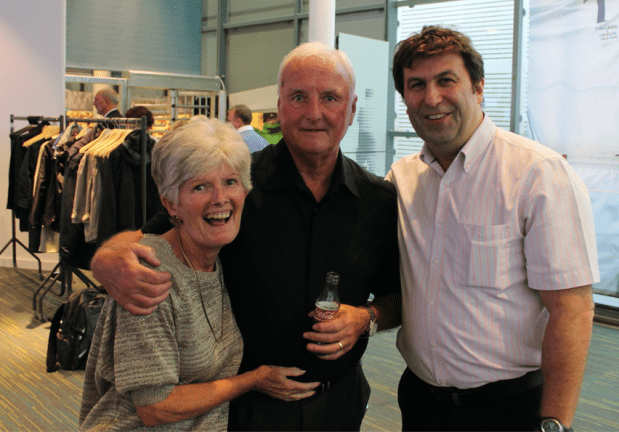
Janice Monk (former City Store), Glyn Pardoe and Steve Mackenzie at the launch of Manchester The City Years in 2012
Both Book and Pardoe played in the 1969 FA Cup final. You can read all about that here:
More on the all-time Manchester City FA Cup winning eleven tomorrow. It was a tough selection and over the next few days I’ll post the rest of the starting eleven.
For the 2024 FA Cup final match programme I was asked to select my all-time best Manchester City FA Cup final team. I set two rules – they had to actually play in a winning final (so, unused substitutes were not allowed) and they could not be a member of the current playing squad. I also tried to focus on the fact that this eleven would also be facing an all time Manchester United eleven. Therefore victories over United in key games were always in the back of my mind.
It was a tough job and so over the next few days I’ll post the names of the starting eleven I chose with some basic information why. I’ll start with the obvious one – the goalkeeper (although those who attended finals prior to 1956 may disagree!):
Bert Trautmann (1949-1964)
As far as FA Cup goalkeepers go 1956 FWA Player of the Year Trautmann is the ultimate selection. The ‘keeper who played on with a broken neck in the 1956 FA Cup final! Starting attacks with a long throw, he also starred throughout the 1955 cup run which included City’s 2-0 defeat of the Busby Babes.
I’ve written a lot about Trautmann over the years and was lucky to chat with him often over the decades. I was also the Manchester football historical consultant for the film The Keeper, about his life. Here’s a brief video of me talking about Trautmann for Dutch TV a while ago:
More on the all-time Manchester City FA Cup winning eleven tomorrow.
Thanks to everyone who has subscribed to Manchester Corinthians: The Authorised History. Research and interviews have been continuing for the book, which will be published later this year. I’ll keep subscribers posted with details over the coming month.
I can state with real accuracy that I have captured voices from every season of the club’s history from 1948-49 through to its final game. I’m really pleased with that and, together with the deepest research ever into the club’s history, this promises to be a fairly definitive story of the club. I say ‘fairly’ because it’s impossible for anything to be definitive but this will contain more information than any other source.
Thanks to all those who have subscribed to the book – it helps enormously as the book and the years of research that have gone into this is all self-funded.
For those who haven’t subscribed or would like to know more on what the book will entail, here’s the latest information:
The book will tell the story via the voices of those involved from beginning to end (and beyond!), backed up with detailed archival research.
Myths, including some connected with the formation of the club, persist and still get promoted. For the first time, this Authorised History will highlight the key steps and people involved with the formation of the club, dispelling myths and properly acknowledging those who ensured the team had a life.
Hundreds of games have been identified with official – and unofficial – match reports adding flavour and supporting the words of the women who played.
Rare objects, cuttings, match programmes, trophies and more have been located for this book, with many of the players lending their collections to help ensure this is a wonderful record of the club’s full life.
The Manchester Corinthians’ tours across the globe will be featured extensively within the book, while the key managers (especially the club’s manager and guiding figure from 1948-49 until his death in 1967, Percy Ashley) and other personalities will be profiled.
Dozens of interviews have been performed for the book and include women who played in the club’s first ever game in 1948-49 and others who played in the last ever game, decades later. It’s a wonderful period of football history.
Voices from every season of the club’s existence have been captured. There are some truly remarkable stories gathered in interviews performed across the country. These wonderful women have provided their memories of every period of the club’s development. Every season is covered.
Over 300 players have been identified as playing for the Corinthians to date. These women come from every era of the club’s existence (but the search continues for other names – please get in touch: Gary@GJFootballArchive.com). Every player identified will be listed within the book.
Every person ordering the book before publication will not only have the book posted to them before it appears in any shop, but they will also have their name (or another name of their choosing) published within a special roll of honour at the back of the book.
The book will consist of over 320 pages and will include hundreds of images from every era of the Corinthians, alongside the story of the club and its players.
As with Gary’s book on Manchester City Women this book is destined to be a landmark history on a true Manchester institution and pioneering football club. In some ways this new Corinthians’ history will be a prequel to the City Women book.
This book is being self funded by Gary and so every pre-publication order helps the research enormously. Thanks for your support. It is appreciated.
UK readers can subscribe to the book here (If you live outside the UK then please contact for details of additional postage costs):
Manchester Corinthians: The Authorised History
The story of a pioneering women’s club as told to Gary James by those who were there
£19.95
You do not need to have a PayPal account to order – use the ‘Pay with PayPal’ button above and it will give you the option to pay by credit/debit card without creating a PayPal account.
Here’s one of the TV reports that covered our plaque unveiling back in October. This is from ITV National News:
Here are a few words from a review of the Manchester City Women book the Corinthians will be based on (this is from a review by Fiona Cosson, for the Oral History Society):
ABOUT THE AUTHOR
Manchester football historian Dr Gary James has been researching and writing about football for around forty years, with his first book published in 1989. By that time Gary was a regular at women’s football games in the region and already knew several Corinthians featured in the Corinthians’ book. His connections with the team go way back, in fact his sister was taught PE in the 1980s by a prominent player with the club, while his mum once told him about an older girl being brought to the front in her school assembly during the 1950s to talk about travelling abroad as a Manchester Corinthian.
Gary was on the steering committee for the National Football Museum project Unlocking the Hidden History of Women’s Football and was the Trafford lead for the UEFA/FA project on the history of women’s football for the Women’s Euros in 2022. He has performed various talks and written many significant articles on the Manchester Corinthians throughout the last six years. He established the campaign to create a blue plaque and other tributes for the women who played for the club, working tirelessly to ensure the Corinthians’ receive the accolades they so richly deserve.
Gary’s research and writing is recognised for his quality and depth, and he has written several landmark publications on Manchester football (both men’s and women’s), as well as being historical consultant with films, such as The Keeper, and TV (including researching and producing a 6 part TV series). Gary is the founder of the International Football History Conference and in 2023 was appointed Visiting Research Professor at New York University. He is also an Honorary Research Fellow at De Montfort University.
You can watch a one hour talk Gary did at the National Football Museum on the history of women’s football in the Manchester region here:
The cover is still in development but the two cover images are draft proposals which will be worked up further. If you’d like to purchase Gary James’ earlier book on Manchester City Women’s team then a limited number of copies, signed by me, are still available. You can order here: