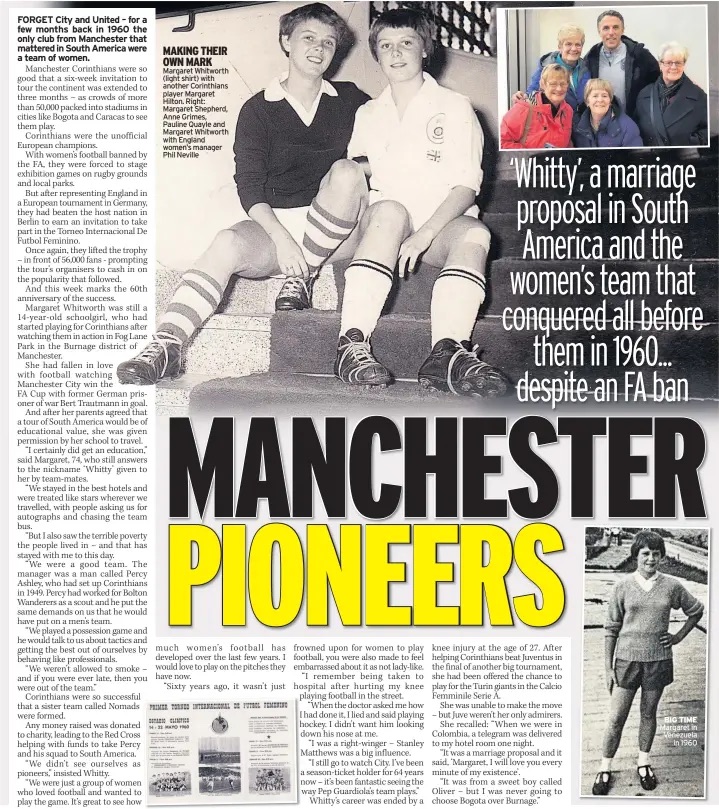
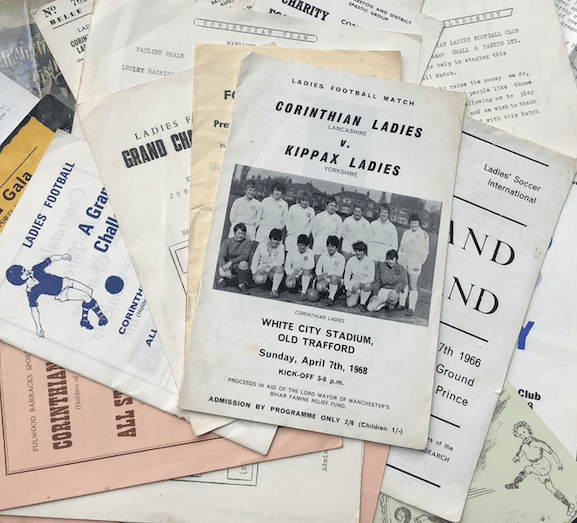
Tomorrow will be a wonderful day as we celebrate the Manchester Corinthians. Expected to be the largest gathering of former players ever, Corinthians from every era will be in attendance as we celebrate the club’s history and recognise their achievements. I’ve been wanting to organise this reunion/celebration event for some time and this will be a remarkable gathering. The afternoon will be a real joy.
Over the last decade I’ve been tracking down women who played for the club from its formation season in 1948-49 to its final days over forty years later. I’ve personally known some of the women for almost forty years and, of course, have been determined to promote their stories for years. I’ve managed to interview women from EVERY season of the club’s existence. I’ve wanted to spread the word and that’s certainly happened in recent years.
Last Monday one of the long held aims (to get recognition from football for the Corinthians) was achieved when the club was awarded a Special Recognition Awards at the North West Football Awards (see elsewhere on this site for that story). Tomorrow, that recognition will be shared with every player in attendance.
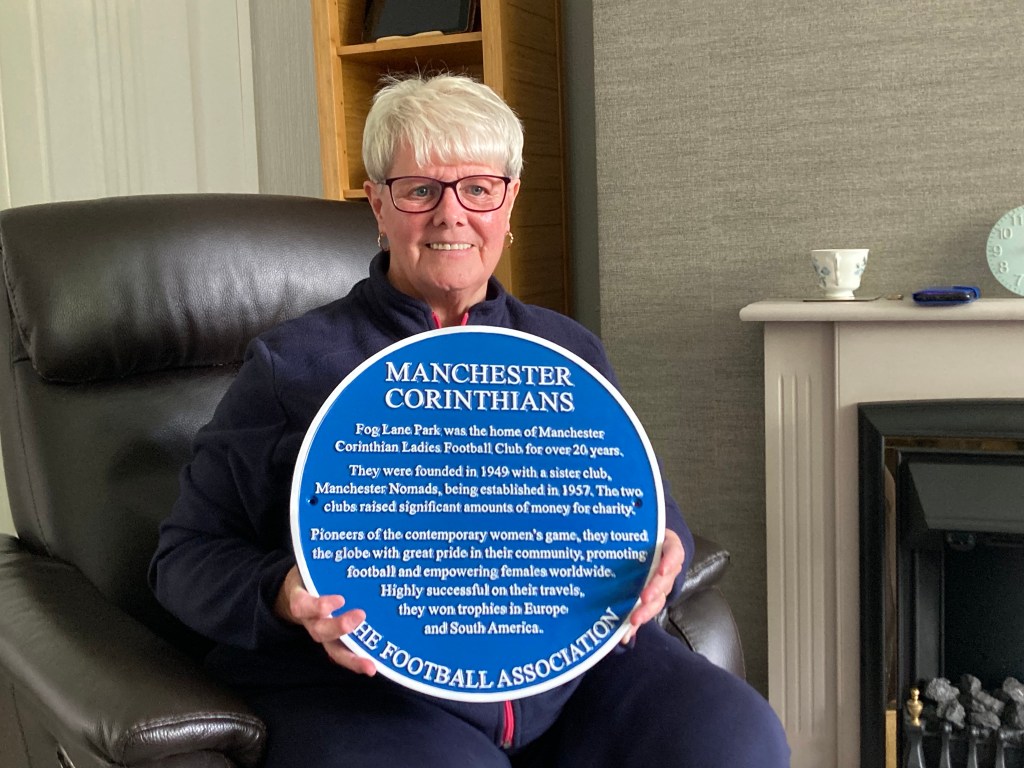
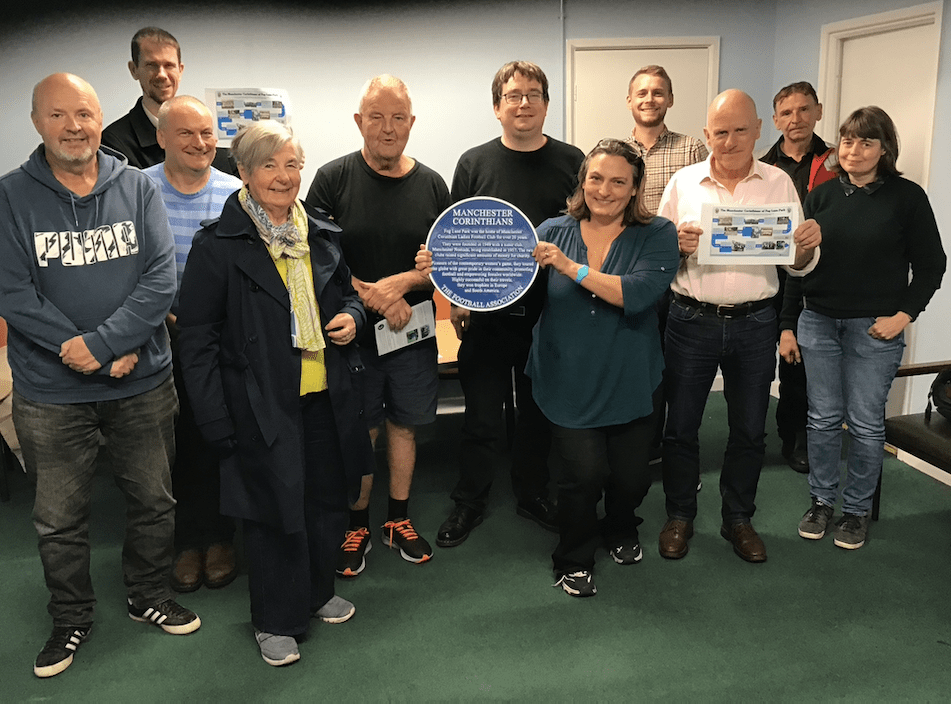
A series of articles and talks were part of a process to get formal recognition of their achievements – that culminated in the successful blue plaque campaign – alongside researching and writing the club’s first authorised history. That book will be published soon, but before then there’s the reunion/celebration, plus other recognition in the pipeline.
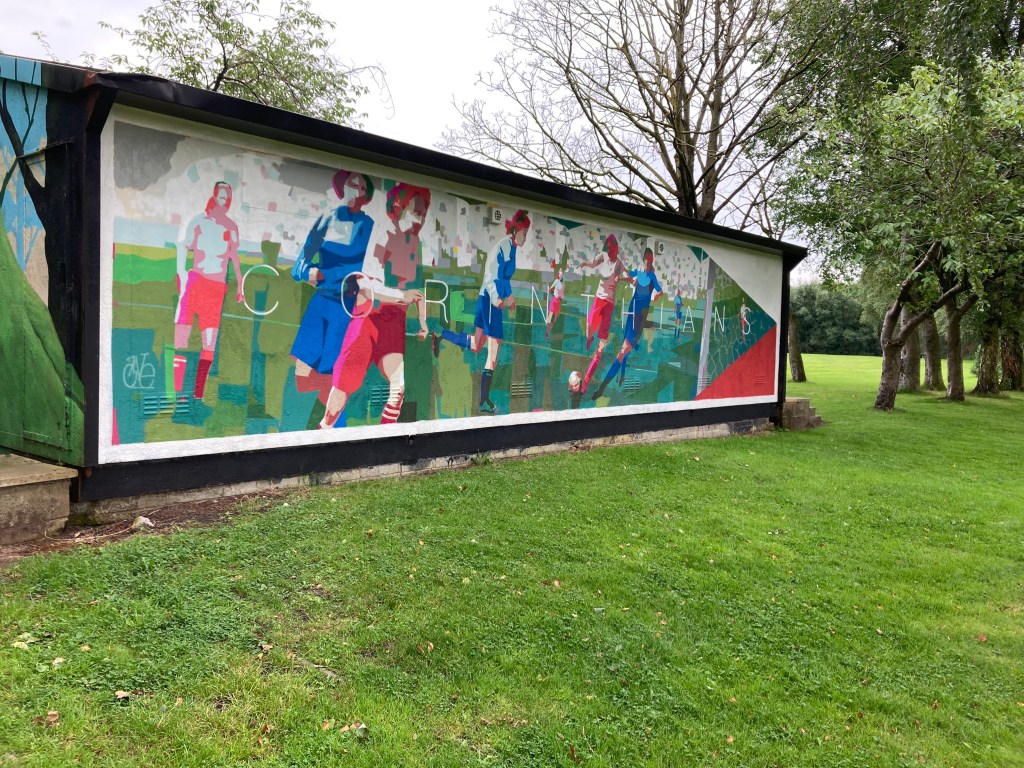
The Manchester Corinthians book draft cover V2Margaret Whitworth with the Manchester Corinthians blue plaqueWashing in the duck pond, Manchester Corinthians by Artist Gavin RenshawManchester Corinthians mural by artist Gavin RenshawSome of the Friends of Fog Lane Park at the last meeting before the Corinthians plaque unveilingPercy Ashley, the guiding force behind the Manchester Corinthians
On this day (1 December) in 1906 the first Manchester derby in Division One was played at City’s Hyde Road ground. This photo shows the crowd management scenes for what was described as Manchester’s biggest football day at the time. There had been derbies between City and Newton Heath in the Second Division, before City were promoted in 1899. There was no opportunity for the Blues and the Heathens to meet in the top flight. In 1902 financial difficulties at Newton Heath meant that club was being wound up. A new club called Manchester United was established in 1902 (as with (like Ardwick’s final days and the new club Manchester City, it’s more complicated than simply a name change) and they played in Division Two, until they earned promotion in 1906.
City won this derby 3-0 with goals from George Stewart (2) and Billy Lot Jones.
Crowd scenes on 1 December 1906 at Hyde Road. The first Manchester Derby in Division One (top flight)
If you want to know more about this season then here’s a 3900 word article telling the story of 1906-07 when the FA ban continued to affect Manchester’s Blues (you can read about that elsewhere on this site). This story continues to be one of skullduggery (by other teams too!) and powerful figures seeking to limit opposition.
All of this sound familiar? Well, get a brew and start reading below if you’re a subscriber. Maybe read the 1903-04, 1904-05 & 1905-06 features first?
If you’re not a subscriber then why not sign up for a month and see what you think?
Subscribe to get access
Read more of this content when you subscribe today. It costs £3 per month (cancel anytime) or sign up a year at a time for the discounted annual fee of £20. This gives access to everything on the site, including PDFs of 3 of my books and various other articles, interviews and audio material. Each subscriber has access to all content posted during their subscription period too. Why not sign up for a month and see what you think?
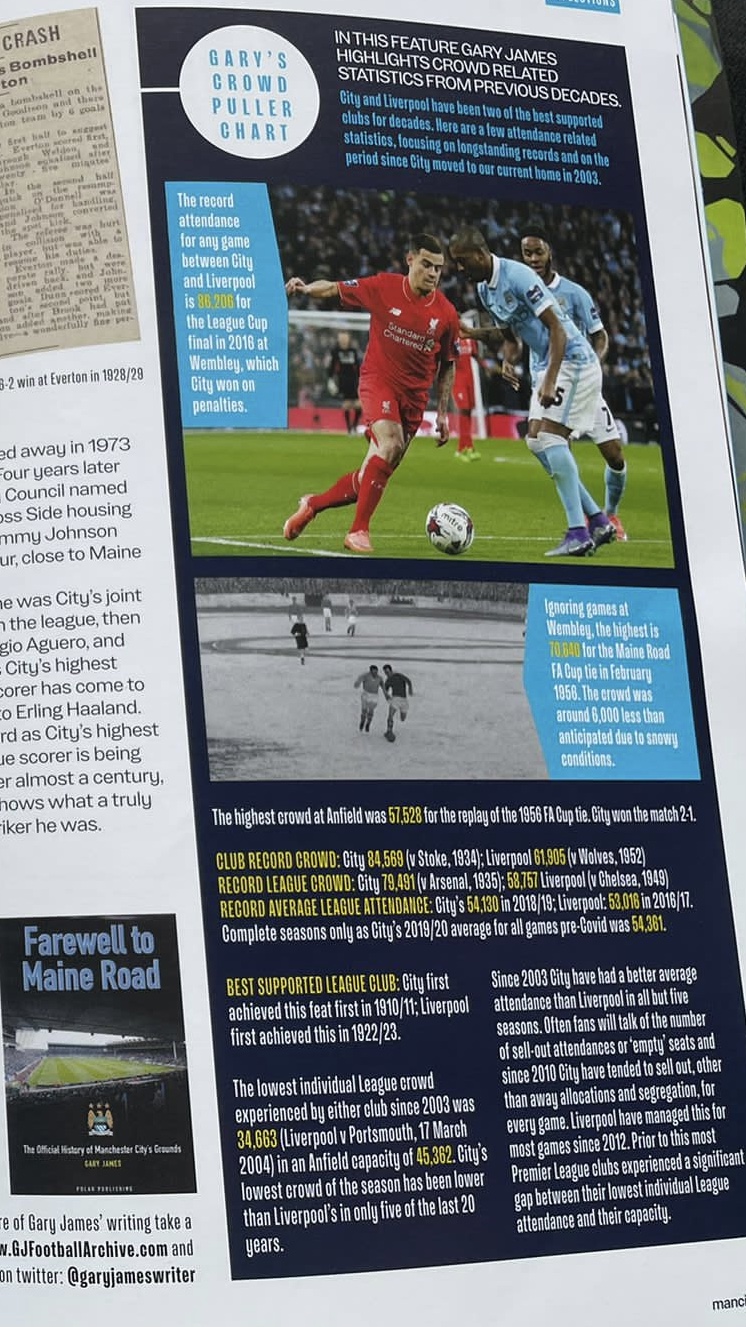
It’s the latest Liverpool-City game on Sunday and, obviously, because they’re at home, top of the League and City have had a bad run recently, this really is a game when Liverpool should win. Of course, football can throw up shock results so fingers crossed! There are lots of articles on my site about games between these two, so why not have a look at these as preparation for the game? Here are a few links:
There are plenty of other mentions of Liverpool on this site so why not use the tabs or do a search.
If you enjoy all the free material on my website and would like to support my research and keep this website going (but don’t want to subscribe) then why not make a one-time donation (or buy me a coffee). All support for my research is valued and welcome. It allows me to keep some free material available for all. Thanks.
Manager Peter Reid (pictured) opened his Manchester City programme notes for the Wimbledon game on this day (30 November) in 1991 with a realistic view of City’s season to date: “We are nearly halfway through the season and I think it’s fair to say we’ve given it a right good go so far. The League table doesn’t lie and we are in the last 16 in the Rumbelows League Cup. You can’t argue with that. But you won’t hear any talk of championships or winning trophies from anyone at Maine Road.”
The previous game had seen the Blues draw 2-2 at Luton and consolidate their position in the table. City were actually third, 6 points behind leaders Leeds United, but the Luton game had started badly with the Blues giving away a sloppy goal. The gritty nature of Reid’s side shone through and a header from captain Curle and a strike from Quinn ensured the point. Sadly, late on Steve Redmond was sent off for a second bookable offence.
Unfortunately the Wimbledon game ended goalless at Maine Road and City started to lose their way a little in the title race, but at least they were still in with a shout.
Result
30 Nov 1991 Wimbledon (H) 0-0, Attendance 22,429
if you’d like to know more on the 1991-92 season when the Blues finished 5th for the second season running, have a read of this 2,100 word article on that season:
Subscribe to get access – Monthly
Read more of this content when you subscribe today. It costs £3 per month (cancel anytime) to access everything posted since 1 October 2022 or there’s a special annual rate below which gives greater access and works out much cheaper.
Read more of this content when you subscribe today. It costs £3 per month (above) or £20 a year (here) to access everything posted since the site was created in December 2020. This special rate works out about £1.67 a week and gives access to everything posted, including PDFs of 3 of my books.
This series of articles and features will run throughout March with indepth articles some days and smaller ‘on this day’ style posts on others. There will be flashbacks to great games, players and more. Every day in March will offer something to enjoy.
Subscribers will get access to everything, while some on this day material will be free for all to view.
If you want to know more on this incredible decade for Manchester City Football Club then why not subscribe and read it all? If you’d like to know more about subscribing then see:
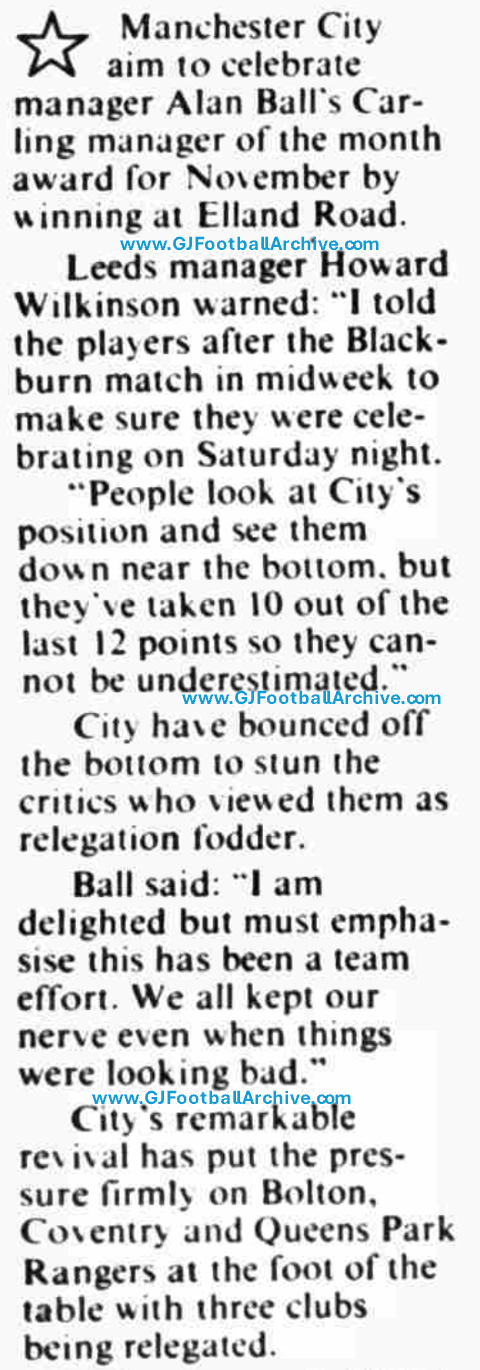
On this day (29 November) in 1995 Manchester City manager Alan Ball won the manager of the month award. These were the days when our initial suspicion about his management approach was looking out of place. His team were starting to get some decent results and then… well, it was soon back to the mess that was Alan Ball’s time as manager of Manchester City. If you’d like to read about that season (and let’s face it, it’s always good to remember days that were awful to appreciate how things are today) then see below.
Alan Ball in August 1996
This article is almost 5,500 words long. It’s available to subscribers, so why not subscribe and relive this extraordinary season? As with all these 1990s subscriber features it contains material from interviews I’ve performed with key figures from that time.
Here’s the 5500 word article on that season:
Subscribe to get access
Read more of this content when you subscribe today. It costs £3 per month (cancel anytime) to access everything posted since 1 October 2022 or there’s a special annual rate or £20 a year to access everything posted since the site was created in December 2020. This special rate works out about £1.67 a week and gives access to everything posted, including PDFs of 3 of my books.
If you want to know more on the 1990s for Manchester City Football Club then why not subscribe and read it all? If you’d like to know more about subscribing then see:
If you enjoy all the free material on my website and would like to support my research and keep this website going (but don’t want to subscribe) then why not make a one-time donation (or buy me a coffee). All support for my research is valued and welcome. It allows me to keep some free material available for all. Thanks.
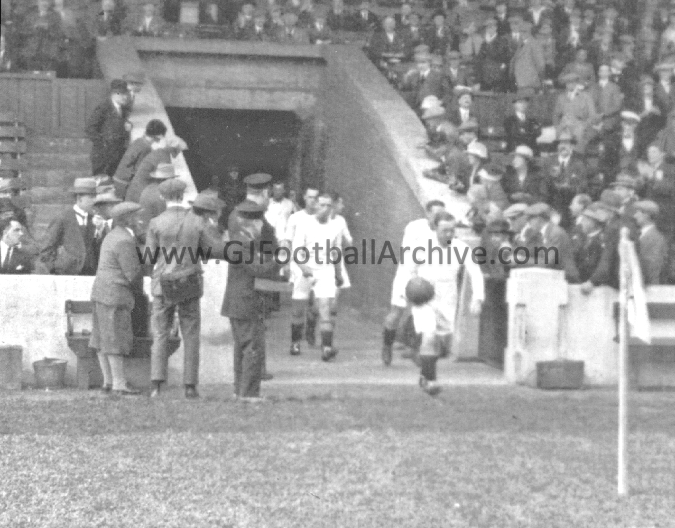
On this day (28 November) in 1964 one of Scotland’s greatest internationals of all time died. He was the former Partick, Manchester City, Oldham and Scotland half back Jimmy McMullan (seen leading out City in this photo). Here’s a MCFC profile of him I wrote a while back which, hopefully, explains a little as to why he should be remembered.
JAMES MCMULLAN (1926-33)
Half Back, 5ft 7in, 11st. 0lbs, b. Denny, 26 March 1895, d. Sheffield, 28 November 1964
Signed from Partick Thistle, 10 February 1926 (£4,700)
Transferred: Oldham Athletic, 15 May 1933
Career: Denny Hibernian, Third Lanark, Partick Thistle, Maidstone United player-manager, Partick Thistle, City, Oldham Athletic player-manager
One of Scotland’s greatest internationals of all time, left back Jimmy McMullan was already a significant star when the Blues signed him in 1926 for £4,700. Clearly his arrival was a major talking point, especially as this was during City’s managerless period when vice-chairman Albert Alexander took on the management of the players. Alexander must have possessed a great footballing brain and must have been a terrific negotiator as McMullan readily joined the Blues.
Within two months of his arrival McMullan was playing at Wembley in the FA Cup final. City lost that game and were also relegated on the last day of the season creating a new, if unwanted, record.
In 1927-8 he made 38 appearances and scored four goals as City won the Second Division title, and that same year McMullan captained Scotland to their most famous victory – a 5-1 defeat of England at Wembley. It was a highly embarrassing day for England, but a great one for the City man. He remained in the City side throughout the twenties and early thirties, and in 1933 he returned to Wembley again with the Club. Sadly, his second final also ended in defeat, and the following May he moved to Oldham as player-manager. He later had spells in charge at Aston Villa (their first official manager), Notts County, and Sheffield Wednesday. He was Wednesday’s manager in 1938-9 when his side drew 1-1 with City at Maine Road. Both sides were chasing promotion, and the single point was not enough for either side. Wednesday missed promotion by a point to arch rivals Sheffield United. In 1942, during the wartime seasons, McMullan’s contract was not renewed.
He passed away at the age of 69 while still living in Sheffield in 1964.
If you enjoy all the free material on my website and would like to support my research and keep this website going (but don’t want to subscribe) then why not make a one-time donation (or buy me a coffee). All support for my research is valued and welcome. It allows me to keep some free material available for all. Thanks.
The winners of the Armstrong Projects Northwest Football Awards (NWFA) 2024 have been revealed. 500 esteemed guests from across the footballing world attended the star-studded event, hosted by broadcasters Eilidh Barbour and Dion Dublin, at The Point at Emirates Old Trafford, Manchester. Winners were crowned in a range of player categories, alongside accolades for clubs, communities, and unsung heroes.
Jan Lyons, Margaret Shepherd and Margaret Whitworth, Manchester Corinthians at the North West Football Awards 2024
After another phenomenal season, Manchester City once again took centre stage, with Phil Foden named Premier League Player of the Season and Khadija ‘Bunny’ Shaw earning the Women’s Player of the Season title for the second consecutive year. Manchester City teammate Khiara Keating was recognised as the Women’s Rising Star. For the red side of Manchester, Kobbie Mainoo collected the Men’s Rising Star award, capping off a sensational campaign for the England international.
In a heartfelt tribute, Ian Rush MBE was honoured with The Maurice Watkins CBE Lifetime Contribution Award, while the Billy Seymour Impact Award was presented to Joe Thompson for his continued inspirational impact on the footballing world.
Burnley FC Women’s Kirstie Levell was named Women’s Player of the Season for The FA Women’s National League, while Liam Lindsay, of Preston North End Football Club took home the Championships Player of the Season further showcasing talent in the Northwest region.
The community-focused aspect of football was also celebrated, with Everton in the Community retaining the title of Premier League Community Club of the Season, and Foundation 92 being recognised as the Community Club of the Season for all other leagues.
A special moment of acknowledgement came with the presentation of the Special Recognition Award for Services to Women’s Football to the legendary Manchester Corinthians, a club that has paved the way for generations of women in football.
You can find out more on the Corinthians across this website, but here’s their reaction to the award on the night:
Laura Wolfe, owner of the Armstrong Projects Northwest Football Awards, said:“What an incredible night. The talent on show this year, both on and off the pitch, continues to highlight the Northwest as a powerhouse of football. Congratulations to all the winners, finalists, and everyone who makes these awards so special – we have proved yet again that the power of the footballing community has the ability to bring the region together and we look forward to seeing clubs continue to make a positive difference.”
The awards not only celebrate footballing excellence but also honour the efforts of those working behind the scenes, with accolades such as the Fabrice Muamba Award for Outstanding Service to Football Medicine & Performance, which went to Ian Liversedge, and the Unsung Hero Award, which was presented to Dr Danielle Prescott.
Armstrong Projects’ Chris Hamlett added: “The Northwest Football Awards are a unique opportunity to champion the exceptional work being done across all levels of football in our region. Congratulations to all the winners and everyone involved in making this evening such a success.”
Armstrong Projects Northwest Football Awards 2024 – Full Winners List:
Community Initiative of the Season – Premier League (in association with the PFA) – Burnley FC in the Community – Academy in the Community
Community Initiative of the Season – All other Leagues (in association with the PFA) – Carlisle United Community Sports Trust – Komatsu Climate Heroes (HIGHLY COMMENDED)
– Morecambe FC Community Foundation – Veterans Project
Community Club of the Season – All other Leagues (in association with the PFA) – Foundation 92
Community Club of the Season – Premier League (in association with the PFA) – Everton in the Community
Women in Football Promoting Inclusion Award – Burnley FC in the Community – Interfaith Partnership with Building Bridges Burnley (HIGHLY COMMENDED)
– Cerebral Palsy United Football Club (Non-League Winner)
– Manchester United Foundation – Inclusive Reds (League Winner)
Best Club Marketing/Sponsorship or Engagement Campaign – Morecambe Football Club – #YourHomeFromHome Season Ticket Campaign
Business and Professional Services to Football – Foudys (HIGHLY COMMENDED)– Saffery
Fan Media, Channel or Podcast of the Season – The Redmen TV
Northwest Football Broadcaster of the Season – Giulia Bould – BBC Radio Merseyside and BBC Sport
Northwest Football Journalist of the Season – David Ornstein – The Athletic
Unsung Hero Award – Dr Danielle Prescott
Rising Star – Kobbie Mainoo – Manchester United Football Club
Women’s Rising Star – Khiara Keating – Manchester City Women’s Football Club
Player of the Season – National League – James Norwood – Oldham Athletic AFC
Player of the Season – League Two – Fraser Horsfall – Stockport County Football Club
Player of the Season – League One – Sam Tickle – Wigan Athletic Football Club
Player of the Season – Championship – Liam Lindsay – Preston North End Football Club
Player of the Season – Premier League – Phil Foden – Manchester City Football Club
Women’s Player of the Season – Barclays WSL & Barclays Women’s Championship – Khadija ‘Bunny’ Shaw – Manchester City Women’s Football Club
Women’s Player of the Season – The FA Women’s National League – Kirstie Levell – Burnley FC Women
Manager of the Season – Dave Challinor – Stockport County Football Club
Women’s Manager of the Season – Matt Beard – Liverpool Football Club Women
Billy Seymour Impact Award – Joe Thompson
Fabrice Muamba Award for Outstanding Service to Football Medicine & Performance (in association with the FMPA) – Ian Liversedge
The Maurice Watkins CBE Lifetime Contribution Award – Ian Rush MBE
Special Recognition Award for Services to Women’s Football – Manchester Corinthians
About the Armstrong Projects Northwest Football Awards:
The Armstrong Projects Northwest Football Awards is an annual event that recognises and celebrates footballing excellence in the Northwest region. From grassroots to elite level, the awards highlight the outstanding achievements and contributions of individuals, clubs, and communities within the footballing community.
Happy 60th birthday to former Everton, Manchester City & Oldham player Neil Pointon. Back in 2005 when both he and I were much younger, I interviewed Neil at his home Here for subscribers is that interview as it appeared when published in April 2005:
Subscribe to get access
Read more of this content when you subscribe today. It costs £3 per month (cancel anytime) or you can sign up for a year at the discounted annual rate of £20. The site was created in December 2020 and annual subscribers have access to everything, including PDFs of Manchester A Football History (that alone cost £24.95 when published) & more.
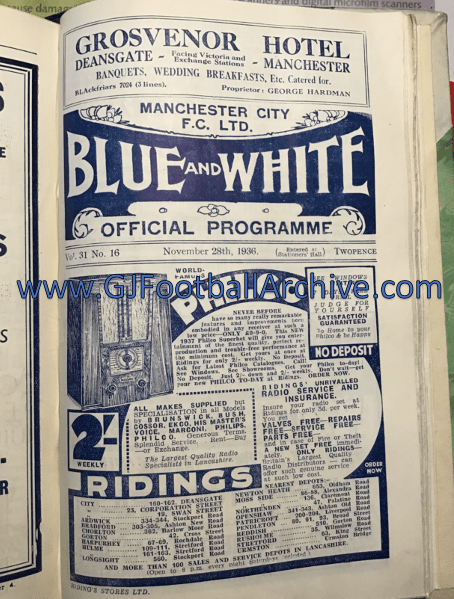
On this day (November 28) in 1936 Manchester City’s game with Brentford was abandoned due to fog. The two were rivals for the League title and the rearrangement of that game did ultimately have a bearing on the title. More on this for subscribers below…
Subscribe to get access
Read more of this article when you subscribe today. It costs £20 a year (£1.66 a month) to access everything or £3 per month paying a month at a time. If you’d like to support my research then why not subscribe? Every subscription directly helps support my research and provides annual subscribers with access to everything posted on this site, including the entire Manchester A Football History and From Maine Men To Banana Citizens books, plus interviews, articles and more.
Today (27 November) is the anniversary of the women’s team’s first game. It was payed at Boundary Park and saw Oldham Athletic Ladies face Manchester City Ladies. I was there as my girlfriend, now wife, was playing. She scored two goals in the club’s 4-1 victory. Subscribers can read a 2,200 word long read on this historic first game. Enjoy!
Subscribe to get access
Read more of this content when you subscribe today. It costs £3 per month or £20 a year. This special annual rate works out about £1.67 a week and gives access to everything posted, including PDFs of 3 of my books.
If you enjoy all the free material on my website and would like to support my research and keep this website going (but don’t want to subscribe) then why not make a one-time donation (or buy me a coffee). All support for my research is valued and welcome. It allows me to keep some free material available for all. Thanks.

















 Gary James' Football Archive