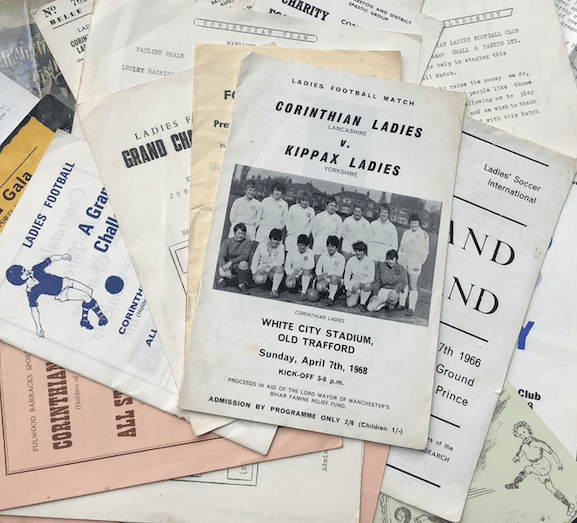
There are some excellent books on women’s football out there but we still need more. There are many long forgotten clubs who deserve to be remembered and it’s up to those of us who research football history to ensure they are remembered, with their efforts properly recorded. There are people like Gail Newsham and her decades’ (many decades) worth of research into Dick, Kerr Ladies, that have helped us understand some of the achievements of women’s clubs over the years. Gail has been researching because it matters to her personally – it’s something I totally understand. Those of us who focus on our clubs or on teams from our towns or on people we’ve known over the decades, tend to research because it’s our passion. It matters to us personally – and it’s often clear when people jump on a bandwagon and mistakenly think there’s money to be made or it’ll give them some form of reflected glory.
For myself, I’ve been researching and writing about football in Manchester throughout my adult life. In my first book, published when I was 21 (but started when I was 19), I managed to include something on the newly formed Manchester City Ladies FC. I was at their first game (in fact I was a regular for the first 4 years of the club’s existence) and my girlfriend (now wife) played for them, scoring twice in the club’s first match. She’d previously played for another Manchester team and during this period we got to know several former Manchester Corinthians players.

Since that time in the 1980s I have been fortunate to meet so many fascinating former footballers – men and women – and have always been fascinated by their stories. I’ve also written lots of books and articles over the last 35 years or so, covering a variety of topics but predominantly focusing on the history of football in Manchester. Publishers have often tried to push me down particular pathways (or said there isn’t enough space for something I felt needed covering) and I understand that. Nevertheless, my motivation has always been to uncover the history of the region’s football clubs and to ensure it is recorded as accurately as possible – no matter how much space it takes. Facts not fiction, dispelling myths (and believe me there are a lot of myths out there!).
If you want to research a topic then do it. Don’t let anybody put you off.
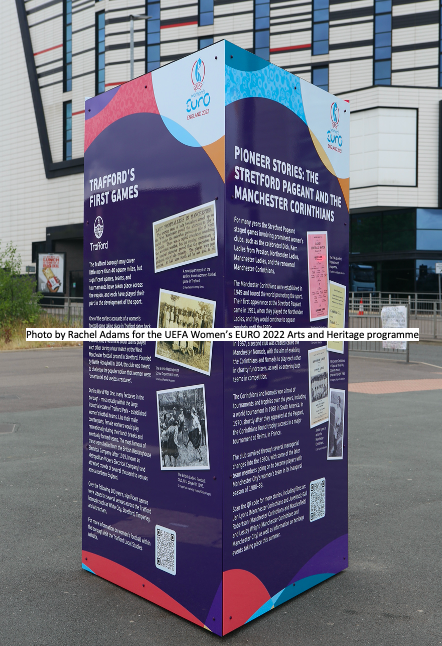
In terms of women’s football in particular I’ve written dozens of articles for Sport in History, Soccer & Society, Manchester FA, Manchester Evening News, She Kicks, Trafford Council, When Saturday Comes, the FA, UEFA, Manchester City, Manchester United and many others, including various fanzines.

There has also been Manchester City Women: An Oral History – the first detailed history of a WSL club. Many of these articles have been about the Manchester Corinthians and I have heard stories recently which talk about one of my articles on the Corinthians providing inspiration. That’s wonderful.
2024 will see the publication of two books I’ve been working on for several years. There’s a book for the publisher Peter Lang, co-edited with Fiona Skillen and Helena Byrne, on the history of women’s football in Britain and Ireland which includes contributions from several leading historians of women’s football. That will be an excellent historical analysis of women’s football.
Then there’s my labour of love – Manchester Corinthians: The Authorised History which I’ve self-funded. This will be of the same quality and size as my book on Manchester City Women and in many ways is a sort of prequel.
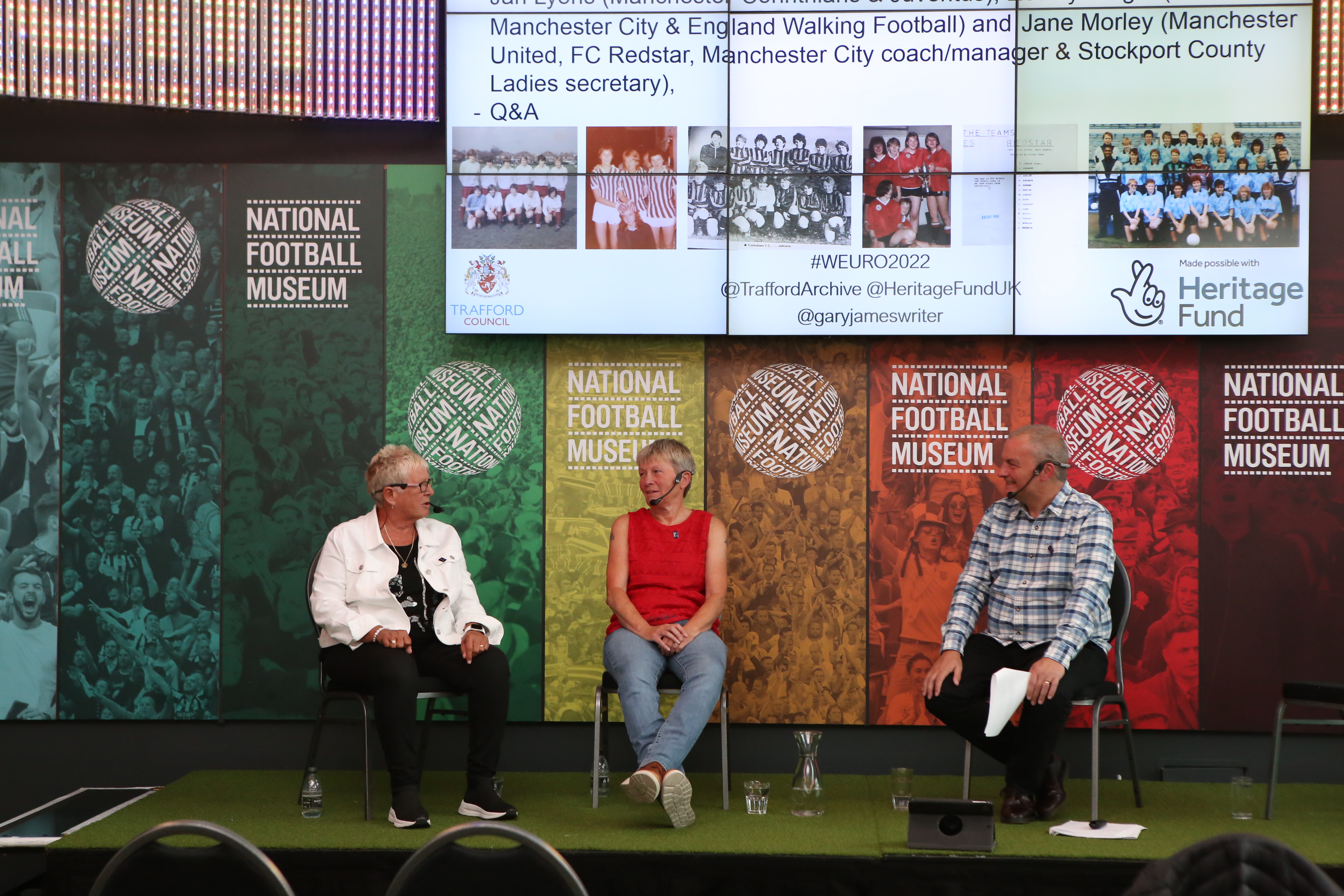
Why the Corinthians? Well, you’ll see from reading the book that I regard the club as the most significant women’s club in the region (possibly nationally) prior to the WSL era (and therefore of huge significance to football, Manchester and nationally!). There have been several prominent trophy winning women’s clubs in Greater Manchester and there have been many that have toured outside the UK, but the Corinthians did all of that and more. There are many myths out there about the club (and some have been promoted a lot recently) but the history of this club is truly significant – and I really do mean ‘truly significant’ as you’ll see in the book. We do not need myths because the facts are remarkable.
Rather than focus on one angle or era, the book covers every season from its formation in 1949 to its demise four decades later. This year marks the 75th anniversary of the Manchester Corinthians’ formation and over the last decade I have interviewed dozens of women involved with the club. I’ve captured stories and voices from women who played in games during EVERY season of the club’s long history. It’s been a shattering but utterly worthwhile experience.


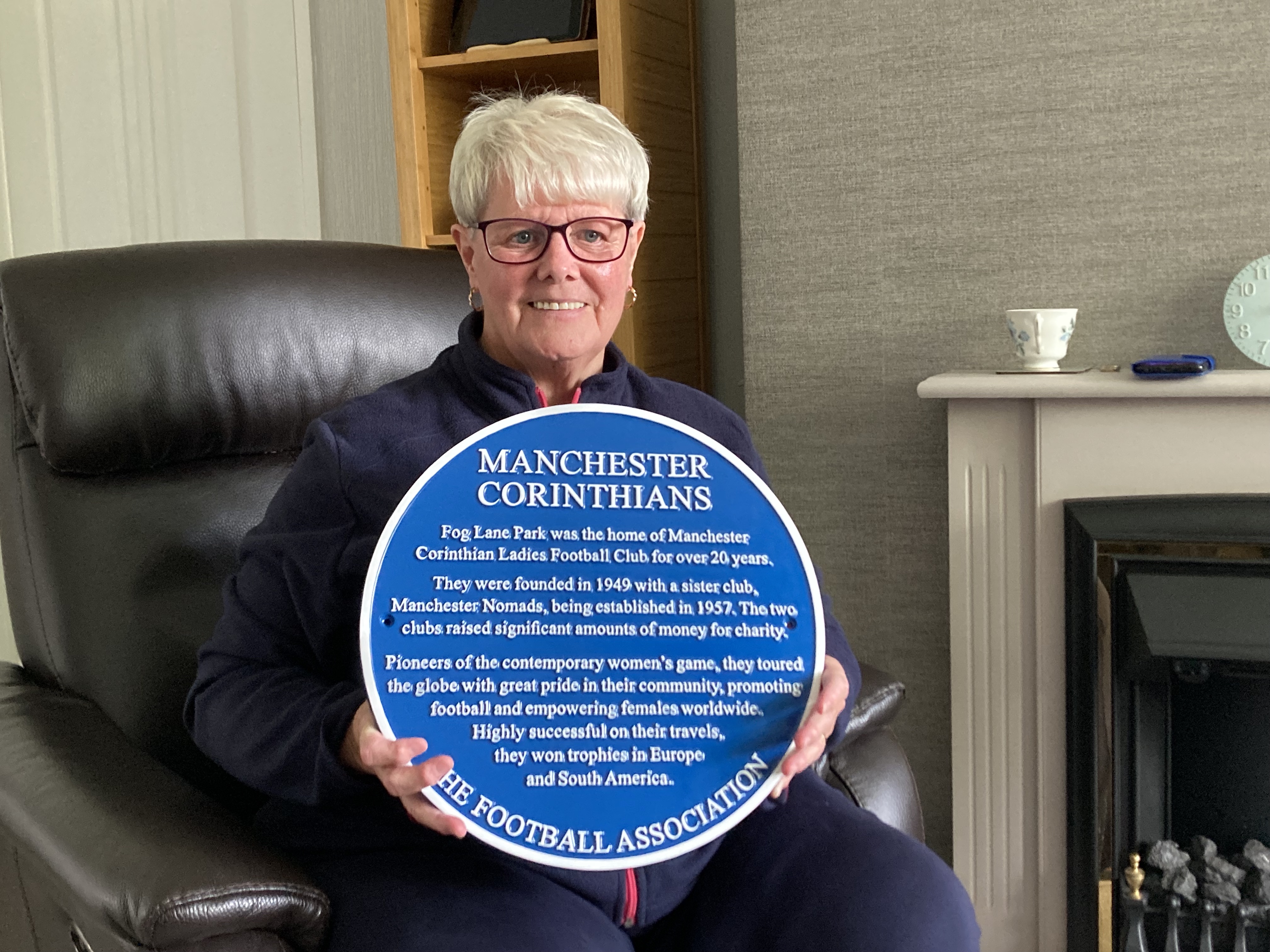
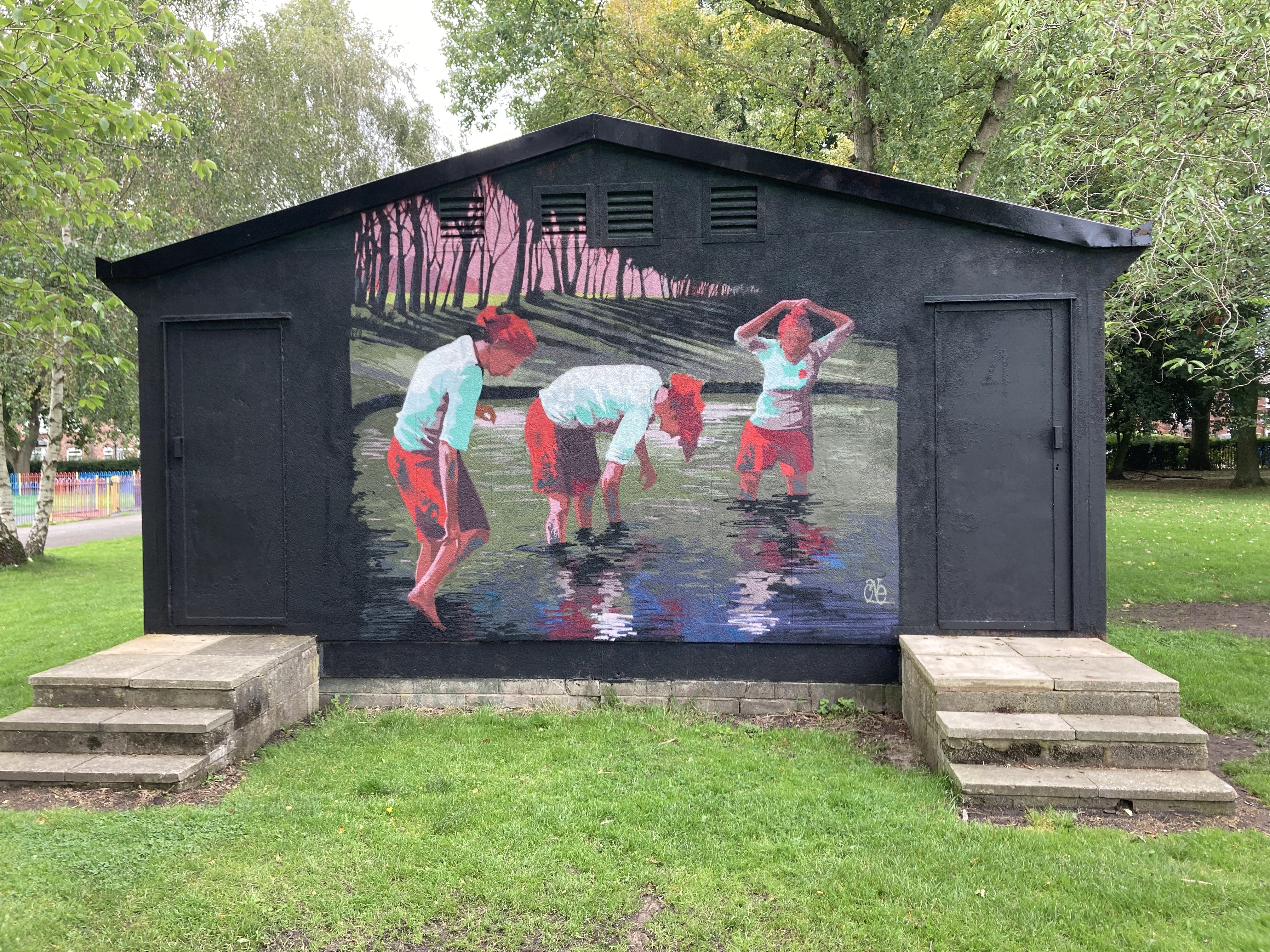


Anyone who has bought my previous books, whether they be on the wider history of men’s football in Manchester, biographies on Mercer or Barnes, Maine Road, or Manchester City Women, will know the lengths I go to make sure the story is interesting, entertaining and factually correct, quoting those that experienced it at the time and supporting players’ memories with detailed archival research. My research into the Manchester Corinthians has been a labour of love. The women who played, and those who were involved but are sadly no longer with us, deserve to be remembered and celebrated.
My hope for the book is that long after we’ve all gone there will be people visiting the library or picking up the book who can learn more about this remarkable club and the people involved with it. Thanks.
You can find out more on the Manchester Corinthians book here:
Before the Corinthians there were the Manchester Ladies (and other clubs in the region – some will be mentioned in the Corinthians book of course!). Steve Bolton wrote a guest blog on Manchester Ladies which can still be read here:

 Gary James' Football Archive