60 Years Ago: McMullan

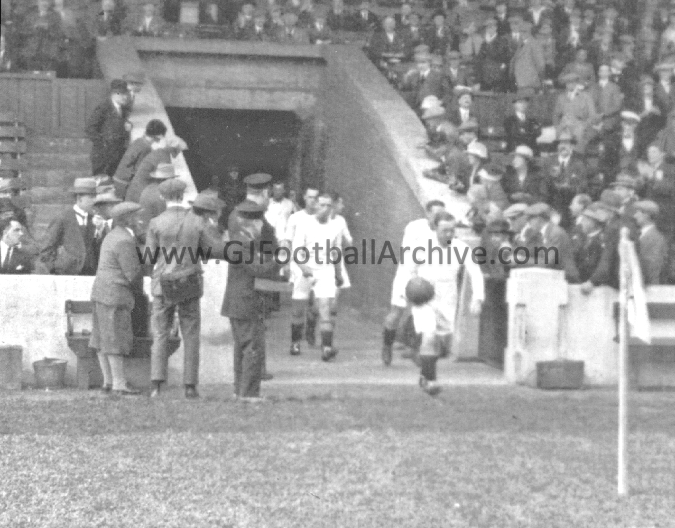
On this day (28 November) in 1964 one of Scotland’s greatest internationals of all time died. He was the former Partick, Manchester City, Oldham and Scotland half back Jimmy McMullan (seen leading out City in this photo). Here’s a MCFC profile of him I wrote a while back which, hopefully, explains a little as to why he should be remembered.

JAMES MCMULLAN (1926-33)

Half Back, 5ft 7in, 11st. 0lbs, b. Denny, 26 March 1895, d. Sheffield, 28 November 1964

Signed from Partick Thistle, 10 February 1926 (£4,700)

Transferred: Oldham Athletic, 15 May 1933 

Career: Denny Hibernian, Third Lanark, Partick Thistle, Maidstone United player-manager, Partick Thistle, City, Oldham Athletic player-manager

Debut v Liverpool, 27 February 1926

Appearances: League: 220 apps. 10 gls; FA Cup: 22 apps. 2 gls; Total: 242 apps, 12 gls.

One of Scotland’s greatest internationals of all time, left back Jimmy McMullan was already a significant star when the Blues signed him in 1926 for £4,700.  Clearly his arrival was a major talking point, especially as this was during City’s managerless period when vice-chairman Albert Alexander took on the management of the players.  Alexander must have possessed a great footballing brain and must have been a terrific negotiator as McMullan readily joined the Blues.

Within two months of his arrival McMullan was playing at Wembley in the FA Cup final.  City lost that game and were also relegated on the last day of the season creating a new, if unwanted, record.  

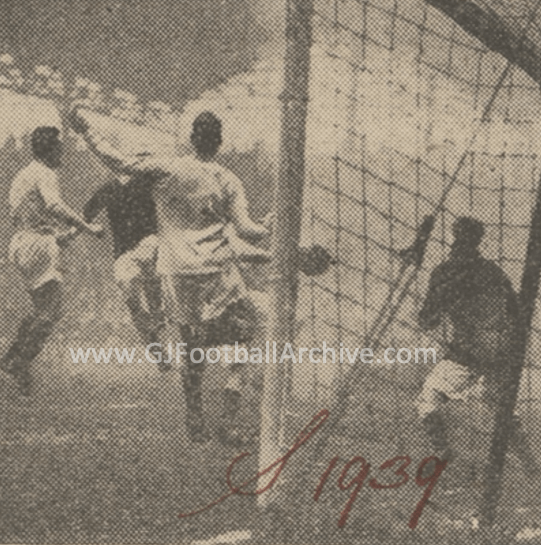
In 1927-8 he made 38 appearances and scored four goals as City won the Second Division title, and that same year McMullan captained Scotland to their most famous victory – a 5-1 defeat of England at Wembley.  It was a highly embarrassing day for England, but a great one for the City man.  He remained in the City side throughout the twenties and early thirties, and in 1933 he returned to Wembley again with the Club.  Sadly, his second final also ended in defeat, and the following May he moved to Oldham as player-manager.  He later had spells in charge at Aston Villa (their first official manager), Notts County, and Sheffield Wednesday.  He was Wednesday’s manager in 1938-9 when his side drew 1-1 with City at Maine Road.  Both sides were chasing promotion, and the single point was not enough for either side.  Wednesday missed promotion by a point to arch rivals Sheffield United.  In 1942, during the wartime seasons, McMullan’s contract was not renewed.  

He passed away at the age of 69 while still living in Sheffield in 1964.

If you enjoy all the free material on my website and would like to support my research and keep this website going (but don’t want to subscribe) then why not make a one-time donation (or buy me a coffee). All support for my research is valued and welcome. It allows me to keep some free material available for all. Thanks.
Choose an amount

£2.50
£5.00
£7.50

Or enter a custom amount

£

Your contribution is appreciated.

Donate

The 2024 Armstrong Projects Northwest Football Awards

The winners of the Armstrong Projects Northwest Football Awards (NWFA) 2024 have been revealed. 500 esteemed guests from across the footballing world attended the star-studded event, hosted by broadcasters Eilidh Barbour and Dion Dublin, at The Point at Emirates Old Trafford, Manchester. Winners were crowned in a range of player categories, alongside accolades for clubs, communities, and unsung heroes.

Jan Lyons, Margaret Shepherd and Margaret Whitworth, Manchester Corinthians at the North West Football Awards 2024

After another phenomenal season, Manchester City once again took centre stage, with Phil Foden named Premier League Player of the Season and Khadija ‘Bunny’ Shaw earning the Women’s Player of the Season title for the second consecutive year. Manchester City teammate Khiara Keating was recognised as the Women’s Rising Star. For the red side of Manchester, Kobbie Mainoo collected the Men’s Rising Star award, capping off a sensational campaign for the England international. 

In a heartfelt tribute, Ian Rush MBE was honoured with The Maurice Watkins CBE Lifetime Contribution Award, while the Billy Seymour Impact Award was presented to Joe Thompson for his continued inspirational impact on the footballing world.

Burnley FC Women’s Kirstie Levell was named Women’s Player of the Season for The FA Women’s National League, while Liam Lindsay, of Preston North End Football Club took home the Championships Player of the Season further showcasing talent in the Northwest region.

The community-focused aspect of football was also celebrated, with Everton in the Community retaining the title of Premier League Community Club of the Season, and Foundation 92 being recognised as the Community Club of the Season for all other leagues. 

A special moment of acknowledgement came with the presentation of the Special Recognition Award for Services to Women’s Football to the legendary Manchester Corinthians, a club that has paved the way for generations of women in football.

You can find out more on the Corinthians across this website, but here’s their reaction to the award on the night:

Laura Wolfe, owner of the Armstrong Projects Northwest Football Awards, said: “What an incredible night. The talent on show this year, both on and off the pitch, continues to highlight the Northwest as a powerhouse of football. Congratulations to all the winners, finalists, and everyone who makes these awards so special – we have proved yet again that the power of the footballing community has the ability to bring the region together and we look forward to seeing clubs continue to make a positive difference.” 

The awards not only celebrate footballing excellence but also honour the efforts of those working behind the scenes, with accolades such as the Fabrice Muamba Award for Outstanding Service to Football Medicine & Performance, which went to Ian Liversedge, and the Unsung Hero Award, which was presented to Dr Danielle Prescott.

Armstrong Projects’ Chris Hamlett added“The Northwest Football Awards are a unique opportunity to champion the exceptional work being done across all levels of football in our region. Congratulations to all the winners and everyone involved in making this evening such a success.”

Armstrong Projects Northwest Football Awards 2024 – Full Winners List:

Community Initiative of the Season – Premier League (in association with the PFA) – Burnley FC in the Community – Academy in the Community

Community Initiative of the Season – All other Leagues (in association with the PFA) – Carlisle United Community Sports Trust – Komatsu Climate Heroes (HIGHLY COMMENDED)

 – Morecambe FC Community Foundation – Veterans Project 

Community Club of the Season – All other Leagues (in association with the PFA) – Foundation 92

Community Club of the Season – Premier League (in association with the PFA) – Everton in the Community

Women in Football Promoting Inclusion Award – Burnley FC in the Community – Interfaith Partnership with Building Bridges Burnley (HIGHLY COMMENDED)

 – Cerebral Palsy United Football Club (Non-League Winner) 

– Manchester United Foundation – Inclusive Reds (League Winner)

Best Club Marketing/Sponsorship or Engagement Campaign – Morecambe Football Club – Season Ticket Campaign

Business and Professional Services to Football – Foudys (HIGHLY COMMENDED) – Saffery

Fan Media, Channel or Podcast of the Season – The Redmen TV

Northwest Football Broadcaster of the Season – Giulia Bould – BBC Radio Merseyside and BBC Sport

Northwest Football Journalist of the Season – David Ornstein – The Athletic

Unsung Hero Award – Dr Danielle Prescott

Rising Star – Kobbie Mainoo – Manchester United Football Club

Women’s Rising Star – Khiara Keating – Manchester City Women’s Football Club

Player of the Season – National League – James Norwood – Oldham Athletic AFC

Player of the Season – League Two – Fraser Horsfall – Stockport County Football Club

Player of the Season – League One – Sam Tickle – Wigan Athletic Football Club

Player of the Season – Championship – Liam Lindsay – Preston North End Football Club

Player of the Season – Premier League – Phil Foden – Manchester City Football Club

Women’s Player of the Season – Barclays WSL & Barclays Women’s Championship – Khadija ‘Bunny’ Shaw – Manchester City Women’s Football Club

Women’s Player of the Season – The FA Women’s National League – Kirstie Levell – Burnley FC Women

Manager of the Season – Dave Challinor – Stockport County Football Club

Women’s Manager of the Season – Matt Beard – Liverpool Football Club Women

Billy Seymour Impact Award – Joe Thompson

Fabrice Muamba Award for Outstanding Service to Football Medicine & Performance (in association with the FMPA) – Ian Liversedge

The Maurice Watkins CBE Lifetime Contribution Award – Ian Rush MBE

Special Recognition Award for Services to Women’s Football – Manchester Corinthians

For more information, visit: www.northwestfootballawards.com

About the Armstrong Projects Northwest Football Awards:

The Armstrong Projects Northwest Football Awards is an annual event that recognises and celebrates footballing excellence in the Northwest region. From grassroots to elite level, the awards highlight the outstanding achievements and contributions of individuals, clubs, and communities within the footballing community.

Mikheil Kavelashvili For President?

I’ve been told that the governing Georgian Dream Party in Georgia has nominated the former Manchester City player Mikheil Kavelashvili to be its candidate for the country’s presidency. Already former City player George Weah has been president of Liberia – maybe being at Maine Road made everyone political?

Interesting times. As far as I’m aware neither Keir Starmer nor Donald Trump ever played at Maine Road!

Kavelashvili made his debut v Manchester United (h) 6 April 1996 (scored one) and made a total of 29 appearance (most as sub), scoring three goals.

If you enjoy all the free material on my website and would like to support my research and keep this website going (but don’t want to subscribe) then why not make a one-time donation (or buy me a coffee). All support for my research is valued and welcome. It allows me to keep some free material available for all. Thanks.

Choose an amount

£2.50
£5.00
£7.50

Or enter a custom amount

£

Your contribution is appreciated.

Donate

Happy 75th Dennis Tueart

Today (27 November 2024) is former Sunderland, Manchester City, New York Cosmos and England forward Dennis Tueart’s 75th birthday. You can watch a video interview I did with Dennis last year elsewhere on this site, or enjoy the following MCFC profile of him I wrote a while back.

Forward, 5ft 8in, 11st. 4lbs, b. Newcastle-on-Tyne, 27 November 1949

Signed from Sunderland, 11 March 1974 (£275,000)

Transferred: New York Cosmos, 13 February 1978 (£250,000)

Signed from New York Cosmos, 31 January 1980 (£150,000)

Transferred: Stoke City, 9 July 1983 (free)

Career: Manor Park Technical Grammar School, Welbeck Juniors, Sunderland, City, New York Cosmos, City, Stoke City, Burnley, Derry City.

Debut v Manchester United, 13 March 1974

Debut v Norwich City, 1 March 1980

Appearances: League: 216+8 apps. 86 gls; FA Cup: 13+2 apps. 3 gls; League Cup: 27, 18 gls; UEFA Cup: 3 aps, 0 gls; AS Cup: 3 apps, 0 gls; TC Cup: 2 apps, 2 gls; T Cup: 3 apps, 2 gls; Total: 267+10 apps, 111 gls

Remembered often for his spectacular overhead goal at Wembley in the 1976 League Cup final, Dennis Tueart was always a hero with City fans.  Earlier in his career he was a popular member of Sunderland’s 1973 FA Cup winning side, alongside Dave Watson, and he joined City in March 1974.

Often described by supporters as an entertaining, exciting, determined player, Tueart constantly delivered during a period when City challenged for the title in addition to the League Cup success, however in 1977-78 he became a little disenchanted and decided to move to the States to play for the New York Cosmos.  He became the first ‘current’ England international to transfer to the USA, and played alongside players such as Beckenbauer.

He remained in America for a couple of seasons before re-joining City in 1980.  He netted five goals during 11 games that season but a wrist injury during a 2-1 defeat at Stoke the following September caused Tueart to miss significant games against Manchester United, Liverpool, and Leeds.  During that period the Blues struggled and the management team of Allison & Book were dismissed.  New manager John Bond transformed the club, but Tueart was not given much opportunity to impress.  Then, in the 1981 FA Cup final replay Tueart was brought on as substitute for Bobby McDonald.  This brief appearance led to him appearing in 15 of the opening 18 matches of 1981-2, scoring 9 goals in the process.  It was a great period for him personally, but he damaged his Achilles tendon against his former team Sunderland in December and missed the rest of the season.

In 1982-3 he made 36 appearances but relegation on the final day led to Tueart being transferred to Stoke.  After his playing career finished Tueart concentrated on his sports promotions company and became a director at City in the mid 1990s, contributing significantly to first the period of resurrection (1998 to 2003) and then stability at the new stadium.

#NWFA2024 Award Success: Manchester Corinthians

Here’s film from the North West Football Awards when our efforts to recognise the Manchester Corinthians reached a new high. Watch as they receive the Special Recognition Award for Services to Women’s Football.

https://gjfootballarchive.com/wp-content/uploads/2024/11/img_7529.mov

This is a wonderful honour and thoroughly deserved. It’s been difficult keeping the secret for so long. Thanks to all connected to the awards for this wonderful recognition.

If all goes to plan we’ll take the award to next week’s Manchester Corinthians reunion where we have over 80 people, the majority are former Corinthian players, in attendance.

If you’re wondering who the Manchester Corinthians are then you can check out various stories on this website. In addition, Manchester Corinthians: The Authorised History is in production. This book will be published in December and you can order a copy to be posted out on publication.

Here’s a reminder of details of price, availability and publication…

The purchase price is £25 and the book will be posted to you before it is sent to any retailer. In addition, any order via this website will be signed by author Gary James.

Those with a delivery address in the UK can order here (outside UK please contact for additional postage costs):

UK ONLY – Manchester Corinthians: The Authorised History

The story of a pioneering women’s club as told to Gary James by those who were there. This will be published in mid December 2024. This is UK only at £25 (incl UK postage and packaging). Outside UK contact for additional postage costs.

£25.00

40 Years Ago Today: Steve Redmond

Steve Redmond signed professional forms for Manchester City on this day (26 November) in 1984. You can find several articles that mention Steve throughout this website. Start looking here:

https://gjfootballarchive.com/tag/steve-redmond/

Award Success: Manchester Corinthians

I’m delighted to say that at tonight’s North West Football Awards the Manchester Corinthians have been recognised with a Special Recognition Award for Services to Women’s Football. That’s wonderful news and I’m here with several Corinthians. Players from 1950s to 1970s are here at Old Trafford Cricket Ground and they have collected the award.

This is a wonderful honour and thoroughly deserved. It’s been difficult keeping the secret for so long. Thanks to all connected to the awards for this wonderful recognition.

If all goes to plan we’ll take the award to next week’s Manchester Corinthians reunion where we have over 80 people, the majority are former Corinthian players, in attendance.

If you’re wondering who the Manchester Corinthians are then you can check out various stories on this website. In addition, Manchester Corinthians: The Authorised History is in production. This book will be published in December and you can order a copy to be posted out on publication.

Here’s a reminder of details of price, availability and publication…

The purchase price is £25 and the book will be posted to you before it is sent to any retailer. In addition, any order via this website will be signed by author Gary James.

Those with a delivery address in the UK can order here (outside UK please contact for additional postage costs):

UK ONLY – Manchester Corinthians: The Authorised History

The story of a pioneering women’s club as told to Gary James by those who were there. This will be published in mid December 2024. This is UK only at £25 (incl UK postage and packaging). Outside UK contact for additional postage costs.

£25.00

Manchester City v Spurs

It’s a murky night in Manchester today. Getting ready for City v Spurs. If you want something to do before the game why not check out some of the features on the two clubs on this site. Here’s a link to everything tagged Tottenham:

https://gjfootballarchive.com/tag/tottenham/

Pep Guardiola Extends MCFC Contract to 2027

I’ve just received this press release from Manchester City…


Manchester City is delighted to announce that manager Pep Guardiola has signed a two-year contract extension. The Catalan’s new deal will mean he will have spent more than a decade as City manager. Guardiola has won a remarkable 18 trophies during his tenure at the Club, including six
Premier League titles and one UEFA Champions League.


Last season, City became the first men’s team in the history of English football to win four top-flight titles in a row. The previous campaign saw Guardiola guide City to a historic Treble, winning the Premier League, UEFA Champions League and FA Cup.


Across all competitions, he has won 353 of the 490 matches he has overseen, giving him a win percentage of 72%. City have scored 1,200 goals during that period, at an average of 2.45 goals per game.


Club Chairman Khaldoon Al Mubarak said: “Like every City fan, I am delighted that Pep’s journey with Manchester City will continue; allowing his dedication, passion and innovative thinking to continue to shape the landscape of the game.


“His hunger for improvement and success remains insatiable and the direct beneficiaries of that will continue to be our players and coaching staff, the culture of our Club, and the English game at large.


“This renewal will take Pep beyond a decade of coaching Manchester City and the opportunity to continue to re-write the managerial record books.”


Guardiola said: “Manchester City means so much to me. This is my ninth season here; we have experienced so many amazing times together. I have a really special feeling for this football club. That is why I am so happy to be staying for another two more seasons.


“Thank you to everyone for continuing to trust and support me – The Owner, The Chairman Khaldoon, Ferran, Txiki, the players and of course the fans… everyone connected to Manchester City. It has always been an honour, a pleasure and a privilege to be here.


“I have said this many times before, but I have everything a manager could ever wish for, and I appreciate that so much. Hopefully now we can add more trophies to the ones we have already won. That will be my focus.”

Franny Lee Scored 2 v West Ham

This day (21 November) in 1970 saw England international Francis Lee score twice as Manchester City defeated West Ham United 2-0 at Maine Road. Franny was a wonderful, attacking player and a statue of him alongside Colin Bell and Mike Summerbee has been erected at the Etihad Stadium. I met Francis a lot over the years and interviewed him frequently. So, if you’ve not seen this before, here’s an interview I did with him at his home in February 2010. This was published in the City match programme back then and you can read Franny’s views on his career here as published at the time. Enjoy!

In a glittering career Francis won two League Championships, the ECWC, League Cup and the FA Cup.

Francis, let’s begin with your early career at Bolton.  Is it true you started on the groundstaff?

That’s right.  I set myself a target that I had to get into the first team by the time I was 17 or 18.  If I didn’t I was going to go back to college and train as a draughtsman.  That was my plan, but I managed to get into the first team at 16 and I made my debut against City (5/11/60).  We won 3-1 and I scored a header at 3.15 against Bert Trautmann – I think Bert must have thought he was getting over the hill for me to score a header past him! 

I had about a dozen games over two seasons, then in 1962-63 I was top scorer with 12 goals from 23 League games.

You topped the goalscoring charts each season at Bolton from 1962 until you left.  You were playing on the wing.  Was that your preferred position?

I think my best position was as support striker to a big fella.  I only played in that role twice really – at Bolton with Wyn Davies when I scored 23 League goals one season and then at City with Wyn again when I scored 33 League goals in 1971-72.  A lot of my career was spent at centre-forward which is a bit of a difficult position to play if you’re only 5ft 7.  When I played for England I was support to Geoff Hurst and that suited me.  At centre-forward I had my back to the ball but when I was support striker – the free player – that suited me fine.  I could pick up the ball going forward and that was great.

At Bolton you scored 106 goals in 210 appearances.  A great record, but when you left the club the stories were that you were in dispute.  Is that true?

Well, what happened is that we were relegated in 1964 and, despite a near-miss in 1965 when we finished third, it didn’t feel as if we were going forward.  My ambition was still to see how far I could develop in the game and in the back of my mind I had the ambition to play for England, but I wasn’t even selected for the under 23s.  The story was going around that I was difficult to handle – which is funny because Joe Mercer said that I was the easiest player to handle at one point.

Were you difficult to handle at Bolton?

I was opinionated and ambitious, but not difficult.  I think that message was going around because I was on a weekly contract at that time.  The club knew that it would be difficult for them to stop me moving on if another club came in.  So any player with a reputation for being difficult would not be on anyone else’s shopping list, would they?  Bolton offered me a new contract worth something like £150 a week but my wage was only £35.  That actually upset me and I said: “if you now think I’m worth £150 a week what about all those years you’ve been underpaying me?”  It wasn’t the money that was an issue it was the way they handled it.  What they were doing was trying to get me on that contract and then my value would increase if someone came in to buy me.   Once they saw how dissatisfied I was with the way they were handling it, they said that it’d be best if we made a clean break, and so I said I’d pack the game in.  I had my business by then and so I said:  “give me my employment cards and I’ll pack it in.”  They thought I was bluffing. 

It’d been a decent season – I’d scored 9 goals in 11 games including when we beat the great Liverpool side in the League Cup – but then it ended in September 1967.  They gave me my cards and that was it.

Were you absolutely certain you’d pack it all in at that point?

I kept myself fit but I was working on my business.  I was driving my lorry around, collecting the waste paper and so on.  The business was growing and I felt that if I wasn’t wanted then I’d concentrate on that.  It was always my fallback. 

I know how stories can get exaggerated over the years, but is it true that in between games you were going around collecting the waste paper?

I used to drive my lorry during the week and even on the Thursday or Friday before a game I’d be collecting waste paper.  I used to put on a flat cap and muffler so that nobody would recognise me!  In the end I was driving articulated lorries and it was getting to be a very good business.  My last pick up was the day before I signed for City!  I roped and sheeted about 15 ton of paper and cardboard from a spinning mill in Bolton.  Took it to the Sun Paper Mill in Blackburn and when I got back about 5pm I got a call from Joe Mercer.  He didn’t give his name at first but I recognised him.  “Who is that?”  He said:  “Tom Jones.”  I said: “It doesn’t sound like Tom Jones, sounds more like a man called Mercer!” and he asked:  “Where’ve you been?”  I told him I’d been playing golf – I couldn’t play the game at all then but I couldn’t tell him what I had been doing! 

This is Your Life Joe Mercer 1970 MCFC squad

Did you immediately want to sign for City?

Other teams had shown interest in signing me.  Liverpool offered £100,000 I understand but then when I wasn’t playing it affected my price.  In later years Shanks often used to grab me and say in that strong Scottish accent:  “Son, I should’ve signed ya the night I saw ya!”

City was just right of course.  It meant the business could carry on.  I don’t know if Bolton had told Joe about my contract or the £150 offer but the first thing he said to me before we talked it through was:  “I’ll be honest with you son.  We’ve no money.  We’re skint!”  I said:  “It doesn’t matter.  I’ll just be delighted to start playing again.”  I meant it as well.

I signed for City for £60 a week – remember I’d turned down £150 at Bolton!  But it was well worth it.  The way the team developed and, of course, when I realised my ambition and played for England.

I left a lot of friends of mine at Bolton – Freddie Hill, Tommy Banks, Roy Hartle, Gordon Taylor – and we had some great times.  Those of us who had come through the ranks were poorly paid for the job we were doing at the time, but we enjoyed ourselves.  I never had any argument with the players, fans or people at Bolton, it was just those that ran it.  I loved my time at Bolton.

When you joined City the Blues were ninth in Division One after losing 5 of the 11 games played.  But the side was transformed from the moment you came.  Unbeaten in your first 11 League games.  Were you the difference?

The team just clicked and I was only part of a good group of players.  We had that great run up to Christmas, then a bit of a blip, but in the New Year we just rattled on.  It was a terrific period.  Mike Summerbee was playing at centre-forward and our culture at the time was to play with five forwards.  It was very unusual for the time.  The only system we played was that we all played – we had ten players who went up together, and ten who defended together.  When we won the League at Newcastle at the end of the season it was wonderful and particularly special because none of us had ever won anything significant.  This was our first major success and that’s why the following season the ordeal of playing a European Cup tie was so tough.

Francis Lee after scoring at Newcastle

Was it just inexperience that caused City to lose the Fenerbahce European Cup tie 2-1 on aggregate?

None of us had played in Europe before.  Mike Summerbee had only made his England debut against Scotland in February 1968.  Colin Bell had played in two England friendlies, but apart from that none of us had any concept of what it could be like in Turkey.  Had we played the first leg in Istanbul and the second at Maine Road I think we’d have gone through, but the goalless 1st leg at Maine Road killed us really.  We worked hard in Istanbul and it was a creditable result over there but we were out and it was because we were inexperienced.  It was a culture shock.

Confidence was at a real low after that game.  We’d had a bad run and only had a small squad so we struggled.  But that was the way it was.  Back then the motivation for all of us was to be in the team and to keep your place. 

I think younger readers may be surprised to read that City tried to keep the same eleven players game after game, competition after competition.  Would you have enjoyed a squad rotation policy when you played?

The aim of a footballer is to play.  Why would anyone want to be rested?  If a manager had said to me ten minutes before full time that he wanted to bring me off even though I was playing well, I’d have told him “no way!  I’m enjoying myself.  This is what you bought me for, now let me do it!”  It wouldn’t matter what the manager says I’d want to stay on.  That’s what the game is about – enjoyment!  Every player wanted to play.  None of us wanted to be on the bench. 

People talk about the number of games played today but in 1969-70, ignoring friendlies, you played 72 competitive games for England and City.  Would squad rotation have helped?

No. Playing is always better than being on the training pitch and I used to love playing, so I tried not to miss a game.  It didn’t matter whether it was an England friendly, Anglo-Italian cup or whatever, I wanted to play and represent my club and my country.  I think it’s best for all players.  Look at Tevez.  He’s improved his fitness and form by playing, and I think a lot of players are like that.  He needs to play, and that’s what I always wanted. 

Francis Lee v Schalke 15 April 1970

Some of the other players from the 1969-70 season have talked about Franny’s Grand Slam.  Your aim to win four trophies in one season inspired them.  What do you remember of that?

Well, we wanted to win every game so it seemed natural to me that we should go for all four.  We won the League Cup and Cup Winners’ Cup, so that wasn’t bad.  In the FA Cup we ended up suffering a rare defeat at United.  We were doing okay in the League then we had a few injuries – Mike, Colin Bell and Neil Young were injured at key times – otherwise I think we would have won three trophies.  But the thing about the ‘Grand Slam’ was that it was the ambition of the place.  I remember we were going to London on the train and could see Wembley, and I shouted to the lads to take a look because two of our ‘Grand Slam’ games would be played there!

1970 ECWC

Moving forward a couple of years, we missed the title by a point in 1972.  Why?

Rodney Marsh has told you himself that his signing affected the 1971-72 season.  Malcolm played Rodney and disrupted a team that I’m convinced would have won the League that year.  I don’t blame Rodney.  There was one game near the end where we should have had a couple of penalties for hand ball but, because this was the season when we got that record number of penalties, they weren’t given.  That season our luck changed and everything went against us. 

A lot has been made about you ‘diving’ but the factual evidence is that the majority of those penalties were given for things like handball or fouls on other players.  Nevertheless, the myths survive.  So, big question, did you ever dive?

I couldn’t say that I always stayed on my feet unless I was absolutely knocked down.  In those days you used to get some horrendous treatment by the defenders, but I will tell you that the season before those penalties we only had a couple, and before that I think it was one.  The reason we got so many in 1971-72 is that they had changed the law, plus we were going for the title so we were putting sides under a lot of pressure and they reacted.  I was fouled only 5 times out of the 13 league penalties we got.

When I was attacking I used to play the odds.  If a defender was coming towards me I’d carry on, or I’d run towards the defender because there were only three things that could happen – he pulls me down, he gets the ball off me – well done, or I get a cracking shot at goal.  So the odds were in my favour.  You have to play them.

I think the reason people go on about penalties with me is because I was the one taking them.  It didn’t seem to matter what they were given for, the headlines were that I had scored from a penalty.  The season after I think we only got one penalty.  I would say that for every dubious penalty that was awarded there were another twenty that we should have had.

Francis Lee’s first penalty for City January 1968 v Sheffield United

Was the move to Derby something you really wanted?

By that time my business was substantial so going to Derby was going to cause problems.  Derby offered City more than anyone else and that was that.  We won the title in my first season – I’d only signed a contract for a year – and they were a very good side, so I stayed with them for another season.  The pitch was awful – even Maine Road’s pitch was better – but I felt we could have won the European Cup that second season.  We beat Real Madrid 4-1 but I missed the return game because I’d been sent off in the Hunter incident against Leeds.  We lost 5-1.

They actually changed the rule after that saying it was unfair to automatically ban a player from a European game after a domestic match when the player had yet to be proved to be guilty.  There wasn’t much chance of me being ‘not guilty’ – the footage was there for everyone to see!

People often suggest that City sold you too soon and that had you stayed a couple of seasons longer we might have won the title again.  Do you hold this view?

I think if I’d have stayed and Mike Summerbee – remember he was sold a year after me – then I do think we’d have mounted a serious challenge for the title.  Mike had plenty to offer and should not have been sold.

You came back to Maine Road and scored for Derby (28/12/74).  I was in Platt Lane that day and I remember a surreal moment when City fans cheered your goal.  Did that actually happen?

Yes, it did.  Then I think they thought:  “What have we done, he’s playing for them!”

I enjoyed my football and I loved scoring.  I loved that goal.  I picked it up with my back to the line, went through two people and on to score the goal.  The film shows me smiling because I’d scored what I thought was a good goal.  It had nothing to do with City or revenge or anything like that.  I think I enjoyed about 95% of every game I ever played.  It was fun.  A great way to earn a living, so on that day I was happy.

Why did you retire in 1976 only a few weeks after your 32nd birthday?

My business was taking over.  I had about 110 people working for me and was travelling all over the country.  Had I been playing closer to Bolton then I may have carried on.  Derby wanted me to stay on, and I made a promise to Dave Mackay that if I was to play again then I’d do it for him.  Tommy Docherty tried to persuade me to join United but I wouldn’t break my promise to Derby.

Your business and horse racing interests grew, but then in 1993 you were back, mounting a takeover of City.  Why?

I wasn’t looking to get back into the game at all during those years.  I had a successful career and was happy.  But City were in a desperate state and I genuinely felt that I could not let a club I cared passionately for struggle like that.

When we finally gained control there were so many issues.  So many skeletons coming out of the cupboards.  The financial state of the club was appalling.  I should have known then that it wouldn’t work! 

The biggest problem at the start was having to build the new Kippax Stand –there really wasn’t a workable plan in place before we arrived and yet the stand had to be replaced within months of us arriving.  We ended up spending about £16m in the end – even removing the waste from underneath the old terracing cost £1.8m because it was contaminated.  I thought then that my luck had changed.  Everything we tried to do became an issue and the Kippax was a millstone.  

1994-95 the new Kippax takes shape

It’s extraordinary when you think that prior to us, Blackburn and Everton, no one ever put money into a football club.  People bought shares but never invested, we did invest. 

Off the pitch things did improve significantly, but on the pitch we struggled.  What’s your view?

People like John Dunkerley worked very hard during that spell and the training facilities were improved and so on.  Then, just when we finished the Kippax, Manchester Council started to talk to me about becoming tenants of the new stadium – now that turned out to be the best thing that happened to City during the decade that followed.  We spent a lot of time working with them and talking with various people to make it happen.  Full marks must go to the Council for having the foresight and it became very important for City to become anchor tenants.  I think I had a lot of bad luck as Chairman and things certainly didn’t work on the pitch, but I do think that was one thing that the club got right.

Finally, thinking of your time as a player, many people claim the 1970 League Cup Final was your greatest City game, do you feel that?

I don’t think of individual games in that way.  You have to look at the club during your time there and see what that club won and what you contributed to the overall success of the club, not necessarily individual games. 

1970 League Cup final. Francis Lee facing ball and Glyn Pardoe

My role was to make things happen, and if I was making things happen, especially if it was causing some aggravation for the opposition, then I was happy.  When you hear the opposition players shouting things like: “don’t let him turn!” that’s a real pat on the back.  You know you’re getting to them.

In terms of individual games or goals…  I think one of the goals I scored at West Ham (18/11/67) was the best goal I’ve ever scored.  I was playing against Bobby Moore and I think I had a fantastic game.

I always think that a top class player should go on to the pitch and have enough confidence in his own ability to know that it is very rare for him to have a bad game.  It’s not arrogance or anything, but it is the mark of a top class player.  If you go onto the pitch feeling that then more often than not you will have a good game.  The next step is to take it up the levels until you walk on to the pitch believing you’ll have a great game and score a couple of goals. 

At City most of us developed that confidence and on some days, when the entire team was at that level, we had some tremendous games.  There are signs that the current side are heading in that same direction.

You can read more on Francis throughout the website. Use the Francis Lee tab lower down on this page or search using his name. As an example, here’s a detailed profile of him I wrote a few years back:

Subscribe to access great content and support Gary’s research

If you’ve enjoyed this piece then why not subscribe and read the rest of the great material on here. At the same time you’ll be supporting my research and writing (I’m not employed by anyone and my research/writing is self-funded). It costs £3 per month (here; access everything posted since 1 October 2022) or £20 per year (below; access everything posted since December 2020). You’ll also get to read all content posted during your subscription. Thanks.

Subscribe to access great content and support Gary’s research

If you’ve enjoyed this piece then why not subscribe and read the rest of the great material on here. At the same time you’ll be supporting my research and writing (I’m not employed by anyone and my research/writing is self-funded). It costs £3 per month (above) or £20 per year (here; access everything posted since December 2020). You’ll also get to read all content posted during your subscription. Thanks.